




Chromolithograph Art Print
These chromolithograph art print pieces bring rich multi-coloured depth and character from the nineteenth and early twentieth centuries straight to your walls.
Chromolithograph Art Print
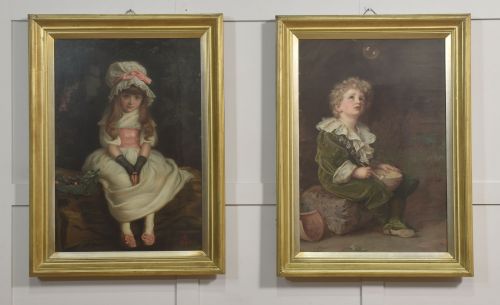
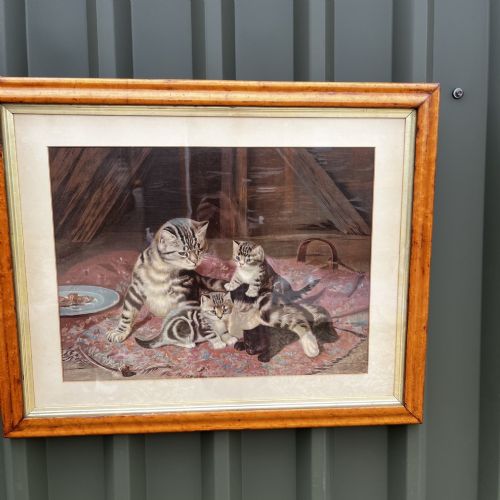
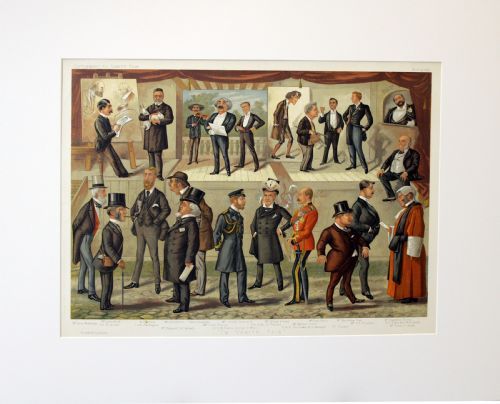
A chromolithograph art print is a multi-layered colour plate produced through nineteenth and early twentieth-century printing technology, capturing subjects ranging from sporting art and domestic animals to satirical society caricatures. You will frequently encounter framed Victorian and Edwardian examples featuring distinct subjects like advertising scenes, botanical studies, and feline portraits.
The selections span distinct periods including the Victorian era, the 1880s, 1890s, and the 1910s, reflecting the widespread popularity of vibrant colour printing for periodicals and portfolios. Framed prints and wall art dominate the offerings, often preserved in period wood or gilt frames with mount board.
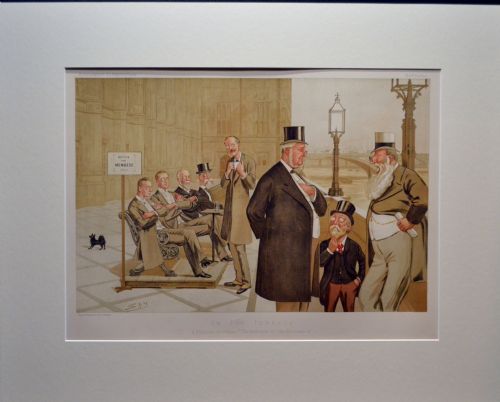
Originating across British and continental workshops, these pieces encompass specific genres such as Vanity Fair caricatures, advertising supplements, and classical revivals like Renaissance Revival compositions. Each item captures the visual culture of its decade through layered ink applications on paper.
How they were made
Makers built these images using multiple lithographic limestone blocks or metal plates, applying a separate ink colour for each successive pass to build up a rich chromatic field. Printers combined fine ink layers on paper, sometimes incorporating gold leaf highlights to add reflective depth to the surface.
Finished plates frequently found placement behind glass within wooden frames, occasionally constructed from oak or finished in gilt. Mount board provided structural support inside the frame, protecting the paper sheet from direct contact with the glass.
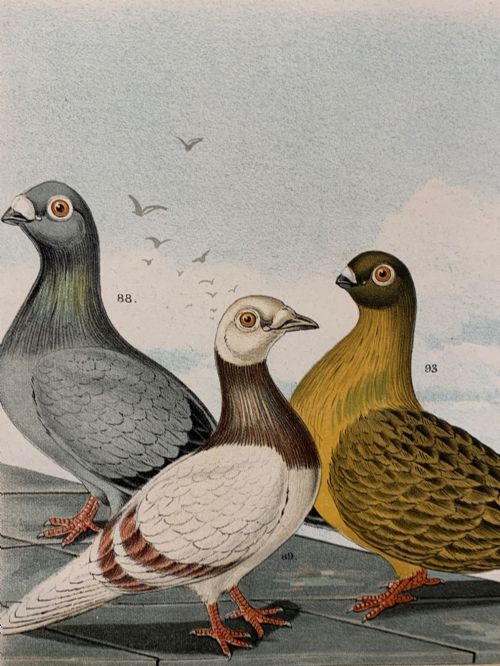
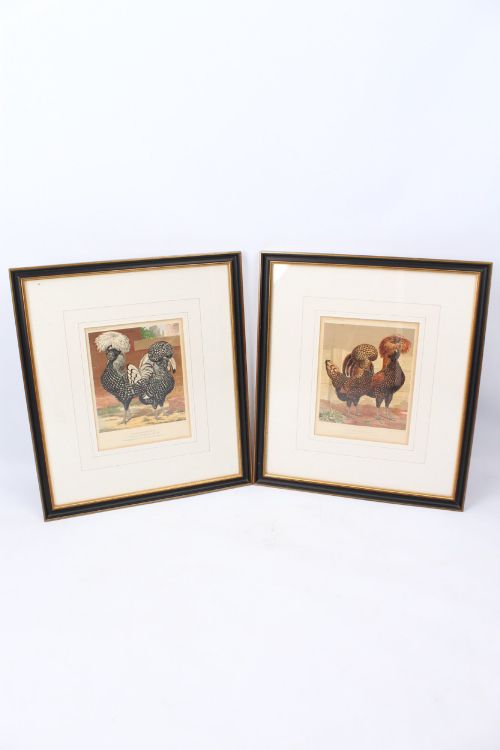
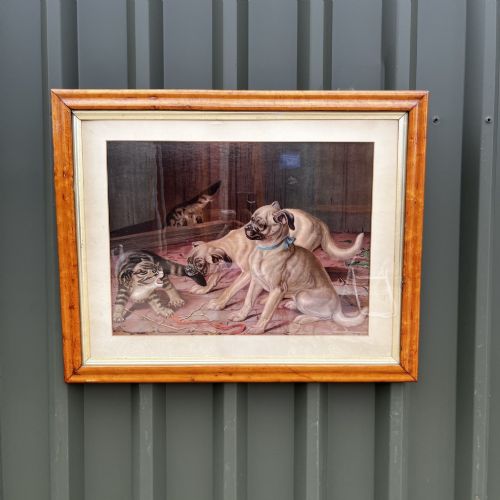
Pugs, cats, pigeons, and chickens share the paper alongside Victorian cricketers and society figures.
What varies in quality
Registration precision across the individual colour stones dictates the sharpness of the final image, separating muddy impressions from crisp, detailed plates. The complexity of the original artwork, whether a detailed animal study or a caricature by a known artist, influences the visual impact of the print.
The preservation of the paper sheet and the vibrancy of the original inks determine the enduring character of each piece. Original framing, including period wood or carved frames, adds significant contextual integrity to the work.
Horatio Henry Couldrey·Charles Burton Barber·Frank Algernon Stewart
The Chromolithograph Art Print Glossary
- Chromolithograph
- A multicoloured planar print produced from multiple lithographic stones, each applying a distinct ink shade to create a rich pictorial surface. This technique defined commercial colour reproduction before modern photographic methods took over.
- Vanity Fair print
- A satirical portrait lithograph published in the British weekly magazine Vanity Fair, often depicting notable public figures of the Victorian and Edwardian eras. These sheets frequently bear signatures or pseudonyms of the caricaturists.
- Chrystoleum
- A coloured photograph or print mounted face-down to glass, made translucent with oils or varnish, and hand-tinted from behind. This painstaking Victorian process creates an illusion of depth resembling an oil painting.
- Mount board
- Heavy paperboard placed around a print inside a frame to separate the artwork from the glass. It protects the paper surface from condensation and physical contact.
- Gilt
- A gold leaf or gold-coloured finish applied to frames or print details to provide a bright metallic accent. This treatment enhances the decorative presence of the framed work.
Chromolithograph Art Print: Frequently Asked Questions
What is a chromolithograph?
A chromolithograph is a colour print made by using separate lithographic stones for each ink hue, layered sequentially onto paper. This method allowed mass production of vibrant, multi-coloured images during the nineteenth century.
Printers carefully aligned each stone to build complex pictorial scenes, ranging from satirical portraits to advertising posters and botanical plates.
How do I identify a Vanity Fair print?
Vanity Fair prints typically feature full-length caricatures of prominent Victorian and Edwardian personalities, often accompanied by biographical text on a separate sheet. They appeared as folding plates in the weekly periodical.
Many bear the artist's pseudonym, such as Spy, printed discreetly near the bottom corner of the image area.
What is a chrystoleum?
A chrystoleum is a Victorian picture created by sticking a monochrome or coloured print to glass, thinning the paper, and painting details by hand from the reverse side. The result has a glossy, three-dimensional appearance.
They are distinct from standard lithographs due to their glass backing and layered oil or watercolour tinting.
How should I frame these prints?
These pieces look best when housed behind glass with acid-free mount board to separate the paper from the surface. Period wood or gilt frames complement the nineteenth-century origins of the paper.
Avoid hanging them in direct sunlight to protect the coloured inks from fading over time.