

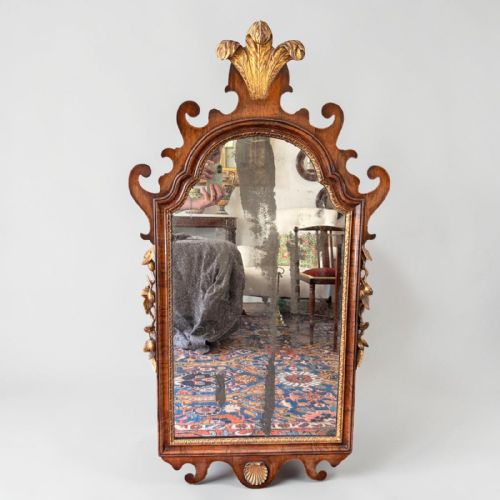
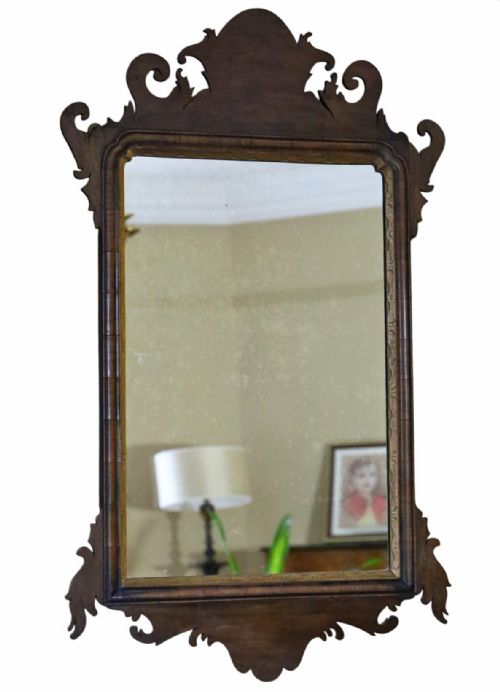


Chippendale Style Walnut Wall Mirror
These chippendale style walnut wall mirror examples bring depth and historic character to a room through traditional fretwork and warm timber tones.
Chippendale Style Walnut Wall Mirror
When searching for a chippendale style walnut wall mirror, buyers encounter pieces spanning the Georgian era, the nineteenth century, and later revivals from the nineteen-twenties. The selection on this page centres on wall mirrors fashioned from walnut, often featuring classic fret-cut outlines and gilt accents.
Forms range from simple rectangular hanging mirrors to elaborate fretwork designs inspired by George II and George III aesthetics. Many pieces incorporate parcel gilt details or carved frames that reflect the decorative tastes of eighteenth-century cabinet makers.
Materials and construction
Makers utilised solid walnut and wood veneer to construct these frames, frequently shaping the timber with intricate fret-cut scrollwork. Giltwood and gilded wood embellishments highlight specific carved sections, creating a contrast against the dark grain of the walnut.
Surviving examples sometimes retain original glass, which shows the slight imperfections characteristic of older manufacturing methods. Joinery relies on traditional techniques suited to mounting these hanging mirrors securely on interior walls.
Chippendale Style Walnut Wall Mirror Retail Price Guide 2026
Typical asking prices for chippendale style walnut wall mirror among the pieces listed under this phrase on Sellingantiques today, from the lower quarter to the upper quarter. They describe what is for sale here now, not the wider market.
Current listings feature walnut wall mirrors spanning the Georgian period, the Victorian era, and nineteen-twenties revival pieces.
Assessing quality in walnut mirrors
Superior examples display crisp fretwork and balanced proportions that reflect the rigorous standards of Georgian and revival craftsmanship. The depth of the carving and the integration of parcel gilt elements distinguish finer frames from simpler productions.
The condition of the timber veneer and the presence of original glass plates influence the overall integrity of a piece. Better mirrors maintain clean lines in their fret-cut silhouettes without heavy modification or loss to the wooden elements.
The Chippendale Style Walnut Wall Mirror Glossary
- Fretwork
- Openwork ornamentation carved or pierced from a flat board of timber. This technique defines the intricate outlines seen on many eighteenth-century and revival wall mirrors.
- Parcel Gilt
- A decorative treatment where specific carved details of a wooden frame are partially covered in gold leaf. It creates a striking visual contrast against the dark walnut background.
- Veneer
- A thin layer of choice walnut applied over a secondary wood base to provide a figured grain appearance. This method allowed makers to display rich decorative patterns across the frame.
- Vauxhall Mirror
- A historical term often associated with high-quality English mirror plates known for their bevelled edges and clear reflection. These plates are typical of better Georgian wall mirrors.
Chippendale Style Walnut Wall Mirror: Frequently Asked Questions
How do I date a walnut mirror?
Dating relies on examining the construction methods, the type of timber preparation, and the style of the fretwork outline. Georgian pieces show period-specific joinery, whereas nineteenth-century and revival items often display distinct machine-cut characteristics or later finishing techniques.
Comparing the backing boards, fixings, and glass plate to known historical examples helps confirm whether a mirror originates from the eighteenth century or a subsequent revival period.
Are these mirrors heavy to hang?
Many of these pieces possess solid timber frames and substantial glass plates that require secure wall fixings. Using appropriate hardware suited to the weight of the frame ensures safety when mounting them in domestic settings.
Professional hanging is recommended for larger examples, particularly those with intricate fretwork or heavy gilded wooden components that place stress on the hanging wire.
What is George II style?
George II style references the architectural and decorative motifs popular during the reign of King George II, characterised by symmetry, bold carving, and classical ornamentation. Mirrors from this tradition often feature architectural pediments and rich walnut surfaces.
Revival versions produced in the nineteenth and twentieth centuries adopted these same design principles, aiming to replicate the grandeur of earlier British interior decoration.
Did these mirrors have original glass?
Some surviving pieces retain their original glass plates, which frequently exhibit minor foxing or light surface wear due to age. Replacement glass is also common in mirrors that have seen centuries of use and maintenance.
The presence of original glass often adds historical interest, though replacement plates provide a clearer reflection for contemporary placement.