

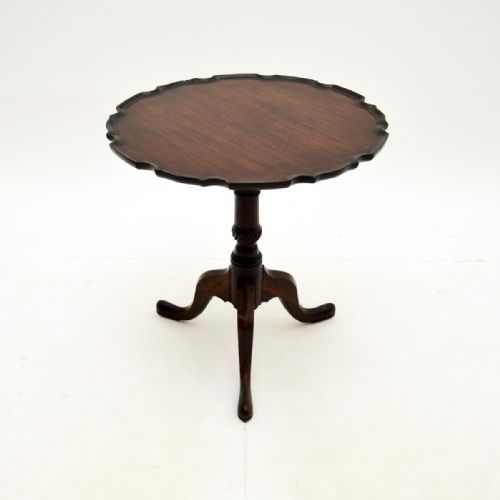

Chippendale Style Tilt Table
Chippendale style tilt tables are flexible occasional surfaces designed to tilt flat when not in use.
Chippendale Style Tilt Table
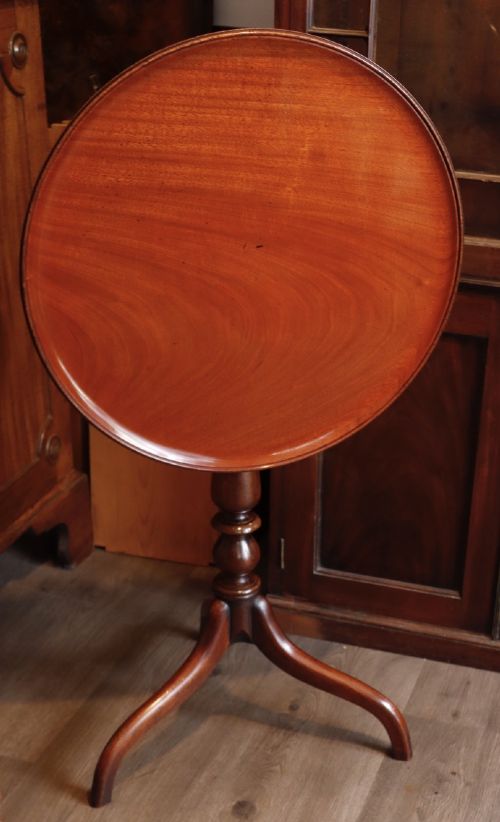
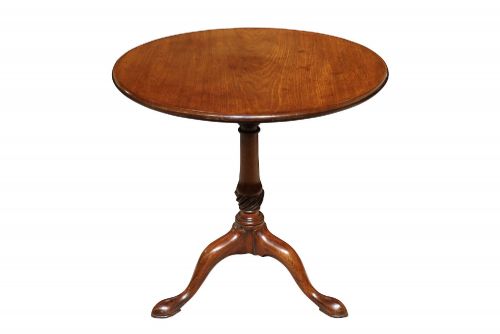
A chippendale style tilt table stands on a central pillar supported by three legs, bringing a compact circular or occasional surface to a room. Buyers searching this phrase will find pieces spanning the eighteenth century through to revival periods in the twentieth century.
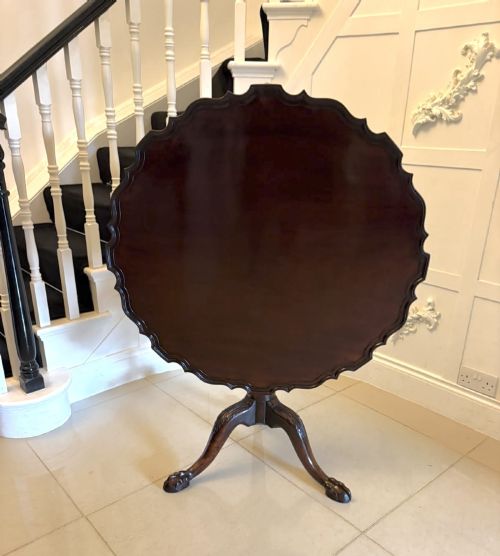
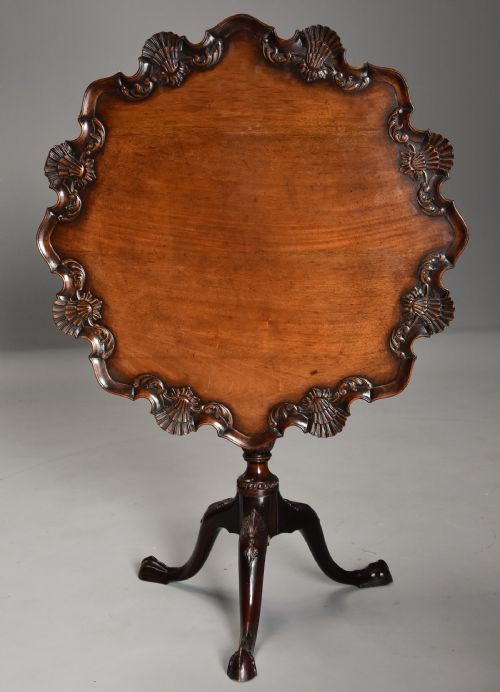
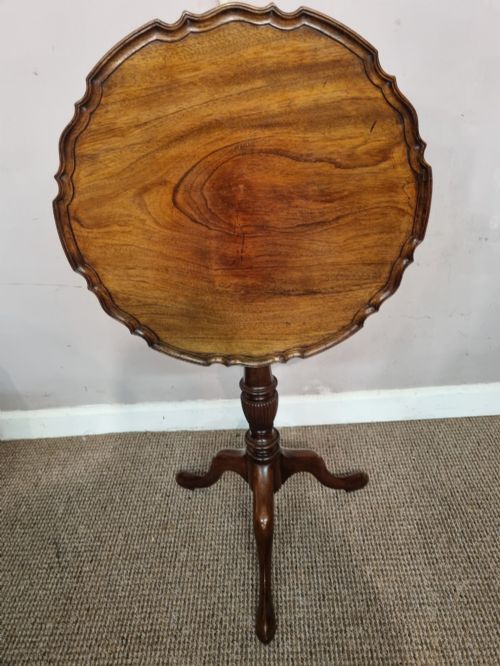
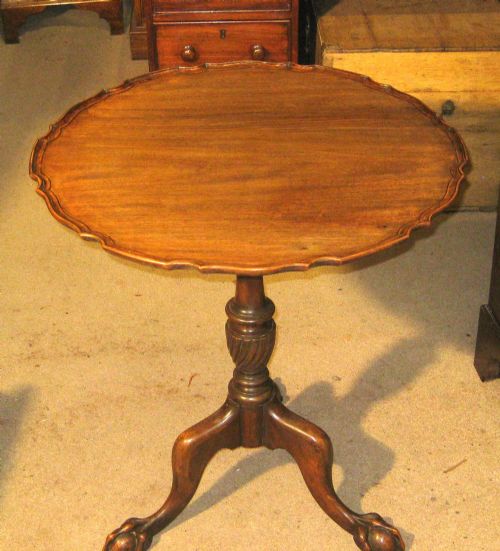
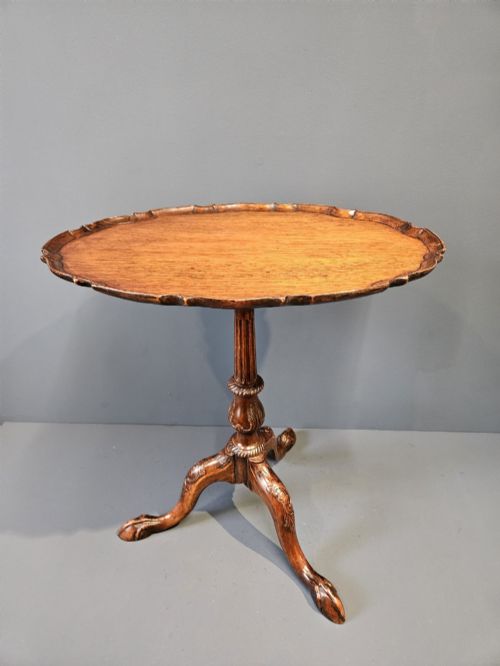
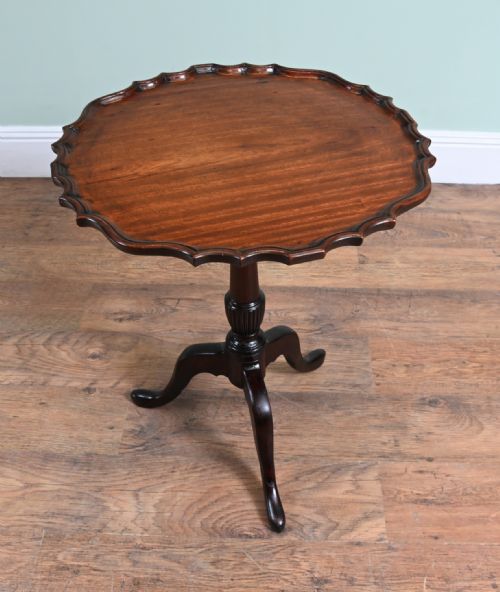
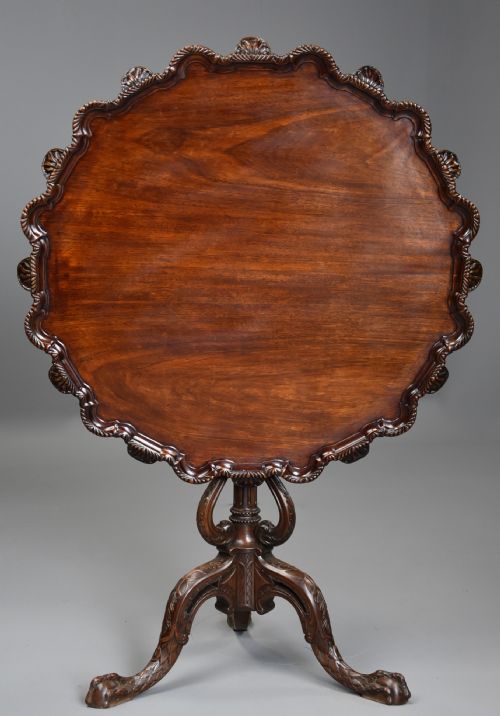
The most common formats on this page combine mahogany timber with a tilting mechanism, often featuring a circular pie crust edge designed to contain tea services or small objects. Forms range from simple occasional tables to refined tripod tea and supper tables.
Origins stretch from genuine Georgian workshops to later Edwardian and revival makers working in mahogany and walnut. The enduring appeal lies in this combination of a movable top and a sturdy tripod base.
Materials and Construction
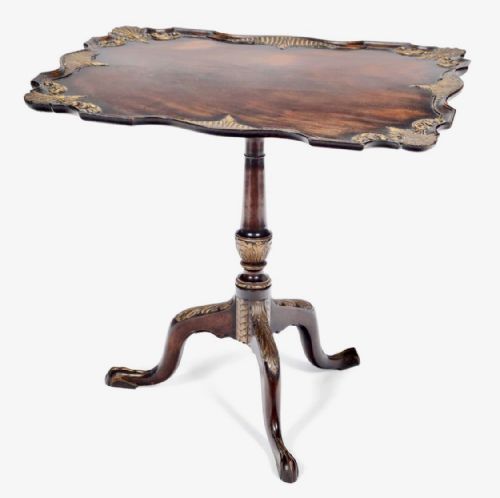
Mahogany serves as the primary timber across these pieces, selected for its dense grain and stability, occasionally accompanied by walnut or augmented with parcel gilt accents. Joinery relies on traditional turning and carving techniques to shape the central pedestal and cabriole legs.
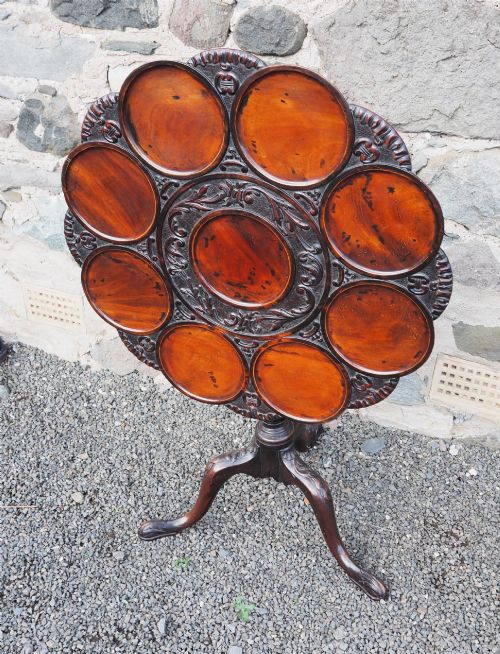
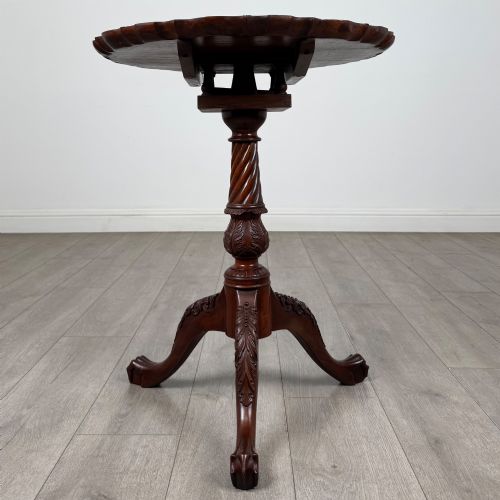
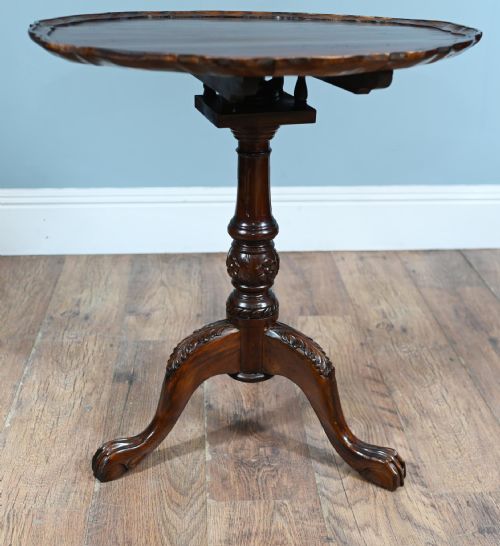
The pivoting mechanism often incorporates a birdcage block that allows the surface to both tilt upright and rotate independently. Edges are frequently carved into raised pie crust profiles or shaped with subtle mouldings.
Several tables include clever birdcage pivots that let the top spin like a compass before tipping sideways.
Judging Quality
Quality rests upon the crispness of the carved details on the legs and the profile of the pie crust edge. Finer examples display deeply defined claw and ball feet and balanced proportions in the central pillar.
The tightness of the birdcage mechanism and the smoothness of the pivot action distinguish better executed pieces from simpler utility tables. The choice and figuring of the mahogany veneer or solid timber further elevate a piece.
S and H Jewell London
The Chippendale Style Tilt Table Glossary
- Piecrust edge
- A raised, undulating carved rim resembling pastry work, designed to keep cups and small items from sliding off the top when level.
- Birdcage
- A timber framework beneath the table top that enables the surface to rotate horizontally and tilt vertically.
- Tripod table
- A small freestanding table supported by a central pedestal branching into three distinct feet.
- Snap top
- An alternative term for a tilt top table, utilising a spring catch to lock the surface in a horizontal position.
Chippendale Style Tilt Table: Frequently Asked Questions
What is a birdcage mechanism?
A birdcage is a wooden framing box fitted beneath the table top that lets the surface rotate in a full circle and tilt vertical.
This construction allows the table to be stored flat against a wall when not in use.
How do I tell an 18th century table from a revival piece?
Eighteenth century examples display hand cut joinery, timber shrinkage, and wear patterns consistent with heavy early use.
Revival pieces from the Edwardian era or later often show uniform machine milling and cleaner interior surfaces.
What were tilt tables used for originally?
These tables served as tea, coffee or supper tables in formal sitting rooms during the Georgian period.
The tilting function cleared floor space in smaller rooms between meals.
Are all these tables mahogany?
Mahogany is the predominant timber found across these listings, valued for its strength and rich dark tone.
A few pieces substitute walnut or include parcel gilt highlights.