
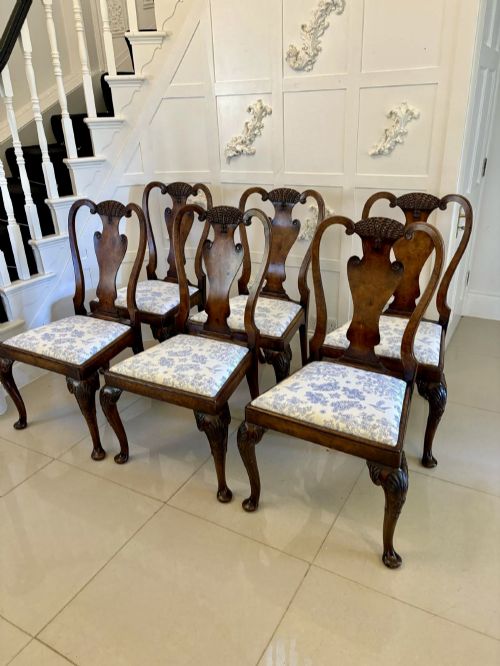
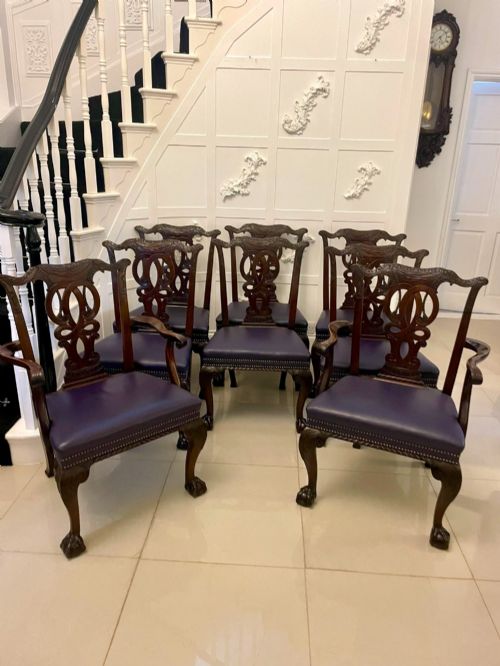
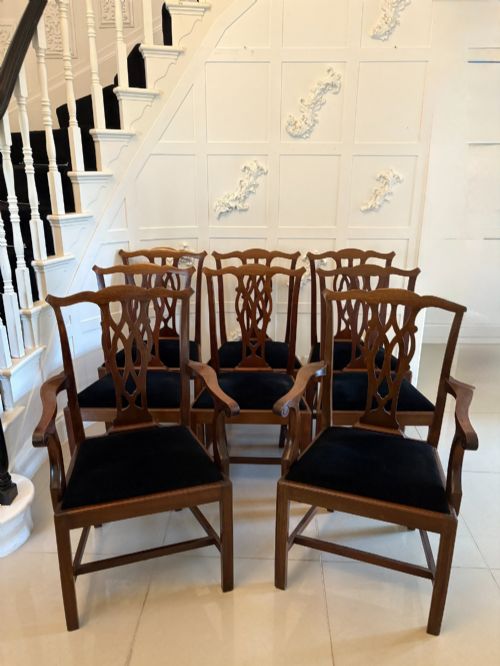
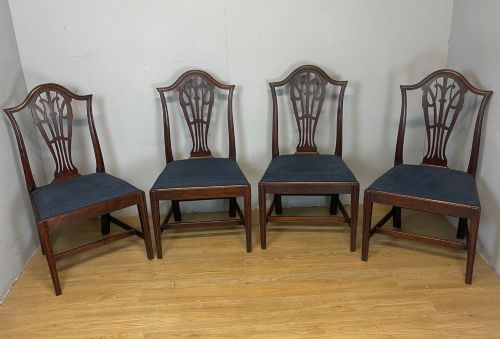
Chippendale Style Dining Set
When choosing a chippendale style dining set, you select from matched tables and chairs spanning multiple periods from the eighteenth century onwards.
Chippendale Style Dining Set
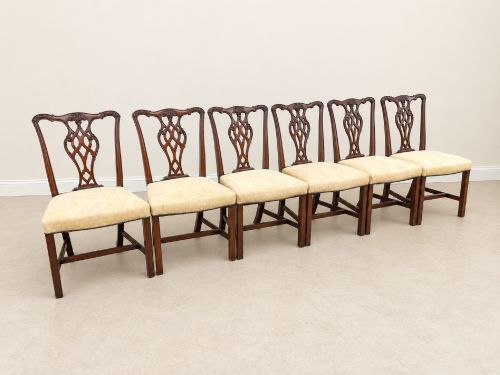
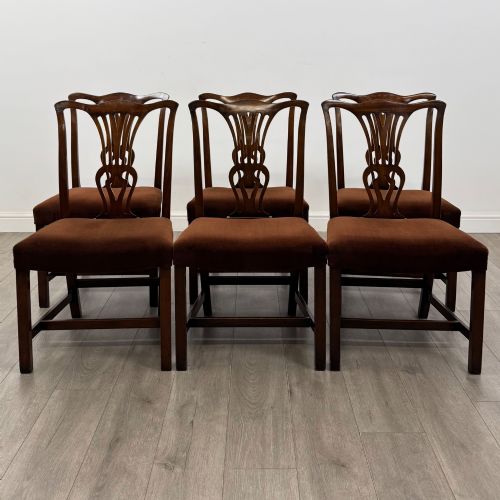
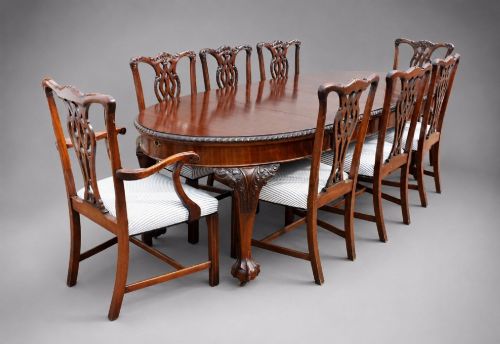
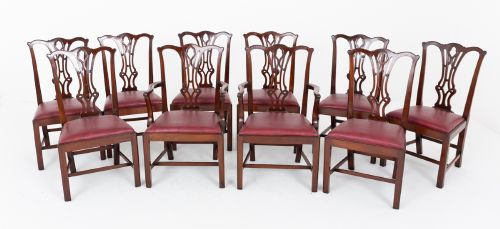
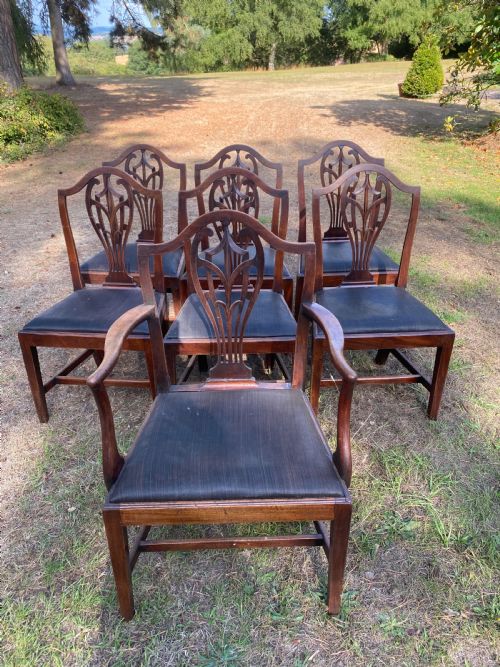
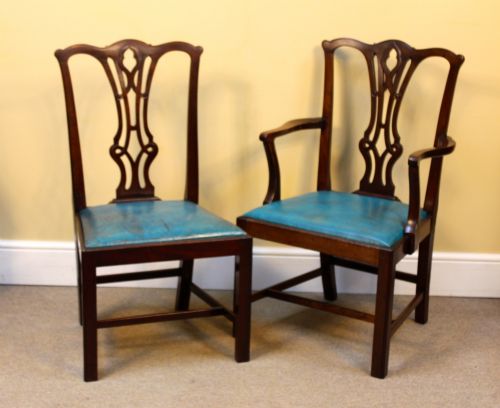
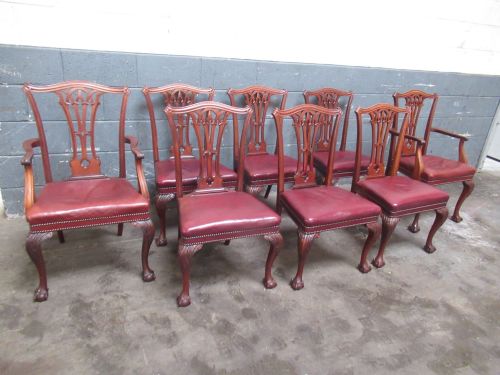
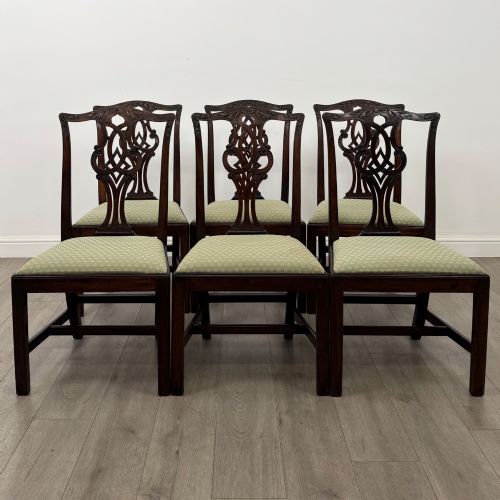
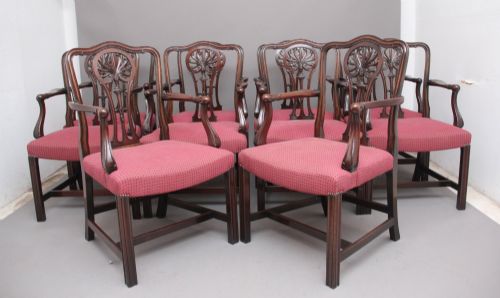
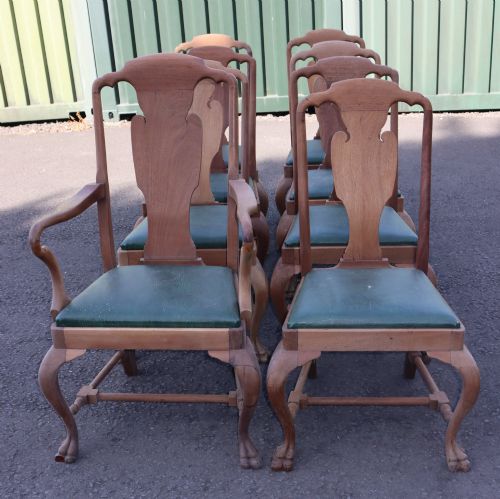
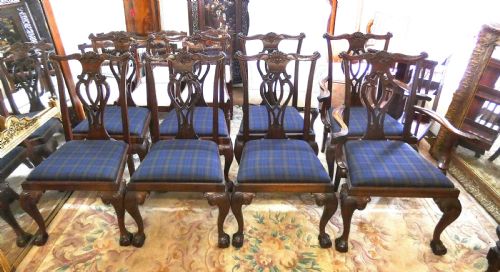
A chippendale style dining set combines a dining table with a matched group of dining chairs, frequently arranged as single chairs alongside a pair of carvers with armrests.
The selections on this page draw from periods including the eighteenth century, Georgian eras, Victorian times, Edwardian years, and the twentieth century up to the 1930s.
Sets commonly appear under revivals such as Chippendale Revival or George II Style, fashioned in configurations ranging from four chairs up to twelve or sixteen pieces.
Materials and Construction
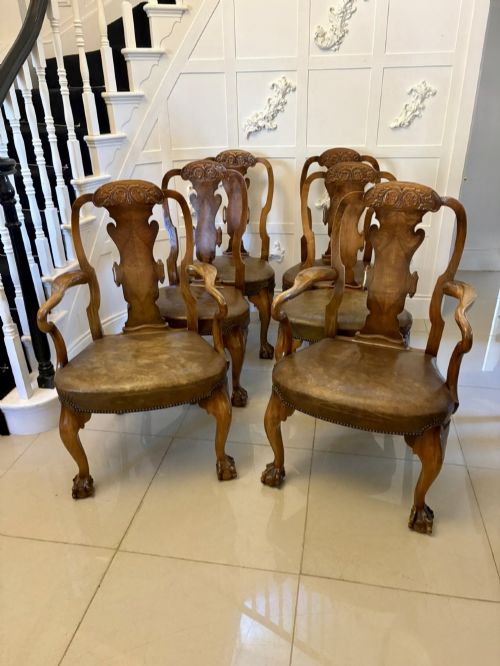
Makers predominantly utilised solid mahogany and walnut, occasionally turning to oak, shaping the timber into chairs featuring carved backs and tables with extending leaves.
Seating portions are upholstered across various materials including leather, fabric, velvet, and original tapestry seats, secured alongside brass elements.
Listings feature dining sets spanning the 18th century, Georgian period, Victorian era, Edwardian years, and 1930s.
Quality Variations
The standard of carving across the chair backs dictates much of the distinction, where deep and crisp detailing on ribbon backs or pierced splats separates simpler work from superior examples.
The integrity of the timber selection and the retention of original upholstery fabrics or leather seating surfaces further influence the standing of any given set.
Alfred Allen of Birmingham·Wheelers of Arncroach
The Chippendale Style Dining Set Glossary
- Carver
- An armchair designed to match a set of single dining chairs, typically placed at the head of a table. These often accompanied sets of six or eight single chairs.
- Ribbon Back
- A chair back design where the central wooden splat is carved to resemble interlaced ribbons. This ornate style appears on select Victorian and late nineteenth-century pieces.
- Extending Dining Table
- A table fitted with a mechanism or removable leaves to alter its length. These frequently accompany large sets of twelve or more chairs.
- Gothic Revival
- A style drawing on medieval architectural motifs, occasionally blended with Chippendale forms in late nineteenth-century items. Such pieces display pointed arches and tracery.
Chippendale Style Dining Set: Frequently Asked Questions
How many chairs come in these sets?
The sets vary considerably in size, ranging from compact groups of four chairs up to large assemblies comprising twelve, fourteen, or sixteen pieces.
Many listings also divide the total count into single chairs and armed carver chairs for the table ends.
What woods were used for these sets?
Mahogany forms the primary timber across the majority of the historical and revival pieces, accompanied by walnut and occasional oak.
Secondary materials include the textiles, leather, velvet, and fabric utilised for the upholstered seats.
Are these sets from the eighteenth century?
The listings encompass genuine eighteenth-century pieces alongside extensive nineteenth-century and Edwardian revivals dating into the 1920s and 1930s.
Stylistic designations often reference Georgian or George II origins even when the physical manufacture falls into the Victorian or Edwardian periods.
How do I care for antique upholstery?
Original tapestry, leather, fabric, and velvet require gentle maintenance suited to their specific textile composition to preserve the seated surfaces.
Regular light dusting and protection from direct sunlight help maintain both the upholstery and the polished mahogany or walnut frames.