
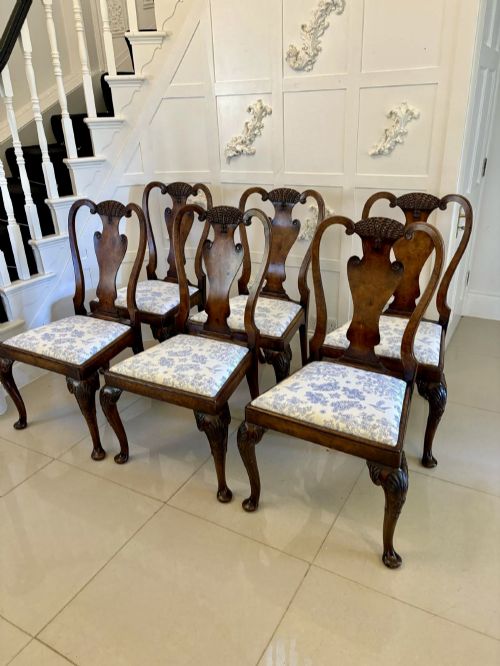
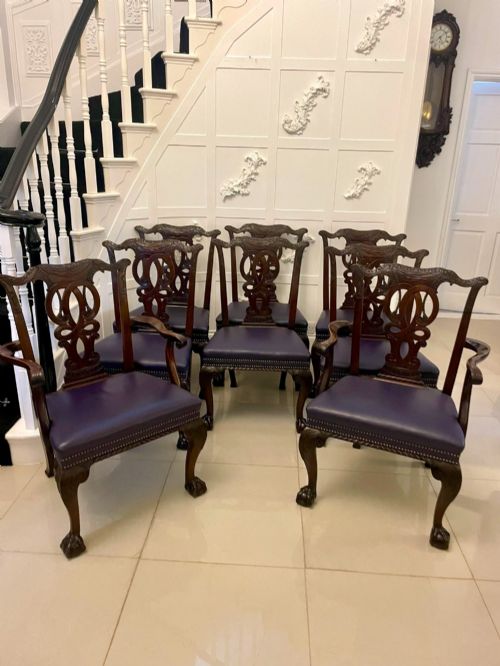
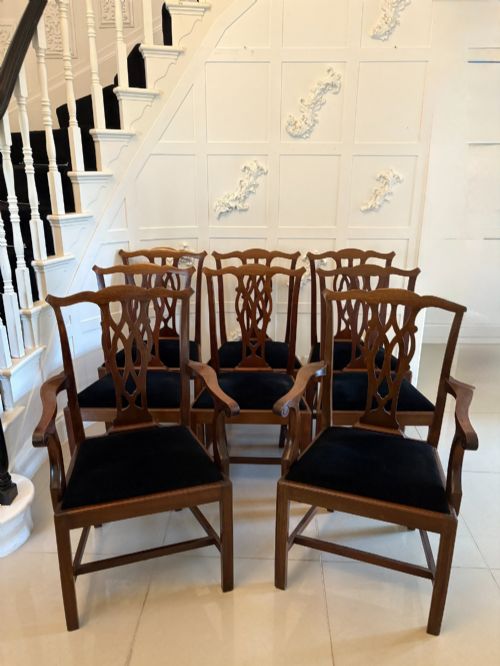
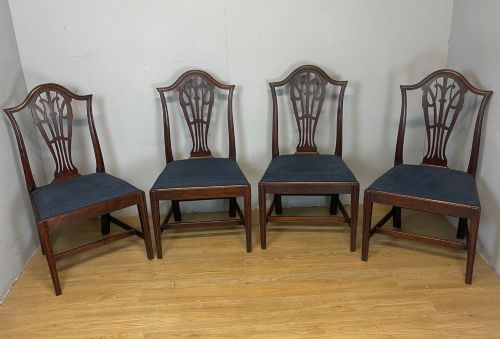
Chippendale Side Chairs Set
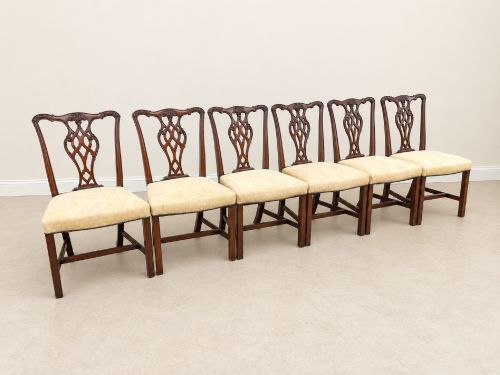
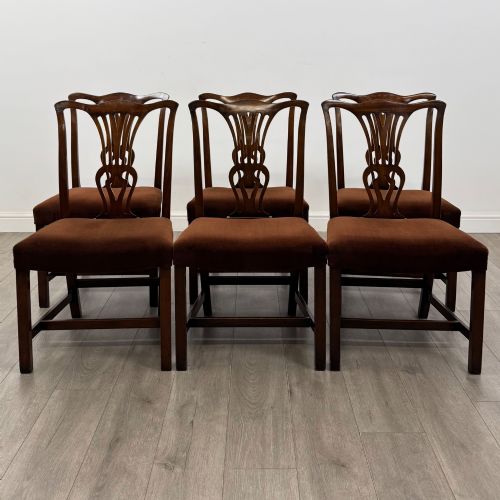
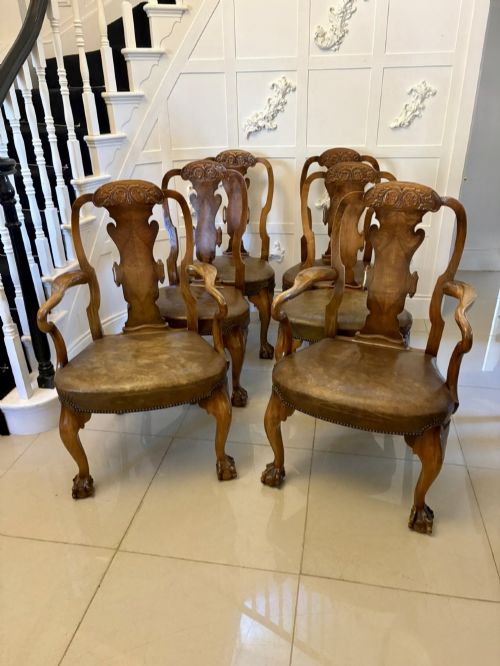
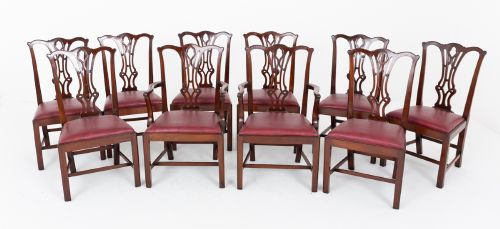
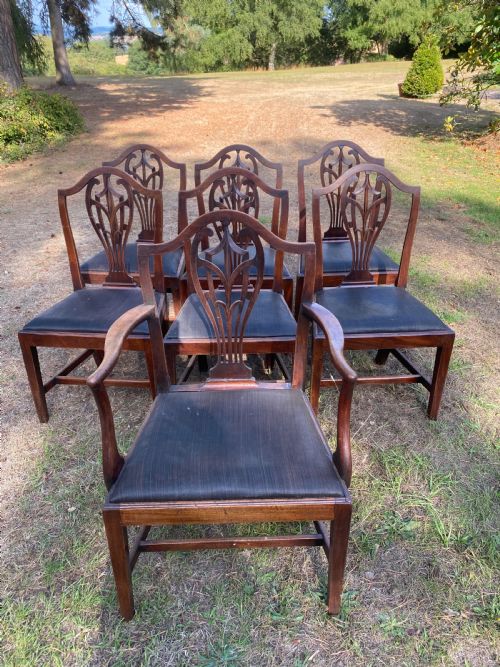
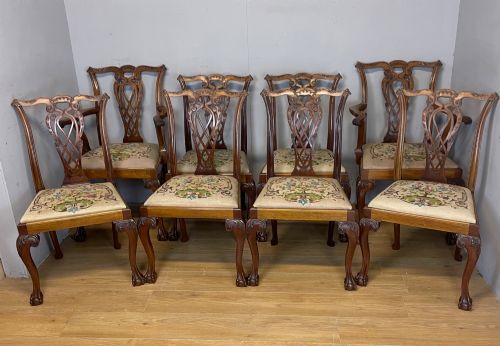
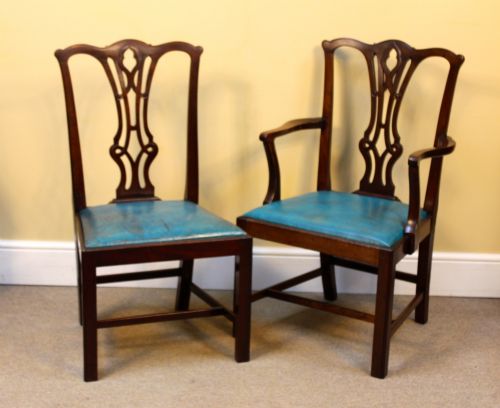
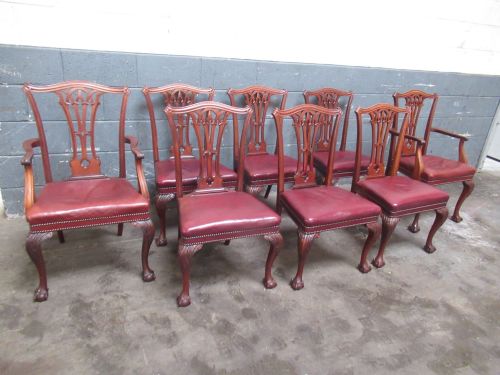
These chippendale side chairs set selections bring formal dining room seating into the home with carved mahogany and walnut frames.
Chippendale Side Chairs Set
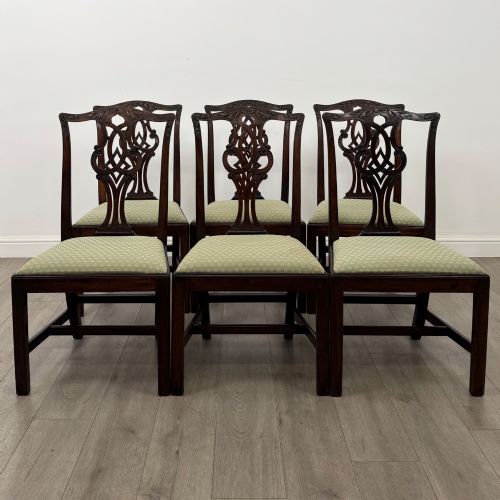
A chippendale side chairs set comprises matching seats designed for dining tables, appearing frequently in mahogany and walnut across this selection. Buyers find pieces ranging from authentic 18th century examples to later revival iterations produced in the Victorian, Edwardian and 1930s periods.
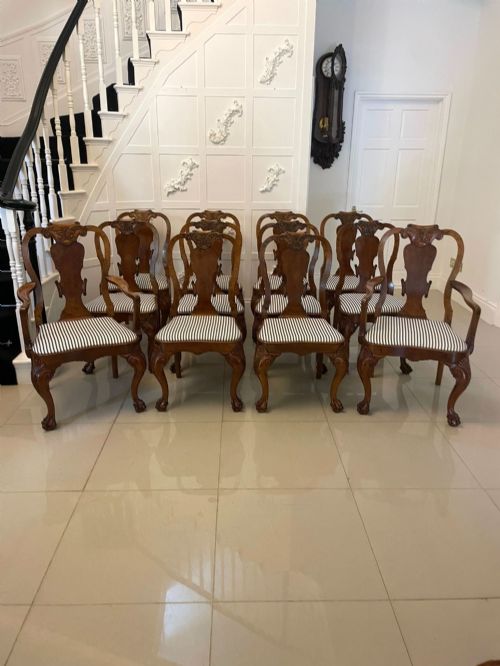
The grouping typically includes sets of four, six, eight, ten or twelve pieces, spanning distinct stylistic interpretations such as Chippendale style, George II style and Gothic or Neo Classical variations. Most examples rely on the characteristic carved back design associated with the aesthetic.
Materials and construction
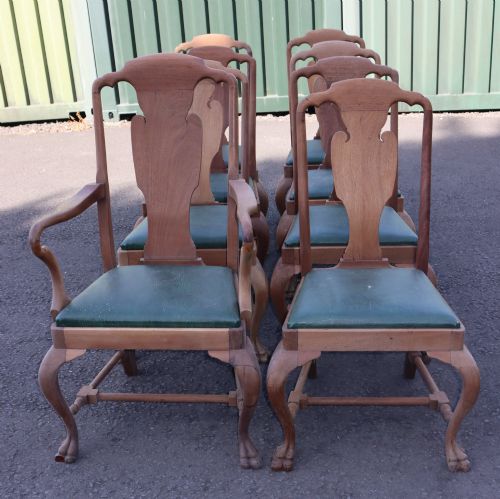
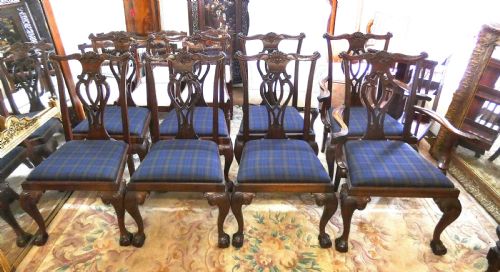
Makers utilised solid mahogany and walnut for the primary frames, applying intricate hand carving to the splats and top rails. Seat frames received diverse textile coverings including leather, velvet, fabric and tapestry upholstery.
Structural reinforcement often involved integrated stretchers between legs, whilst specific items incorporated brass details or bleached wood finishes to achieve the desired visual effect.
Listings span from the 18th century through Georgian, Victorian, Edwardian, and 1930s periods, executed primarily in mahogany and walnut.
Assessing craftsmanship
The distinction between tiers rests upon the depth and crispness of the wood carving along the chair backs and legs, alongside the proportional balance of the frame. Earlier 18th century originals demonstrate superior joinery methods compared to mass-produced revival pieces.
The integrity of the timber selection and the preservation of original or period-appropriate upholstery materials significantly influence the overall standing of an individual set.
Warings·Wheelers of Arncroach
The Chippendale Side Chairs Set Glossary
- Chippendale style
- A decorative design inspired by the 18th-century cabinetmaker Thomas Chippendale, characterised by intricate pierced splats and cabriole legs.
- Splat
- The vertical central slat of a chair back, frequently carved in ribbon or ladderback configurations in these pieces.
- Cabriole leg
- A furniture leg that bends outward and then tapers inward, terminating in a pad or claw foot.
- Revival
- A later stylistic movement reproducing historical designs from earlier centuries, such as Georgian or 18th century forms.
- Upholstery
- The padded textile, leather or tapestry covering applied to the seat frame for comfort.
Chippendale Side Chairs Set: Frequently Asked Questions
How do I date a set?
Dating relies on timber patination, construction joinery methods, and the specific stylistic cues of the period. Examining the underside and joint construction reveals the age of the woodwork.
Revival pieces from the Victorian and Edwardian eras often show machine tooling or standardisation not present in 18th century examples.
Are these suitable for daily use?
Most antique dining chairs remain sturdy enough for regular seating if the frame joints are secure. Solid mahogany and walnut provide strong structural support.
Buyers should periodically check the glue blocks and stretchers to ensure the antique frames handle everyday weight safely.
How are different periods distinguished?
Original 18th century pieces display hand-cut joinery and natural timber ageing. Later revival sets from the 19th and early 20th centuries often replicate these forms with slightly heavier proportions.
Stylistic labels like George II or Gothic revival offer further clues to the precise era of manufacture.
What seat materials should I expect?
Original and replacement seats feature a variety of materials including leather, velvet, tapestry, and modern woven textiles. Many listings retain upholstered drop-in pads.
Selecting a set depends on whether the preference is for original fabric or a modern upholstery update.