

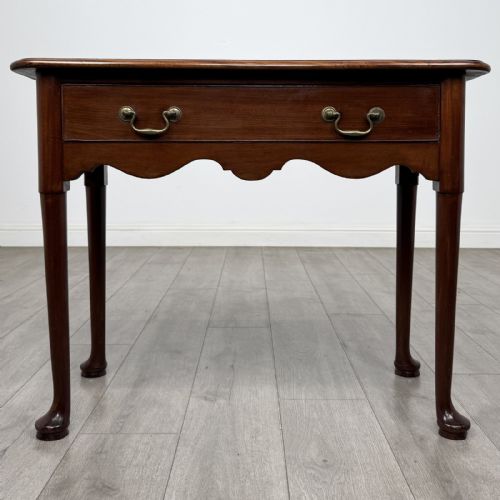


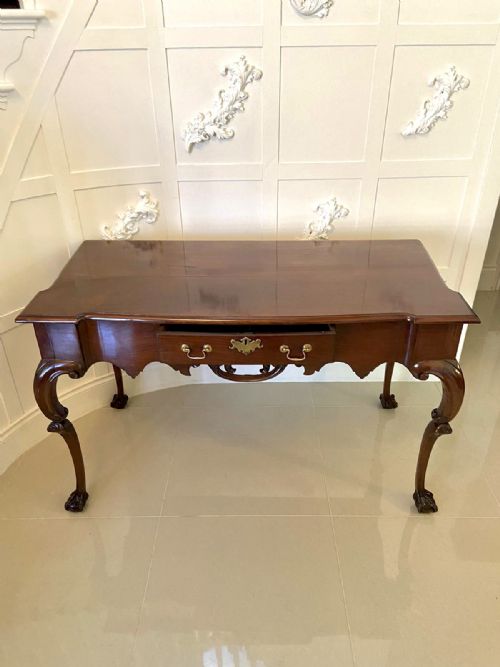
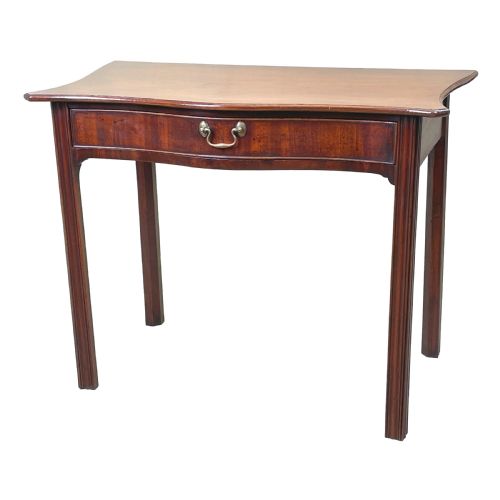

Chippendale Serving Table
A chippendale serving table brings solid mahogany presence and carved detail to a dining room, uniting eighteenth-century proportion with enduring utility.
Chippendale Serving Table
When you search for a chippendale serving table, you encounter formal dining furniture designed for eighteenth-century and later reception rooms. These pieces function as sideboards, console tables, and pier tables, providing a long surface for food and silver service.
The examples available here span original Georgian pieces from the eighteenth century alongside later nineteenth-century revivals and Edwardian interpretations. Mahogany forms the primary structure across both period originals and subsequent revivals.
Most items take the form of rectangular or serpentine side tables, while related variants include silver tables, dresser bases, and occasional tray tables. You will find both strict period pieces and looser interpretations built in the Chippendale manner.
What varies in quality
The depth and crispness of the hand carving separate standard commercial output from superior workshop production. Sharp, undercut foliage and well-defined mouldings indicate skilled execution by experienced hands.
The choice of timber creates a marked distinction, with highly figured mahogany veneers or dense solid planks elevating the visual weight of a piece. Original surfaces and patination accrued over centuries also determine the standing of an individual table.
Chippendale Serving Table Retail Price Guide 2026
Typical asking prices for chippendale serving table among the pieces listed under this phrase on Sellingantiques today, from the lower quarter to the upper quarter. They describe what is for sale here now, not the wider market.
The Chippendale Serving Table Glossary
- Serpentine
- A front edge or surface that curves outward in the centre and inward at the sides. This contour requires precise woodworking and adds visual movement to large case pieces.
- Pier table
- A decorative table designed to stand against a wall, frequently positioned between windows beneath a pier glass mirror. These serve primarily display functions rather than heavy dining use.
- Chippendale revival
- A distinct period of nineteenth and early twentieth-century furniture production copying eighteenth-century forms. Makers during this era reinterpreted classic designs using contemporary workshop practices.
- Dresser base
- A low wooden storage unit featuring drawers or cupboards beneath a wide top board. These utilitarian pieces originate from country houses and domestic kitchens rather than formal parlours.
Chippendale Serving Table: Frequently Asked Questions
How do I date a chippendale serving table?
Examination of the timber construction, tool marks, and secondary woods helps differentiate eighteenth-century originals from nineteenth-century revival pieces. Secondary elements like drawer linings and block fixings reveal the period of manufacture.
Style nuances also provide clues, as Victorian and Edwardian revivals often exhibit heavier proportions or machine-assisted joinery compared to Georgian originals.
Where should I place a serving table?
These tables suit dining rooms, hallways, or large drawing rooms where their long surfaces can display decorative objects or serve drinks. Their shallow depth allows them to sit flush against walls without blocking circulation.
Positioning them away from direct heat sources protects the timber and historic polish from drying and splitting over time.
What is Chinese Chippendale style?
Chinese Chippendale incorporates Asian-inspired motifs such as lattice fretwork, pagoda silhouettes, and blind panelling into British furniture forms. This aesthetic reflects eighteenth-century trade and stylistic exchange with East Asia.
Tables executed in this taste often feature pierced square legs and intricate corner brackets supporting the frieze.
How do I maintain mahogany furniture?
Regular dusting with a dry, soft cloth prevents particulate accumulation on carved surfaces and polished tops. Periodic application of appropriate wax feeds the timber and maintains the finish without building up heavy residue.
Keeping pieces out of direct sunlight prevents the mahogany from fading and protects the historic patina.