






Chippendale Dining Furniture
Chippendale dining furniture brings enduring Georgian character to the dining room through substantial mahogany construction and classical carved detail.
Chippendale Dining Furniture
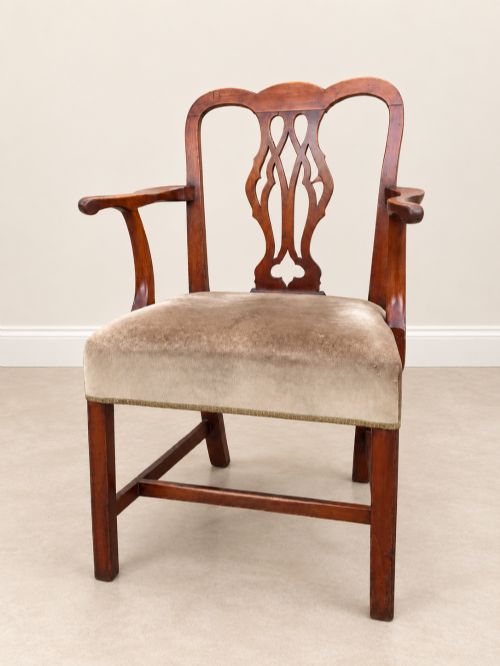
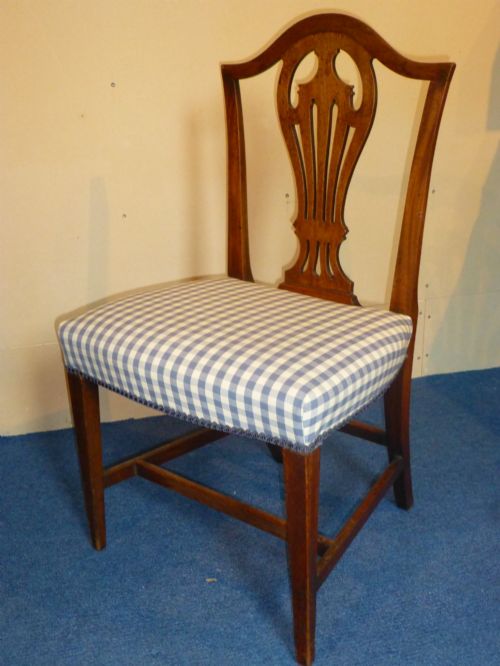
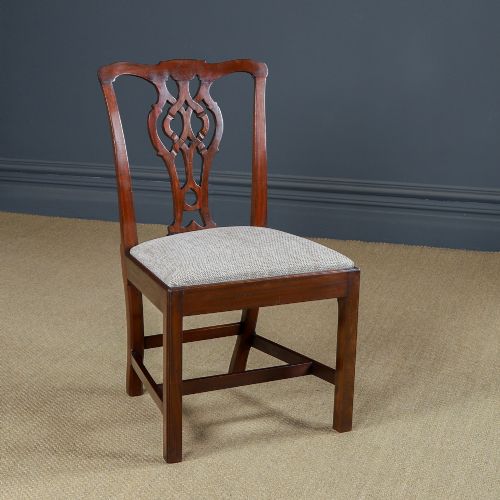
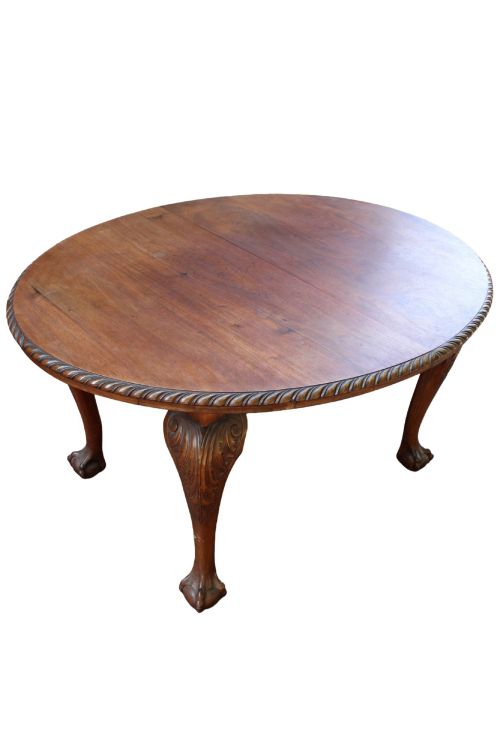
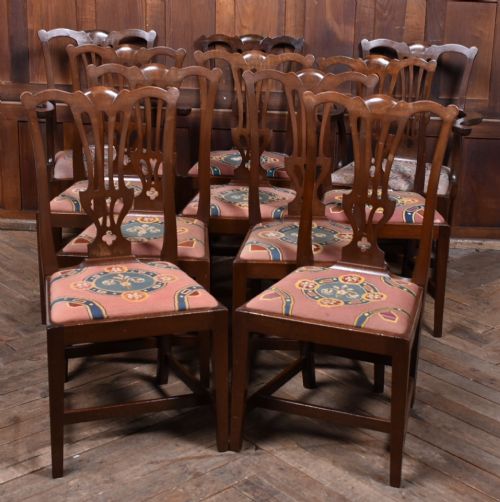
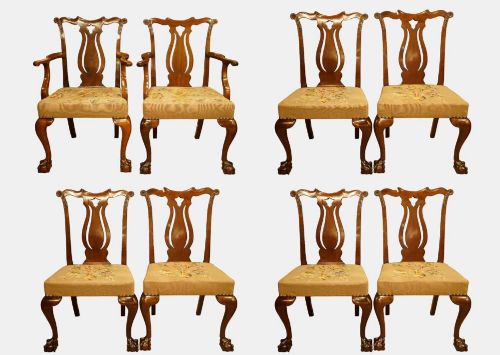
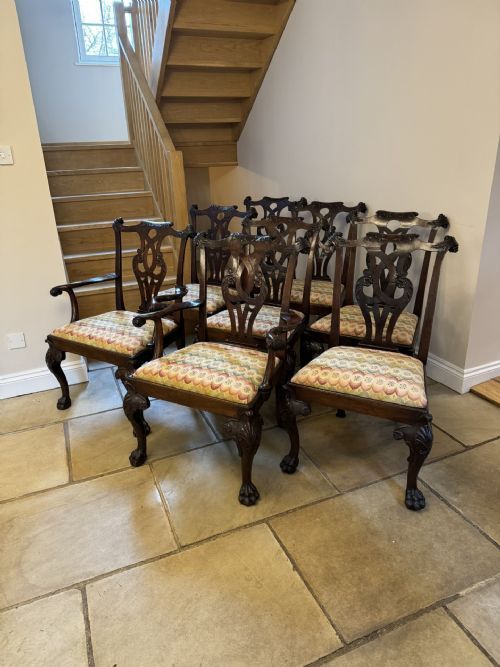
Chippendale dining furniture encompasses dining chairs, armchairs, side chairs, dining tables, sideboards, and side cabinets originating from the eighteenth century onwards. Buyers searching for chippendale dining furniture encounter both original Georgian pieces and later revival interpretations from the Victorian, Edwardian, and early twentieth-century periods.
The seating options on this page range from single side chairs and carvers to large matching sets of six, eight, ten, or twelve chairs. Alongside seating, the selection includes extending dining tables, drop-leaf tables, and flame mahogany serpentine sideboards designed to complement the dining room setting.
Materials and Construction
Mahogany serves as the primary timber, including Cuban mahogany and flame mahogany variants valued for rich grain patterns. Alternative woods such as oak, elm, fruitwood, and yew wood appear in country pieces and vernacular interpretations.
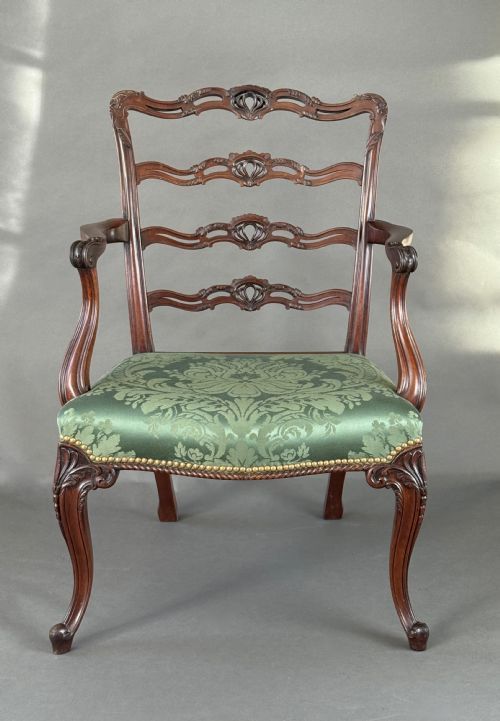
Joinery relies on traditional carpentry techniques, while carved cabriole legs, pointed pad feet, and pierced splats demonstrate skilled manual woodworking. Seating components incorporate upholstery fabric, leather, brass accents, and original tapestry seats.
Chippendale Dining Furniture Retail Price Guide 2026
Typical asking prices for chippendale dining furniture among the pieces listed under this phrase on Sellingantiques today, from the lower quarter to the upper quarter. They describe what is for sale here now, not the wider market.
Listings feature mahogany, oak, elm, fruitwood, and yew wood across dining chairs, tables, and sideboards spanning the eighteenth to early twentieth centuries.
Assessing Quality
Quality rests upon the crispness and depth of hand carving across the splats, knees, and rails. Superior examples display fluent lines and balanced proportions that reflect meticulous workshop execution.
The integrity of the timber and the preservation of original surfaces distinguish finer items. Matched sets command attention when timber figure and colour remain uniform across every chair.
Jas Shoolbred·Wheelers of Arncroach
The Chippendale Dining Furniture Glossary
- Carver
- An armchair designed for the head of the dining table, typically featuring open arms and a wider seat. These pieces match the style of the accompanying single side chairs.
- Splat
- The vertical wooden strip down the centre of a chair back, often pierced and intricately carved in the manner associated with Thomas Chippendale designs.
- Serpentine sideboard
- A serving cabinet featuring a undulating front contour with a convex centre flanked by concave curves. These pieces utilise figured flame mahogany veneers.
Chippendale Dining Furniture: Frequently Asked Questions
How do I care for antique mahogany dining furniture?
Maintain stable room humidity and protect surfaces from direct sunlight to prevent timber drying and fading. Apply natural beeswax periodically to nourish the wood and preserve the lustre.
Avoid placing hot dishes or liquids directly onto tabletops. Use coasters and felt pads beneath serving items to safeguard the polished finish.
Are these chairs suitable for daily use?
Eighteenth-century and revival dining chairs are structurally robust when soundly constructed from dense timbers like mahogany. Many handle regular seating when joints remain tight and stable.
Inspect older seating for stability before heavy daily use. Professional conservation can secure loose frames without compromising historical integrity.
How do I distinguish eighteenth-century pieces from later revivals?
Original eighteenth-century pieces display period tool marks, timber shrinkage consistent with age, and construction methods characteristic of Georgian workshops. Revival pieces from the Victorian and Edwardian eras show nineteenth or twentieth-century joinery techniques.
Secondary woods, nail types, and the character of the patina help differentiate Georgian production from Chippendale revival items made around nineteen hundred.
Can I mix carvers and side chairs?
Pairing armchairs with matching side chairs follows historical dining room tradition where carvers sat at the table ends. Sets often combine two armchairs with six or eight single chairs.
Ensure stylistic harmony by matching timber species and carved motifs when assembling a dining suite from separate pieces.