



Chippendale Clock
A chippendale clock brings stately mahogany timber and intricate carving into a room, offering both traditional timekeeping and presence.
Chippendale Clock
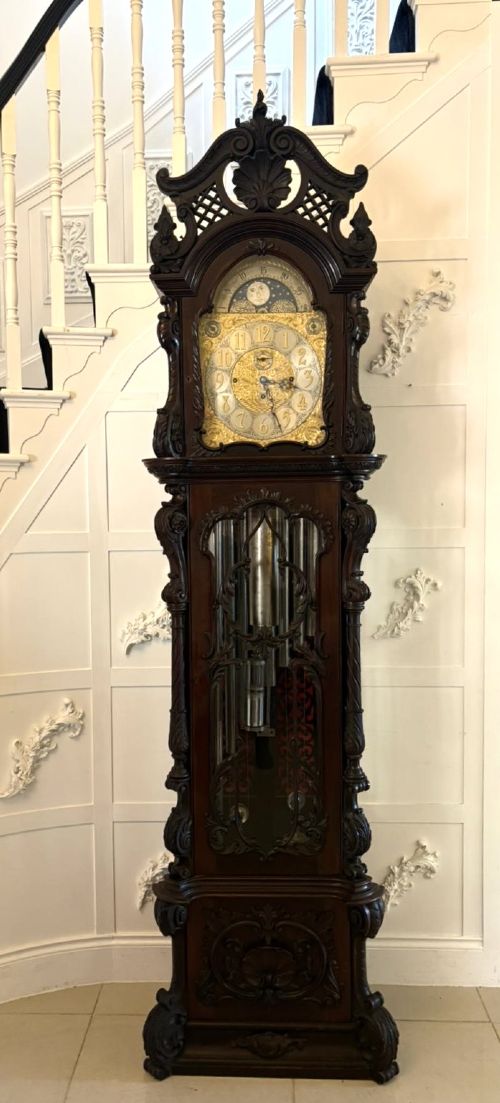
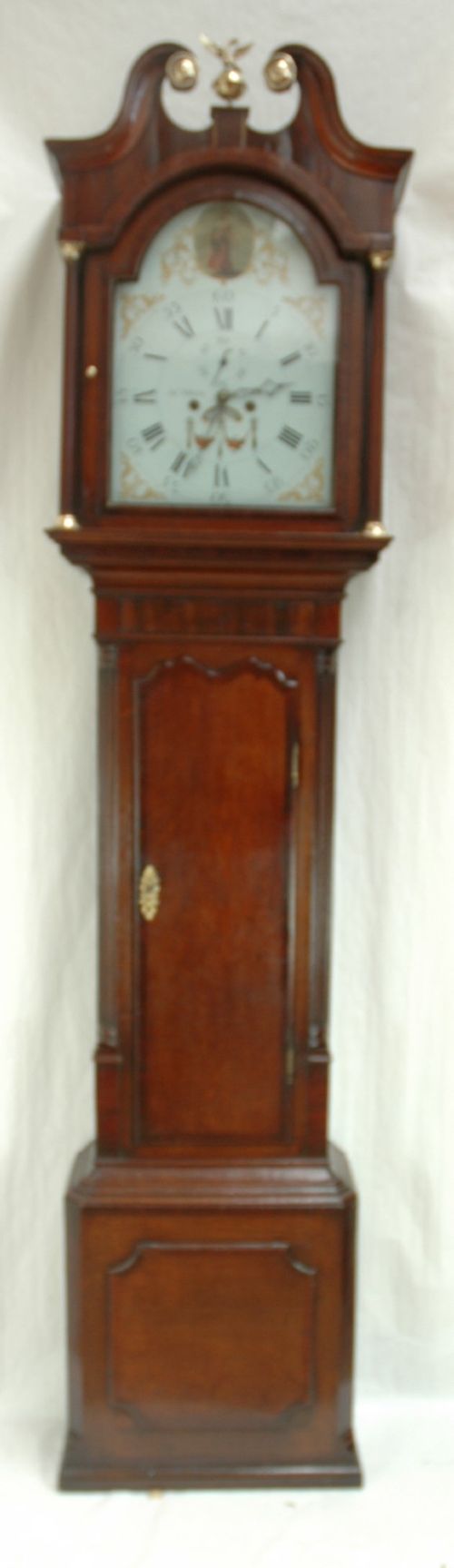
When you search for a chippendale clock, you encounter tall floor-standing timepieces that dominate a hallway or living space. These pieces span longcase clocks, grandfather clocks, and smaller grandmother clocks designed for domestic interiors.
The versions most commonly met on this page range from 18th century Georgian origins through to later 19th century, Edwardian, and 1920s revivals. Makers of these later periods adopted Chippendale style and Chippendale revival aesthetics to recreate earlier grandeur.
Many examples feature striking painted dials, musical movements, moonphase complications, or nine-tube chiming systems housed within carved wooden cases. They serve as functional timekeepers and significant decorative furniture items.
How they were made
These clocks rely primarily on solid mahogany timber for the cabinetry, often combined with intricate carved details and inlay work. The warmth and grain of the wood form the visual foundation of each case.
Internal mechanical workings incorporate brass, steel, and iron components to drive the timekeeping, musical trains, and chiming functions. Protective glass panels enclose the dial faces, shielding the delicate hands and numerals.
Chippendale Clock Retail Price Guide 2026
Typical asking prices for chippendale clock among the pieces listed under this phrase on Sellingantiques today, from the lower quarter to the upper quarter. They describe what is for sale here now, not the wider market.
Listings feature pieces spanning the 18th century, Georgian era, 19th century, Edwardian period, and up to 1920.
What varies in quality
Quality rests in the depth and crispness of the timber carving, alongside the visual balance of the mahogany case proportions. Superior examples display refined joinery and well-executed inlay that elevates the piece beyond a simple utility object.
The sophistication of the internal movement further distinguishes the range. Musical capabilities, complex chime arrangements, and finely painted dials separate standard timepieces from exhibition quality longcase clocks.
The Chippendale Clock Glossary
- Longcase clock
- A tall, freestanding pendulum clock enclosed in a wooden case, commonly known as a grandfather clock. These standing timepieces require adequate floor space and ceiling height.
- Grandmother clock
- A smaller, more slender version of the traditional longcase clock. They suit domestic settings with lower ceilings where full-sized grandfather clocks overwhelm the room.
- Moonphase
- A dial mechanism that tracks and displays the phases of the lunar cycle. This complication adds visual intricacy to the clock face.
- Chippendale revival
- A stylistic movement from the late 19th and early 20th centuries that reinterprets 18th-century cabinetmaking designs. These pieces emulate the carved mahogany aesthetics of earlier generations.
Chippendale Clock: Frequently Asked Questions
Where should I place a longcase clock?
These tall floor-standing timepieces need a stable, level surface on a ground floor or sturdy foundation to keep the pendulum swinging evenly. Avoid placing them in areas subject to dampness or direct sunlight that could damage the mahogany timber.
Ensure there is enough vertical clearance for the specific height of the case, whether you choose a full longcase or a smaller grandmother clock.
How do I wind a musical clock?
Winding requires using the appropriate key to gently tension the weights or springs associated with the time, chime, and musical trains. Take care not to overwind the mechanism to prevent damage to the internal brass and steel components.
Consult the specific mechanical requirements of your clock, as multi-train movements often involve separate winding points for each function.
What is a grandmother clock?
A grandmother clock is a scaled-down variant of the traditional longcase clock, typically produced during the Edwardian period and early 20th century. They retain the classic mahogany case and dial layout but offer a more compact footprint.
This smaller scale makes them adaptable to modern rooms while maintaining traditional cabinetmaking styles.
How do I identify a revival piece?
Revival items from the Edwardian era or late 19th century often display crisp machine-assisted joinery alongside hand-carving that imitates 18th-century Georgian aesthetics. Examine the interior woodwork and the condition of the brass movement for clues to the manufacturing era.
Stylistic markers like Chippendale revival labels help date pieces created long after the original 18th-century period.