



Chippendale Bachelor Chest
A chippendale bachelor chest is a compact wooden drawer unit with a pull-out slide, offering refined proportions and practical surface space.
Chippendale Bachelor Chest
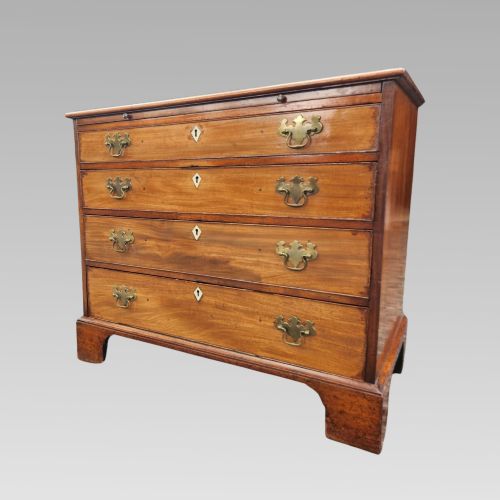
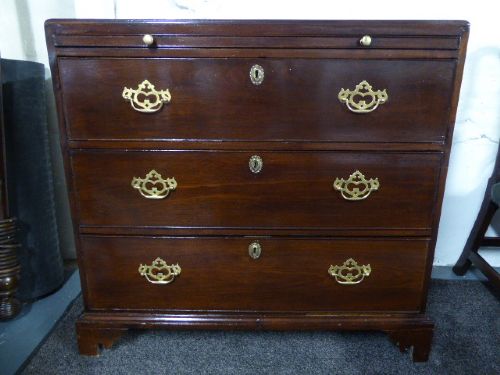
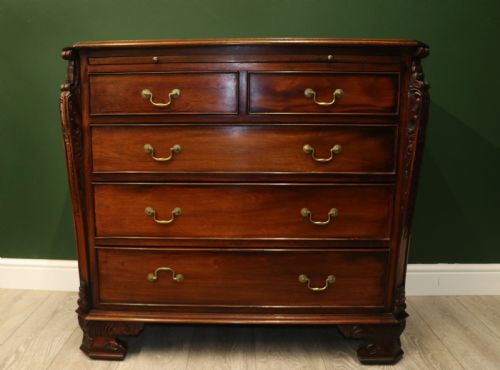
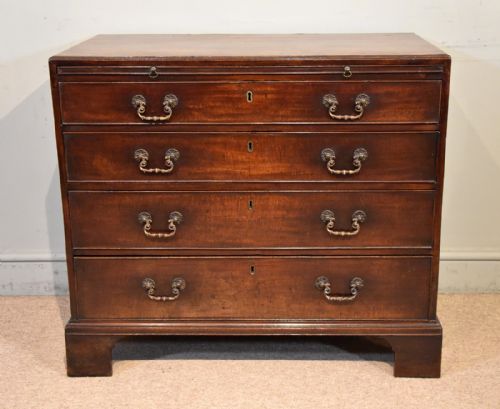
A chippendale bachelor chest is a low cabinet designed for storage and writing, typically outfitted with a sliding shelf above the drawers. These pieces appear frequently in mahogany, often adhering to Georgian and Chippendale style conventions.
Most examples on this page date from the eighteenth century, alongside later revivals from the nineteenth and twentieth centuries. The primary form functions as a chest of drawers, occasionally incorporating fitted compartments or writing drawers.
How they were made
Construction relies heavily on solid mahogany and flame mahogany veneers, matched with brass hardware and occasionally baize linings for writing surfaces. Joinery techniques from the period prioritized stable box construction to support the sliding components.
Surface finishing involves polishing the mahogany timber to highlight the grain. Details such as rococo brass handles are integrated into the drawer fronts to complete the aesthetic.
Chippendale Bachelor Chest Retail Price Guide 2026
Typical asking prices for chippendale bachelor chest among the pieces listed under this phrase on Sellingantiques today, from the lower quarter to the upper quarter. They describe what is for sale here now, not the wider market.
Listings on this page span the eighteenth century, the Georgian period, the Edwardian era, and mid-century production, constructed primarily in mahogany with brass and baize.
What varies in quality
Quality differences emerge in the selection of timber, particularly the use of figured flame mahogany against plain stock. The crispness of the carving on Chippendale style details and the smooth operation of the brushing slide also set finer examples apart.
Original brass hardware and the integrity of the secondary woods inside the drawers indicate the standard of production. Period pieces from the eighteenth century generally display different construction nuances compared to later Edwardian or mid-century interpretations.
The Chippendale Bachelor Chest Glossary
- Brushing slide
- A pull-out board located above the top drawers, used originally for writing or brushing clothes. It slides directly into the frame when not in use.
- Chippendale style
- A design influence originating from eighteenth-century furniture patterns, noted for classical proportions and decorative brasses. Pieces in this style often incorporate rococo elements.
- Flame mahogany
- A timber cut that produces a flickering, flame-like grain pattern across the wood surface. This material is typically found on higher-grade facade panels and drawer fronts.
- Serpentine
- A front profile characterised by a gentle undulating curve, convex at the centre and concave at the ends. This shape appears on several revival and period chests.
Chippendale Bachelor Chest: Frequently Asked Questions
What is a brushing slide?
A brushing slide is a pull-out wooden shelf positioned just beneath the top surface of the chest. It provided a clean surface for folding clothes or writing letters.
In daily use, the slide pulls forward smoothly on runners. It sits flush with the frame when pushed in.
How do I date a mahogany chest?
Dating relies on examining the construction methods, wood types, and secondary timbers used inside the drawers. Eighteenth-century pieces show hand-cut dovetails and period hardware fixing methods.
Later revivals from the Edwardian era or the nineteen-sixties often use standardised fixings and machine-cut elements. Comparing the handle styles and drawer linings helps clarify the period of manufacture.
Where were these chests placed?
These compact chests were typically positioned in bedrooms or dressing rooms for personal storage. Their smaller footprint allowed them to fit into tighter spaces than a full wardrobe.
The pull-out slide offered temporary workspace without requiring a separate desk. This made the furniture versatile for private chambers.
What is the difference between Georgian and Chippendale style?
Georgian refers to the broader historical period spanning the reigns of the first four Georges. Chippendale style specifically denotes design characteristics drawn from Thomas Chippendale's pattern books and associated cabinetmakers.
Many pieces share both categories, being built during the Georgian era using Chippendale design motifs. The style encompasses specific handle designs and proportions.