

Chinoiserie Lacquer Cabinet
A chinoiserie lacquer cabinet brings striking painted scenes and exotic imagery into a room, spanning forms from towering wedding cupboards to compact table cabinets.
Chinoiserie Lacquer Cabinet
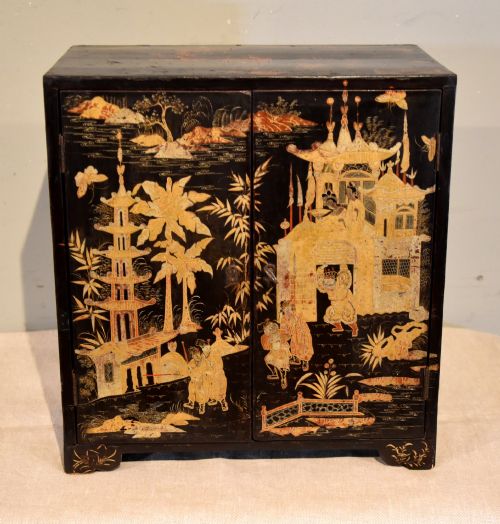
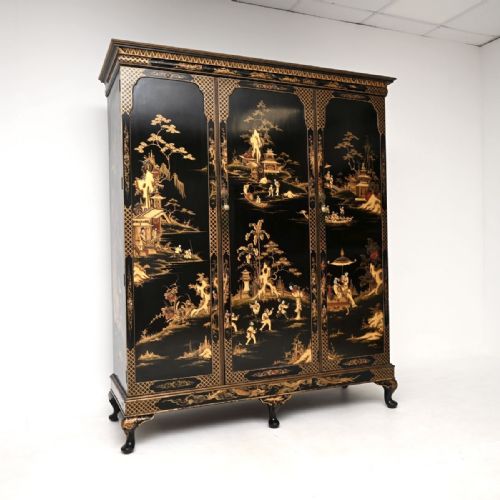
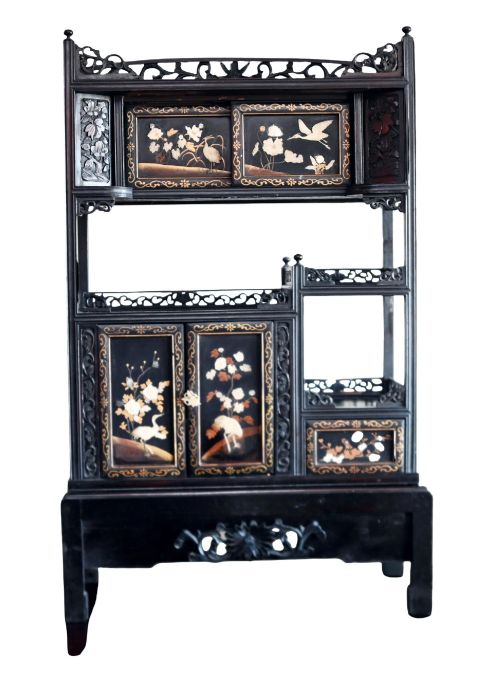
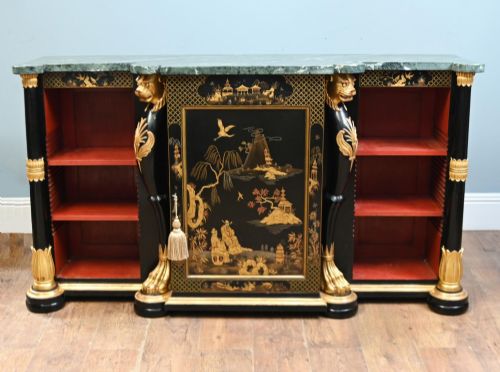
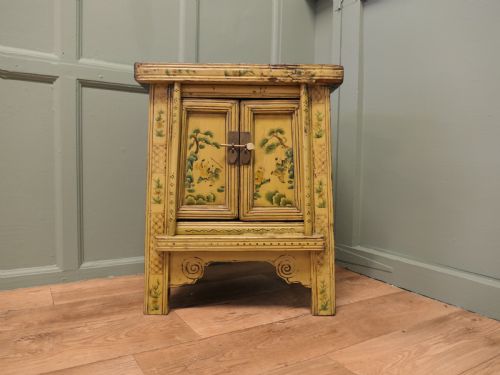
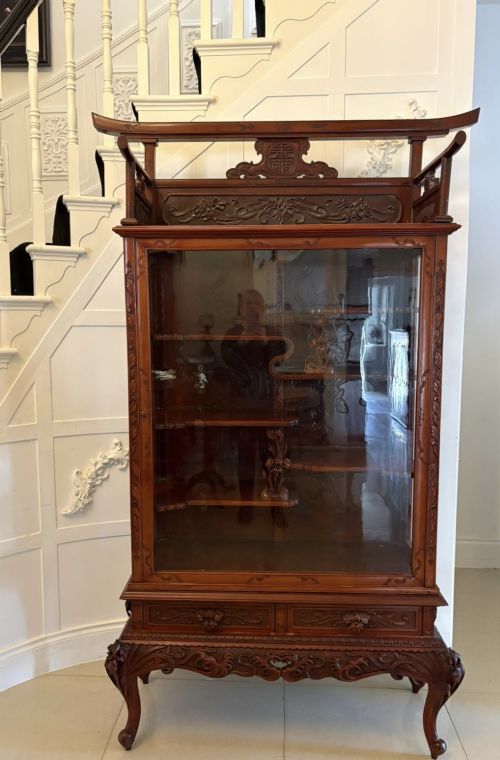
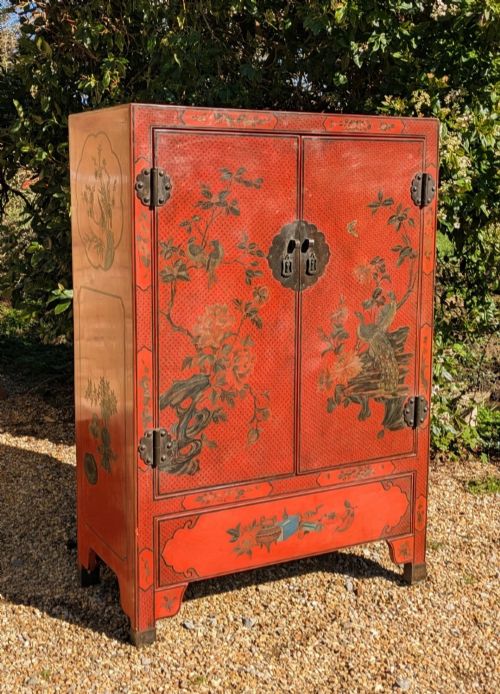
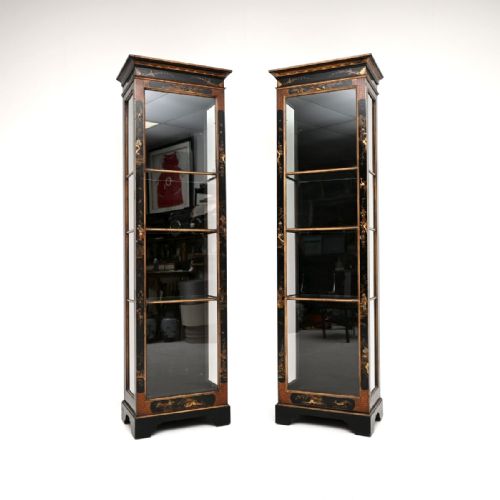
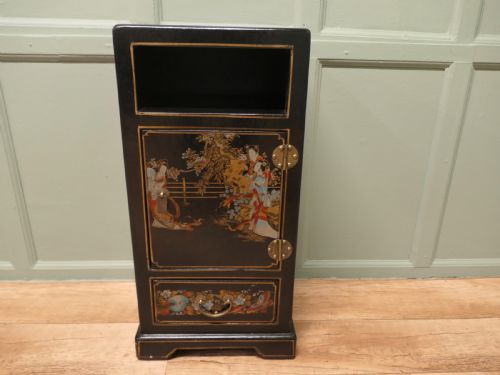
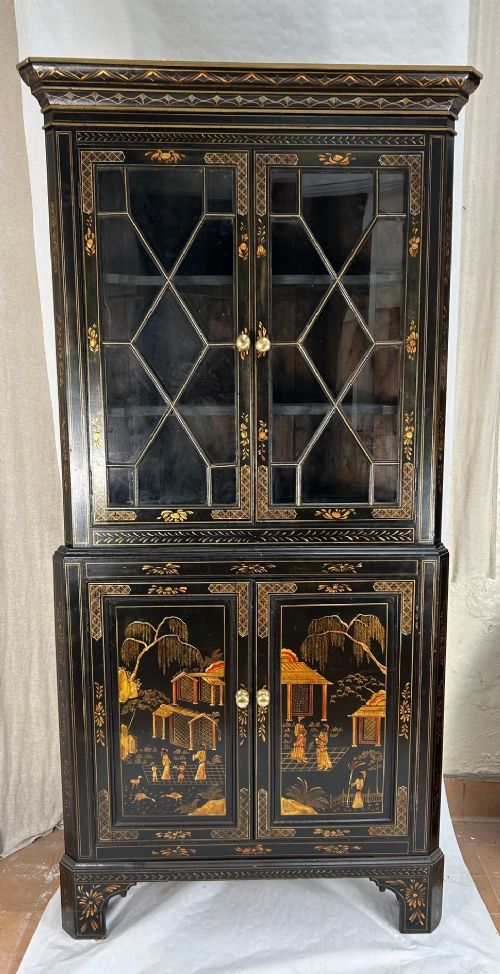
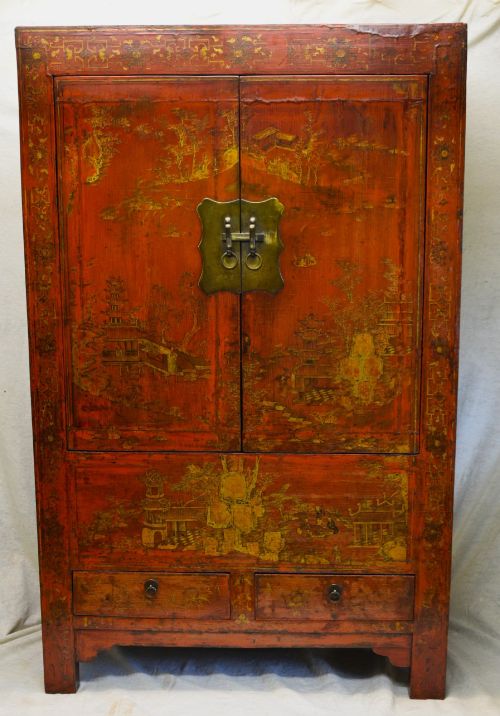
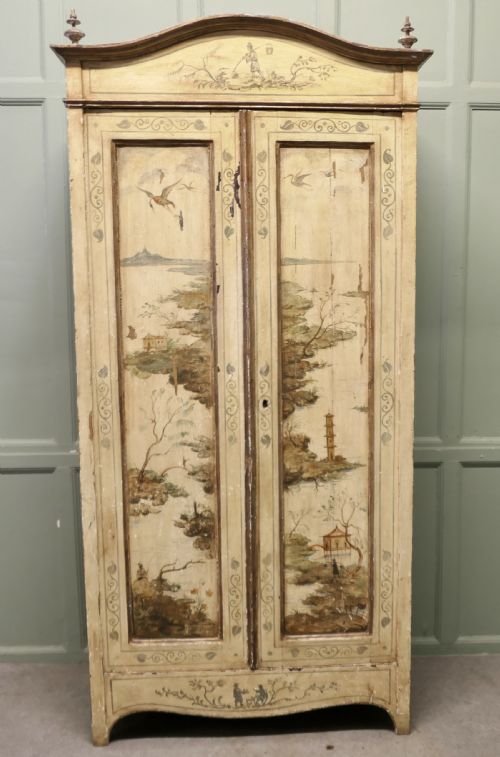
A chinoiserie lacquer cabinet is a storage piece defined by oriental decoration, often presenting figures, landscapes, or floral motifs upon a finished surface. These items appear across various formats, including corner cupboards, side cabinets, tall display units, and bureaux.
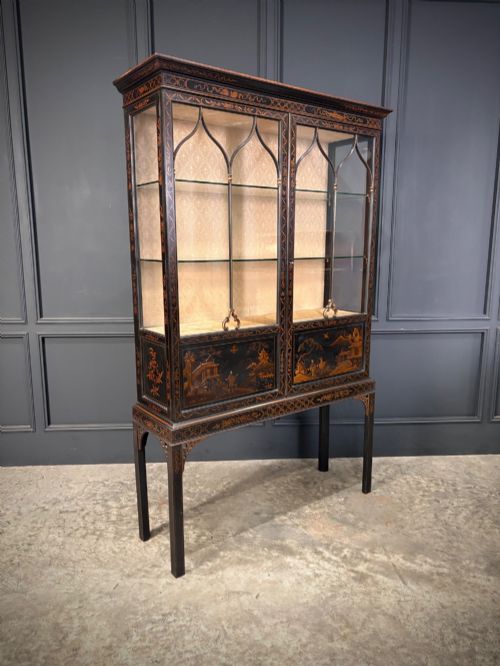
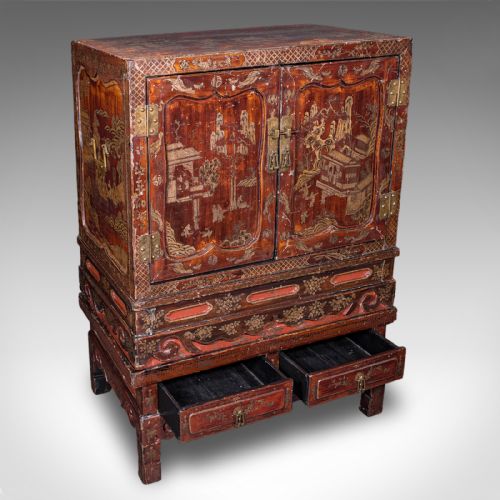
The selections available range widely in age and origin, encompassing 18th-century examples alongside Victorian iterations, Edwardian pairs, and pieces produced through the 1920s and 1930s. Buyers frequently encounter formats raised on stands or fitted with glass doors for display purposes.
How They Were Made
These pieces utilise wood as a base material, coated in layers of lacquer to create a smooth, durable shell for subsequent ornamentation. Artisans applied gold leaf, paints, and sometimes carved elements to construct intricate outdoor scenes and decorative borders.
Hardware such as brass hinges, handles, and lock plates often complement the dark or brightly coloured lacquer surfaces, while certain constructions incorporate glass panels or marble tops to finish the design.
Chinoiserie Lacquer Cabinet Retail Price Guide 2026
Typical asking prices for chinoiserie lacquer cabinet among the pieces listed under this phrase on Sellingantiques today, from the lower quarter to the upper quarter. They describe what is for sale here now, not the wider market.
Listings span multiple centuries, ranging from 17th-century craftsmanship through 18th-century japanned pieces to 1930s cocktail cabinets.
What Varies in Quality
The refinement of the painted decoration dictates much of the distinction across these pieces, separating simple surface applications from elaborate, multi-layered pictorial scenes. Finer examples display meticulous brushwork and precise detailing in the gold leaf and motifs.
Structural execution also sets items apart, observable in the joinery of the cabinet carcase and the stability of stands or bases. The depth and resilience of the lacquer finish itself reflect the care taken during production.
Hille for Harrods·Maison Krieger
The Chinoiserie Lacquer Cabinet Glossary
- Chinoiserie
- European decorative style inspired by Chinese art, featuring imaginative renderings of oriental landscapes, figures, and architecture. This aesthetic defines the painted scenes found across the cabinetry.
- Japanned
- European imitation of East Asian lacquerwork, created by building up layers of varnish and resin on a wooden base. The technique was widely employed on British and European furniture.
- Cabinet on Stand
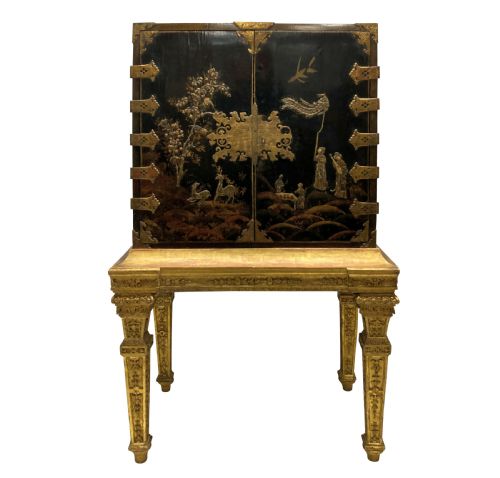
- A raised storage format where the main enclosed cupboard sits upon a separate supporting table or frame. This configuration elevates the decorative surface closer to eye level.
- Breakfront
- A furniture form where the central section projects forward from the flanking wings. This architectural arrangement adds depth and visual rhythm to larger bookcases and side cabinets.
- Bombe
- A swollen or outwardly curving furniture profile popular in continental designs. The undulating shape creates dynamic contours beneath the lacquered finish.
Chinoiserie Lacquer Cabinet: Frequently Asked Questions
What rooms suit a chinoiserie lacquer cabinet?
These cabinets serve as focal points in living rooms, dining spaces, or hallways, where their vibrant colours and detailed scenes draw the eye.
Compact variations like table cabinets fit neatly onto sideboards or desks, while taller display cases and wedding cupboards require wall space to stand alone.
How do red and black lacquer differ?
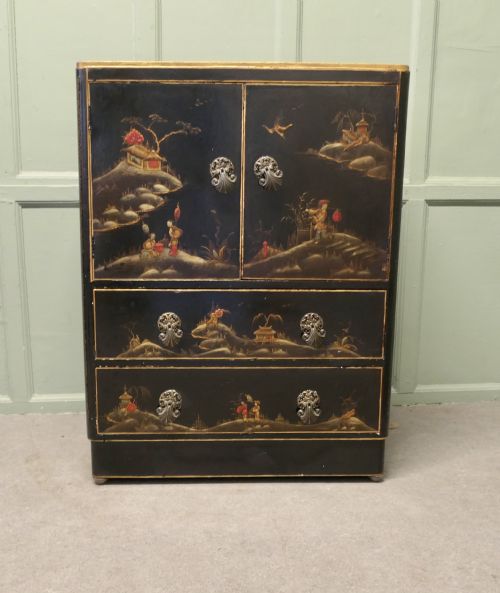
Black lacquer finishes typically evoke traditional japanned surfaces with gold leaf detailing, offering a dramatic yet formal presence within a room.
Red lacquer variations, often seen in marriage and wedding cabinets, introduce vivid warmth and bold chromatic energy to an interior scheme.
Where were these cabinets made?
Production spans both European workshops interpreting Asian styles and authentic Chinese export pieces created for Western markets.
British and French makers frequently produced revival pieces during the Victorian, Edwardian, and Art Deco periods, drawing on centuries-old decorative traditions.
How do you style a lacquer cabinet?
Allow the painted scenes and metallic highlights to stand out by keeping surrounding walls and decor relatively neutral.
Display cabinets with glass doors benefit from minimal interior placement to showcase collectibles without obscuring the decorated background.