


Chinoiserie Desk Light
A chinoiserie desk light brings hand-painted lacquer, porcelain and bronze into a workspace, offering warm illumination alongside centuries of decorative tradition.
Chinoiserie Desk Light
A chinoiserie desk light encompasses table lamps and converted vessels that display European interpretations or Asian imports of decorative motifs. These pieces serve to illuminate reading and writing surfaces while introducing historical pattern and colour to a room.
The versions most commonly found here originate from the nineteenth and early twentieth centuries, spanning Edwardian, Regency and 1920s aesthetics. Makers utilised existing vases, tea canisters and ginger jars alongside purpose-made wooden bases to construct these functional objects.
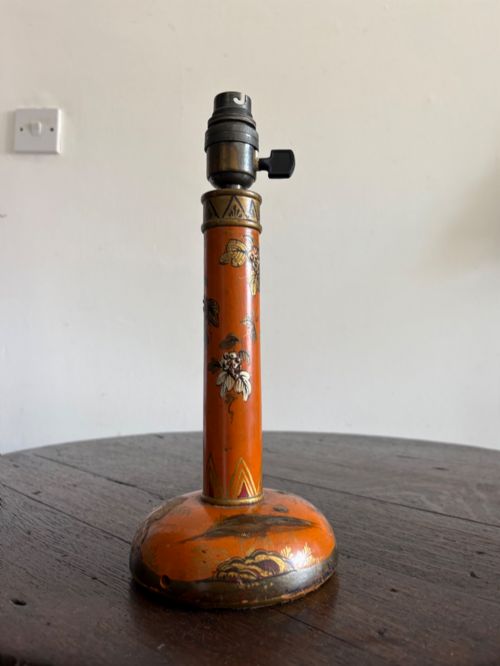
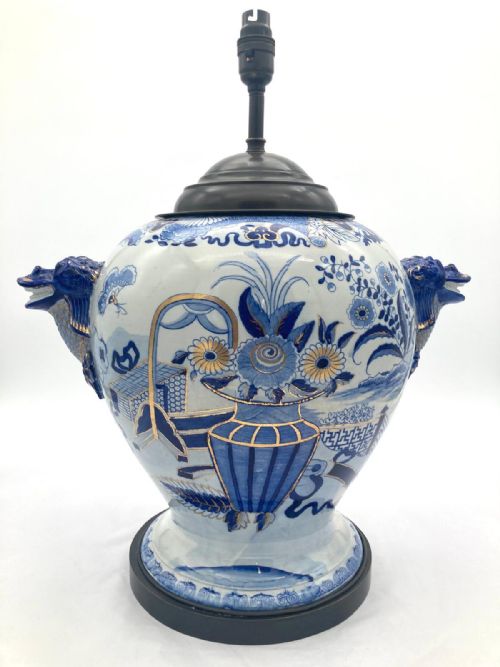
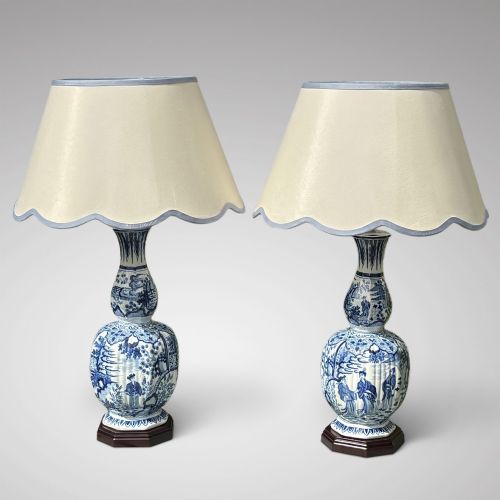
Vessels of ceramic, cloisonné and lacquered wood dominate the selection, often paired with handmade fabric shades. Buyers encounter everything from small mandarin orange lacquer cylinders to substantial porcelain ginger jars adapted for modern electrical use.
Materials and construction
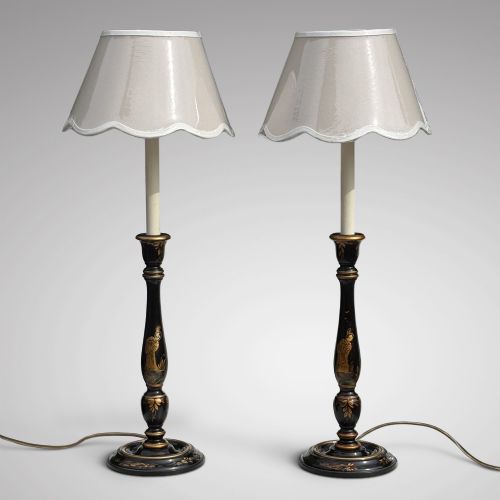
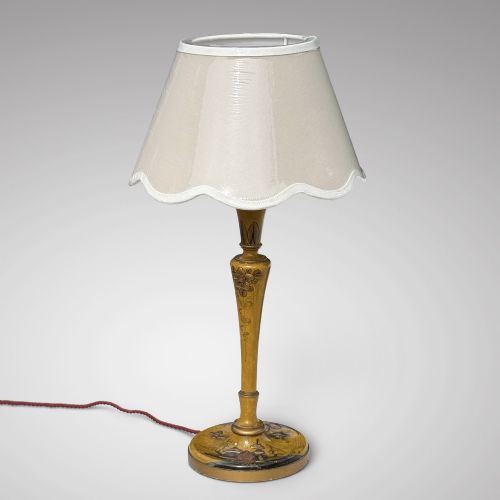
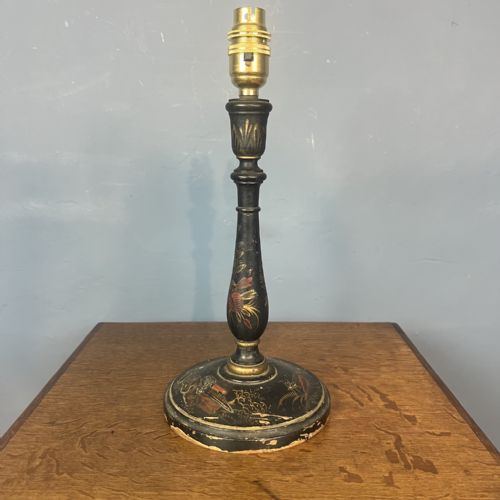
Lacquered wood and japanned finishes form the basis of many pieces, applied in layers to create smooth black, ochre or patterned surfaces. Artisans painted these grounds by hand with figures, landscapes and floral motifs in gilt or contrasting pigments.
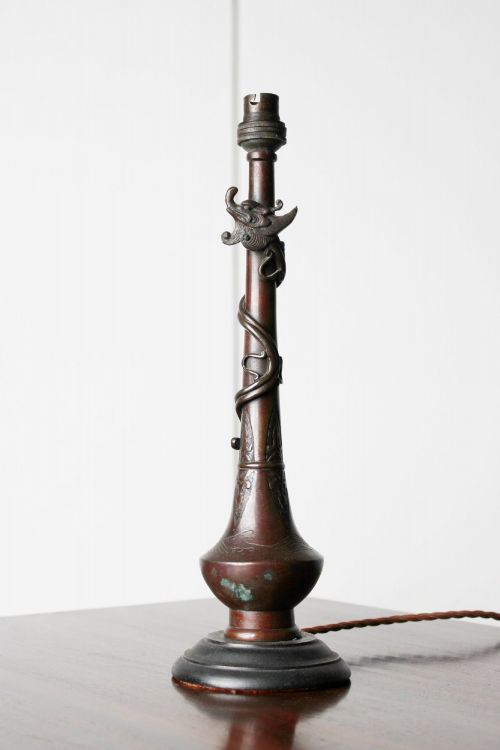
Ceramic components rely on porcelain, ironstone and delftware bodies shaped into vases or jars, sometimes mounted on gilt bronze, ormolu or pressed brass bases. Metal elements undergo patination or gilding to complement the Asian motifs of the main body.
Materials across these listings include lacquered wood, porcelain, bronze, fabric, and silk, spanning the nineteenth and early twentieth centuries.
Assessing quality
The refinement of the hand-painted detail separates ordinary examples from superior ones. Crisp brushwork on lacquer and delicate line work on porcelain indicate skilled execution by the artist.
The quality of the mountings and the integrity of the conversion matter significantly. Heavy cast bronze or ormolu mounts fitted securely to ceramic bodies demonstrate careful assembly rather than hurried adaptation.
The Chinoiserie Desk Light Glossary
- Famille Verte
- A palette of green enamels dominant in Chinese porcelain decoration, often combined with other colours during the Qing Dynasty.
- Cloisonné
- An enamel technique where metal wires form small compartments on a vessel body, filled with coloured paste before firing.
- Japanned
- European lacquering technique imitating East Asian finishes, popular in various periods for furniture and decorative items.
- Imari
- Japanese porcelain decorated in underglaze blue and overglaze red, gold and other colours, produced primarily for export.
- Ormolu
- Gilded bronze mounts applied to furniture, ceramics and lighting fixtures, common in French and English decorative arts.
Chinoiserie Desk Light: Frequently Asked Questions
How do I choose the right size lamp?
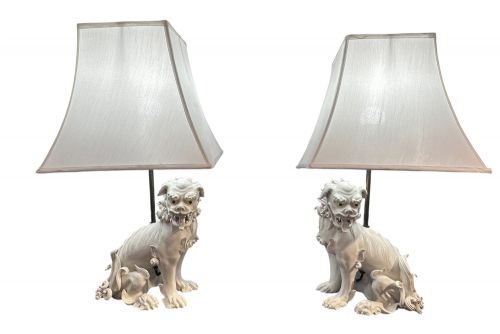
Consider the scale of your desk and the surrounding furniture before selecting a base. Taller porcelain figures or substantial ginger jar lamps require adequate surface area to balance their visual weight.
Ensure the height of the lamp allows light to spread comfortably across your workspace without glaring directly into your eyes.
Are these lamps newly rewired?
Many older lamps have been updated with modern electrical flex and fittings to meet current safety standards. It remains sensible to check individual listings for confirmation of recent rewiring.
Local electricians can readily update older brass or ceramic fittings if a piece retains its original historical wiring.
How do I clean lacquer and porcelain bases?
Dust lacquered wooden surfaces gently with a soft, dry cloth to protect the painted finish from abrasion. Avoid using harsh chemical sprays or damp cloths on antique lacquer.
Porcelain and cloisonné bodies tolerate careful wiping with a barely damp cloth, followed immediately by drying with a lint-free towel.
Can I replace the lampshade safely?
Replacing a shade is straightforward provided the fitter matches the existing bulb holder type, such as a bayonet or screw fitting. Many pieces are paired with handmade fabric shades designed to complement the colours of the base.
Ensure any new shade allows adequate clearance around the bulb and does not exceed recommended wattage limits for vintage fittings.