



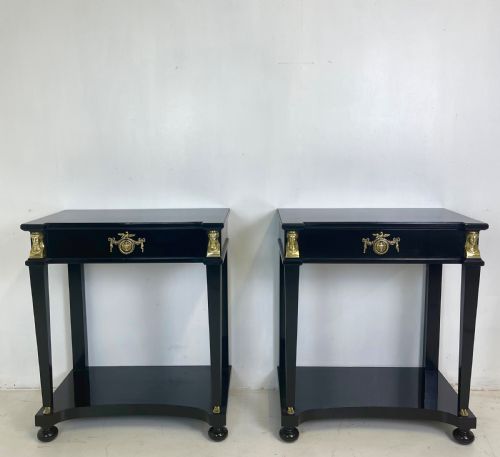

Gold Black Bedside Lamp
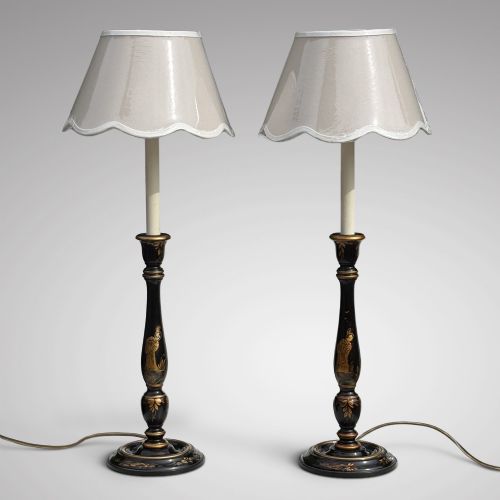
A gold black bedside lamp brings dark painted surfaces and gilded highlights right to your night table.
Gold Black Bedside Lamp
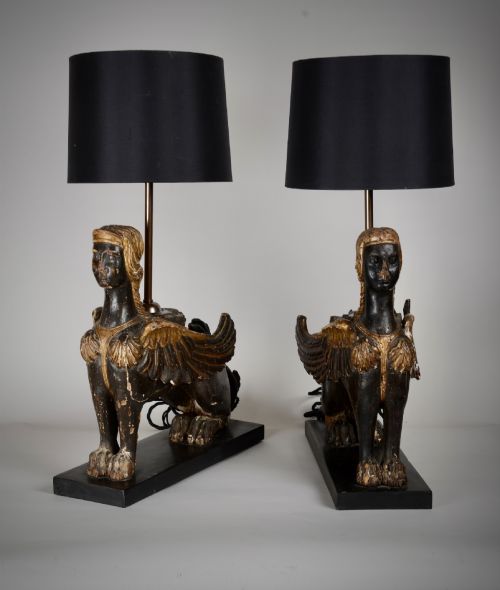
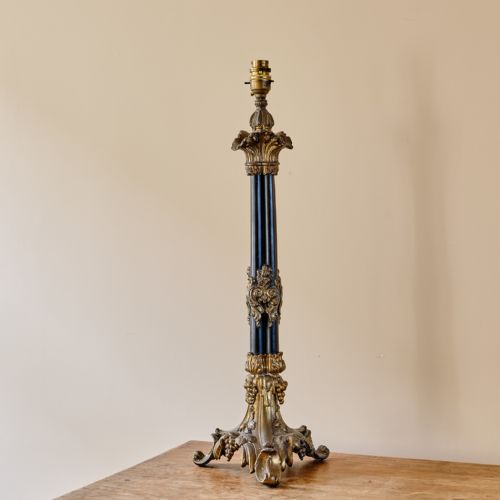
When you search for a gold black bedside lamp, you encounter table lamps and conversion pieces shaped by Chinoiserie, Empire, and Neoclassical styles. The selection spans centuries from the eighteenth century through the Victorian era to the nineteen-twenties and nineteen-thirties.
Lacquer, ebonised wood, and painted metal dominate the forms you meet on this page. These dark finishes provide a strong contrast to parcel gilt and solid brass highlights.
Many examples begin life as tea canisters, vases, or architectural figures before conversion into lamps. Pairs appear alongside single tall lights, offering distinct options for a bedroom scheme.
Materials and construction methods
Craftsmen utilised wood, brass, and fabric, applying lacquer and paint to create rich dark surfaces. Carved wood supports receive parcel gilt treatment, catching the light against ebonised bodies.
Metalwork takes the form of cast brass or painted toleware, shaped into classical empire profiles and sphinx figures. Artisans built these pieces by hand, adapting utilitarian vessels and furniture elements for electrical use.
Gold Black Bedside Lamp Retail Price Guide 2026
Typical asking prices for gold black bedside lamp among the pieces listed under this phrase on Sellingantiques today, from the lower quarter to the upper quarter. They describe what is for sale here now, not the wider market.
Listings feature pieces spanning the eighteenth century through to the nineteen-thirties, using brass, lacquer, and carved wood.
Assessing quality in dark and gilt lighting
The standard of finish separates basic painted items from superior examples with deep lacquering and hand-applied parcel gilt. Hand-painted decorative motifs show varying degrees of skill and detail across different makers.
The integrity of the conversion work dictates how well an older object functions as a lamp. Original nineteenth-century materials and period brass components hold more interest than later adaptations.
The Gold Black Bedside Lamp Glossary
- Parcel Gilt
- Partial gilding applied to specific areas of a carved wood or metal surface. This technique highlights raised details against a darker background.
- Chinoiserie
- European decorative style interpreting Chinese artistic traditions. It frequently employs black lacquer and gold painted scenes.
- Toleware
- Enamelled or lacquered metalware, typically iron or tin. It often appears in black finishes suitable for desk and table lighting.
- Ebonised Wood
- Timber treated to resemble ebony, usually through staining and polishing. It offers a deep black finish popular in nineteenth-century design.
- Empire Style
- Neoclassical design movement drawing inspiration from ancient Rome. It favours bold architectural forms and contrasting metallic details.
Gold Black Bedside Lamp: Frequently Asked Questions
What is a gold black bedside lamp?
These pieces combine dark lacquered or painted finishes with gilt decoration, taking the form of converted vessels, urns, and classical columns.
They serve as functional reading lights while adding strong decorative contrast to a bedroom interior.
How do I style a black and gold lamp?
Place them on timber side tables or bedside chests where the dark finish can anchor the arrangement.
Pair them with neutral or textured fabrics to let the metallic highlights stand out against the dark body.
Are these lamps period conversions?
Many listings feature older objects, such as tea canisters or vases, that have been converted into functional table lamps.
This practice preserves historical items by giving them a new purpose in modern interiors.
What materials are used?
Construction relies on wood, brass, and toleware, finished with hand-painted details and black lacquer.
Surfaces often feature parcel gilt accents applied over carved or turned forms.
How do I date these lamps?
Dating depends on stylistic markers from periods like the Regency, Victorian era, or early twentieth-century revival movements.
Examination of the base materials, wiring channels, and manufacturing techniques helps determine the age.