



Chinoiserie Carved Mirror
A chinoiserie carved mirror brings fantasy landscapes, pagodas and birds into a room through elaborate wood frames and gilt surfaces.
Chinoiserie Carved Mirror
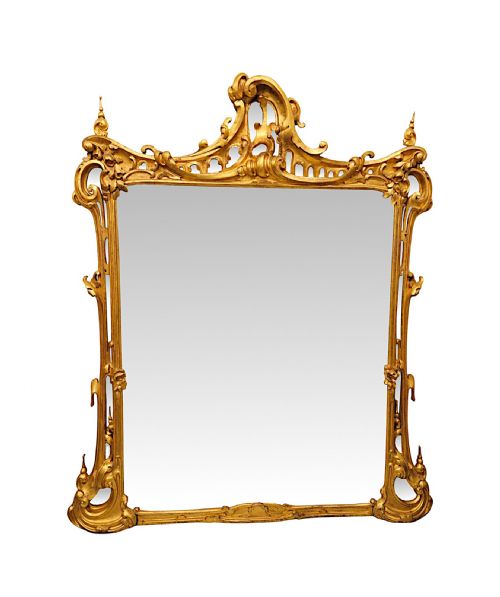
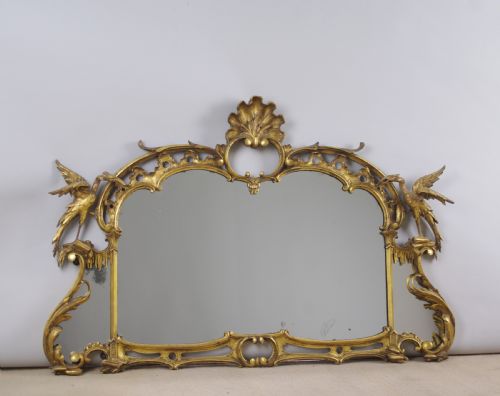
A chinoiserie carved mirror takes the form of wall mirrors and substantial overmantel mirrors designed to dominate a room. These pieces appear most frequently in 19th Century and early 20th Century examples, often drawing on Chinese Chippendale and Rococo Revival idioms.
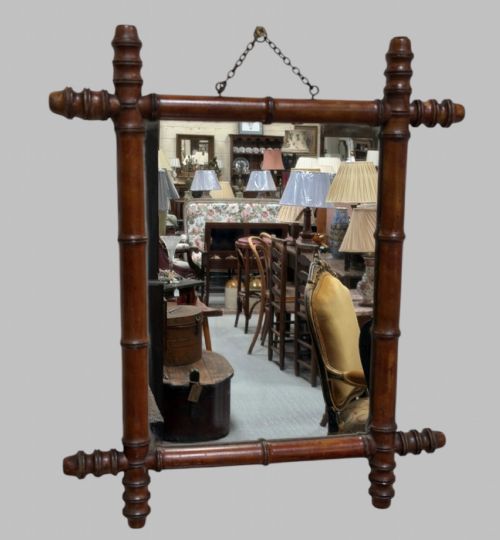
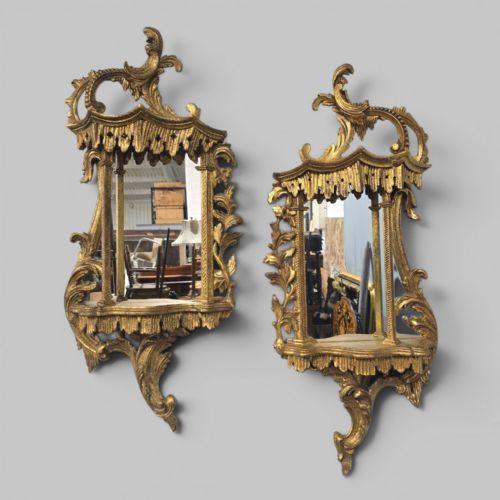
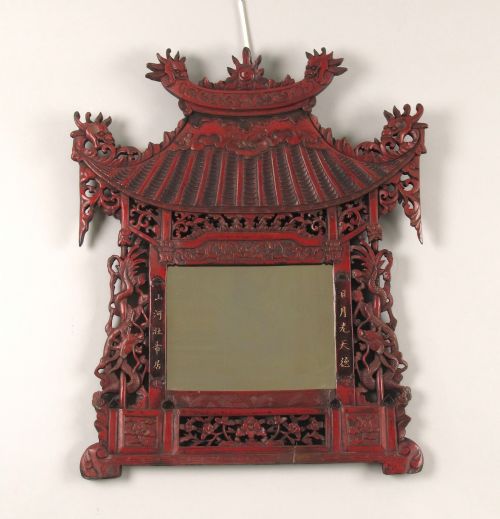
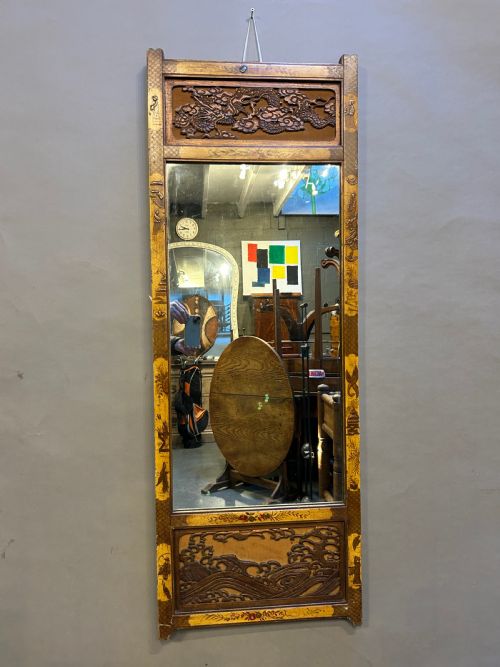
The buyer meets various interpretations on this page, ranging from red lacquer pagoda frames to giltwood carvings populated by Ho-ho birds. Faux bamboo variations also surface alongside Oriental carved wooden wall mirrors.
Origins stretch from English Chinese Chippendale interpretations to French interpretations involving faux bamboo and Japonisme. Overmantel mirrors provide scale, while pier wall mirrors and smaller wall hung pieces suit tighter spaces.
What separates the grades
Depth and crispness of the wood carving distinguish superior examples from plain ones, particularly where pagodas, birds and foliage intertwine. The finesse of the gilding or the smoothness of the lacquer finish dictates the visual presence of the object.
Scale and proportion govern the architectural success of an overmantel mirror within a room. The complexity of the pediment design, such as elaborate pagoda tops or paired figures, marks the ambition of the maker.
Keep an eye out for whimsical Ho-ho birds perched atop the frames, watching over the room with mythical indifference.
Gabriel Viardot
The Chinoiserie Carved Mirror Glossary
- Chinoiserie
- European artistic style reflecting Chinese motifs and decorative tropes. It appears heavily in 18th-century revivals and later Victorian interpretations.
- Giltwood
- Timber coated with thin gold leaf or metallic gilt powder over a prepared gesso ground. This finish provides a bright reflective surface that ages with a warm patina.
- Overmantel
- A large mirror designed specifically to hang above a fireplace mantelpiece. These pieces often feature wide proportions to match the hearth below.
- Pagoda
- Tiered tower structure originating in East Asian architecture. It frequently caps the pediment of Chinese Chippendale mirrors.
- Faux bamboo
- Wood turned or carved to imitate natural bamboo stalks. This technique gained popularity during the 19th century under Asian design influences.
Chinoiserie Carved Mirror: Frequently Asked Questions
Where should I hang an overmantel mirror?
An overmantel mirror belongs above a fireplace mantelpiece where its large scale anchors the room.
Ensure the wall fixings can support the substantial weight of carved wood and glass.
What is Chinese Chippendale style?
Chinese Chippendale combines English 18th-century cabinetmaking with Chinese architectural motifs like frets and pagodas.
Later 19th and 20th-century makers revived this aesthetic for grand reception rooms.
Are these mirrors heavy?
Carved wood and thick glass make these overmantel and wall mirrors considerably heavy.
Professional installation into solid masonry or secured studs is essential for safety.