

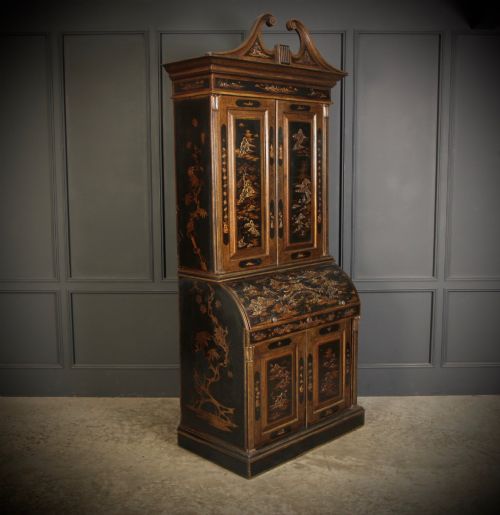


Chinoiserie Bureau
A chinoiserie bureau brings together European cabinet-making and hand-painted decorative motifs, offering a striking workspace.
Chinoiserie Bureau
When you search for a chinoiserie bureau, you are looking at writing furniture decorated with Asian-inspired motifs and raised ornamentation. These pieces range from compact sloping writing desks to large, towering bureau bookcases fitted with multiple internal drawers and pigeonholes.
The versions you are most likely to meet on this page span several distinct periods, including pieces from the eighteenth century, the nineteenth century, and later Edwardian interpretations. Styles vary from Queen Anne and French Rococo to Chinese Chippendale and later bamboo hybrids, reflecting changing European tastes for exotic design over three centuries.
Forms include standard writing bureaux, dressing mirrors with miniature bureau bases, and grand desk cabinets with pagoda tops. Each piece combines a practical writing surface with elaborate decorative schemes that served as status symbols in period interiors.
Materials and construction
Makers built these pieces using wood substrates such as pine and mahogany, which provided a stable foundation for decorative surface treatments. Skilled artisans applied layers of lacquer to create smooth, dark panels that imitated imported East Asian screens.
Decoration relied heavily on gold leaf and gilt work to build up raised pictorial scenes of figures, pavilions, and landscapes. Brass hardware, including drop handles and escutcheons, was fitted to drawers and drop-fronts to complete the construction.
Chinoiserie Bureau Retail Price Guide 2026
Typical asking prices for chinoiserie bureau among the pieces listed under this phrase on Sellingantiques today, from the lower quarter to the upper quarter. They describe what is for sale here now, not the wider market.
The listings span multiple centuries, incorporating eighteenth-century Georgian and Queen Anne examples alongside nineteenth-century pieces and early twentieth-century designs.
Judging quality and craftsmanship
The distinction between ordinary and exceptional pieces lies in the depth and execution of the lacquerwork and gilding. Finer examples feature intricate, multi-layered pictorial scenes with hand-tooled details that retain their clarity and relief over centuries.
Structural integrity also separates the range, visible in the precision of the joinery on interior pigeonholes, secret compartments, and heavy bureau fall-fronts. Superior pieces maintain smooth mechanical movement in their drawers and structural stability in their supporting stands.
The Chinoiserie Bureau Glossary
- Chinoiserie
- The European imitation and interpretation of Chinese and East Asian artistic traditions, particularly in decorative arts and furniture. This style dominated various periods of British design.
- Bureau bookcase
- A combination furniture form featuring a sloping-front desk compartment below a tall bookcase or shelving unit with doors. These dual-purpose pieces provided space for both writing and library storage.
- Japanning
- A European technique of finishing furniture with heavy layers of varnish and lacquer to simulate Asian lacquerware. It frequently employed black or red grounds decorated with raised gold figures.
- Escritoire
- A writing cabinet or desk fitted with drawers and pigeonholes behind a drop-front writing flap. Examples range from standard table forms to tall cabinets with pagoda tops.
- Kneehole desk
- A compact desk featuring a central recessed space for the user's knees, flanked by pedestals of small drawers. This form appeared during the early eighteenth century.
Chinoiserie Bureau: Frequently Asked Questions
What is a chinoiserie bureau?
A chinoiserie bureau is a writing desk featuring a sloping fall-front that opens to reveal internal compartments, finished with decorative Asian-inspired lacquer and gilding. These pieces were designed to provide a private writing surface while displaying fashionable exotic artistry.
They evolved from simple desks into complex cabinet pieces incorporating bookshelves, mirrors, and drawers. The exterior surfaces typically display painted scenes of figures, landscapes, and pavilions rendered in gold upon dark lacquer grounds.
How do I date an antique bureau?
Dating relies on examining the construction methods, timber choices, and specific decorative style of the piece. Eighteenth-century pieces often feature solid timber carcases and hand-cut dovetails, while nineteenth-century and Edwardian examples show different handling of lacquer and hardware.
Stylistic markers also help determine age, as Queen Anne and Georgian pieces display distinct architectural proportions compared to later Victorian revivals or bamboo hybrids. Looking at the secondary woods inside the drawers provides further clues to the period of manufacture.
Were these desks used for writing?
Yes, the primary function of these pieces was correspondence, record keeping, and the storage of writing implements and stationery. The drop-front flap folds down to create a flat writing surface at a comfortable height for sitting.
Inside the desk section, numerous small drawers and pigeonholes kept letters, documents, and inkwells organised. Some sophisticated variants included secret compartments for storing valuables and sensitive papers.
How do I care for lacquer furniture?
Lacquer and gilt surfaces require a stable indoor environment away from direct sunlight and extreme humidity changes. Dusting should be done gently with a soft, dry cloth to avoid scratching the delicate surface.
Polishes containing harsh chemicals or silicone should be avoided, as they can damage the historic finish. Maintaining consistent room temperatures prevents the wood beneath the lacquer from expanding and causing the finish to crack.