







Chinoiserie Accent Lamp
A chinoiserie accent lamp brings rich painted decoration and lacquered surfaces into a room, offering warm illumination alongside decorative depth.
Chinoiserie Accent Lamp
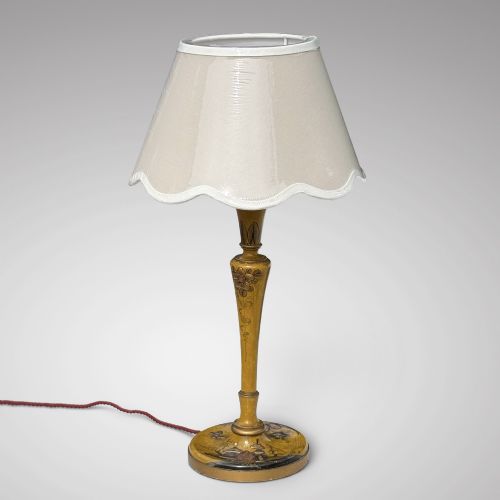
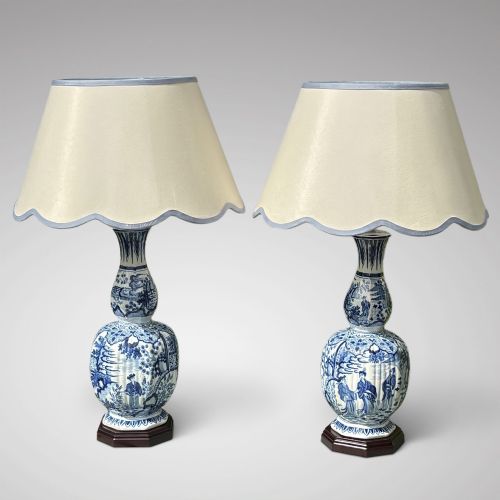
When you search for a chinoiserie accent lamp, you encounter table lamps built from ceramic vessels, painted toleware, or carved root wood. These pieces span from the nineteenth century through the 1930s, often drawing on earlier Chinese Qing Dynasty or French Rococo revival aesthetics.
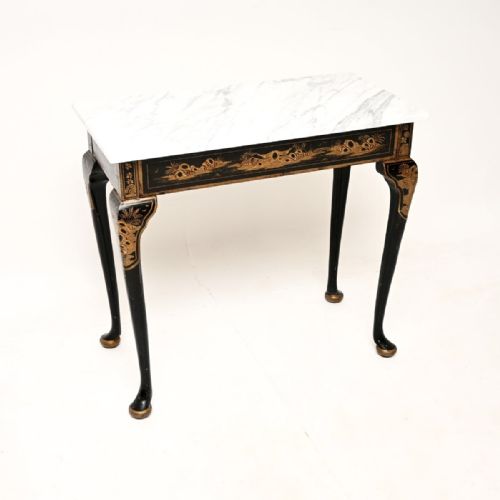
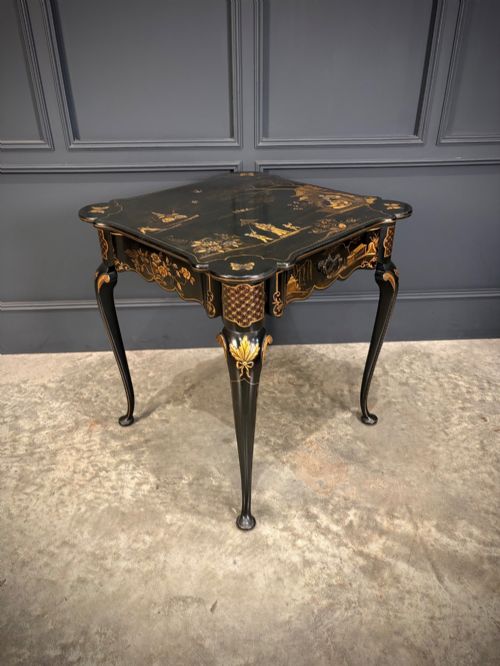
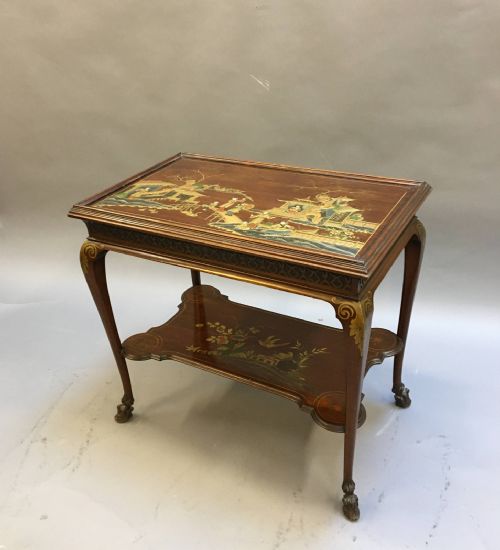
The most common versions on this page are hand-painted ceramic and lacquered lamp bases, alongside converted vases. Alongside dedicated table lamps, the selection includes related occasional and side tables that share the same lacquered and decorated vocabulary.
Many examples arrive paired as sets, particularly those utilising porcelain elements or matching brass bases. They function effectively on side tables or desks, providing focused light while introducing saturated colour such as red, ochre, or mandarin orange.
Materials and construction
Makers built these pieces using wood, brass, gilt bronze, and ceramics, often applying layers of lacquer in black, green, or red. Surface decoration frequently incorporates gold leaf and hand-painted motifs executed directly onto the lacquered ground or porcelain body.
Structural elements involve turned wood, bamboo, and carved root wood for lamp bases and tables. Metal components rely on cast brass and gilt bronze to support ceramic bodies and provide stable mounting for electrical fittings.
Chinoiserie Accent Lamp Retail Price Guide 2026
Typical asking prices for chinoiserie accent lamp among the pieces listed under this phrase on Sellingantiques today, from the lower quarter to the upper quarter. They describe what is for sale here now, not the wider market.
Object forms include table lamps alongside occasional, side, wine, and lamp tables decorated in the chinoiserie style.
Judging the work
Quality rests upon the execution of the hand-painted decoration and the depth of the lacquer finish. Superior examples display precise brushwork and well-preserved gilt leaf, whereas simpler pieces show coarser application.
The choice of base materials also distinguishes the range, with heavy cast brass, French porcelain, and substantial carved wood sitting above simpler constructions. Preservation of the original surface coat without extensive later repainting determines the desirability of the piece.
The Chinoiserie Accent Lamp Glossary
- Chinoiserie
- European decorative style reflecting Chinese artistic influences, prominent in furniture and lamp design. It employs motifs like figures, landscapes, and pavilions rendered in lacquer and paint.
- Lacquer
- A durable resin finish applied in multiple layers and polished to a hard sheen. It forms the smooth black, red, or green grounds characteristic of these pieces.
- Toleware
- Painted and japanned sheet metal objects converted into lighting or decorative items. These surfaces often feature gold decoration over dark lacquer.
- Cloisonne
- Enamelwork technique where thin metal wires form raised cells on a vessel surface to hold coloured pastes. These vessels frequently serve as the body for converted lamps.
- Japanned
- European imitation of East Asian lacquering techniques utilising varnishes and heat-cured finishes. It appears frequently on the occasional tables and lamp stands listed here.
Chinoiserie Accent Lamp: Frequently Asked Questions
How do I date a chinoiserie lamp?
Dating relies on examining the materials of the base, the wiring style, and the wear on the lacquer. Nineteenth-century examples often use heavy porcelain or carved wood, while 1920s and 1930s pieces commonly feature toleware or brighter painted ceramics.
Changes in manufacturing methods and the type of brass fittings also help place an object within the Victorian, Edwardian, or interwar periods.
Are these lamps converted from old vases?
Many lamp bases originate as Chinese baluster vases, cloisonne vessels, or porcelain jars fitted later with electrical hardware. This practice of conversion was common throughout the nineteenth and early twentieth centuries.
Inspect the mounting at the top and base to see how the ceramic or metal vessel was adapted for wiring without damaging the original body.
How do I clean a lacquered lamp?
Dust the surface gently with a soft, dry microfiber cloth to remove everyday particles. Avoid using liquid cleaners, solvents, or abrasive polishes that can lift the delicate lacquer or gold leaf.
Keep these pieces out of direct sunlight to prevent the coloured lacquer from fading or cracking over time.
What is the difference between sheraton and rococo revival chinoiserie?
Sheraton period pieces from the late eighteenth century favour straight lines, classical proportions, and restrained japanned decoration. French Rococo revival styles embrace asymmetrical curves, elaborate gilt bronze mounts, and exuberant painted scenes.
Recognising these structural shapes helps separate English neoclassical furniture forms from continental decorative lighting.