






Chinese Wooden Chest
A Chinese wooden chest offers robust storage and rich texture, bringing centuries of craftsmanship and aromatic camphor wood into a room.
Chinese Wooden Chest
A Chinese wooden chest serves as a practical storage vessel and a decorative focal point, drawing on traditions of travel and domestic organisation. Buyers exploring this category encounter storage trunks, blanket boxes, and smaller caskets designed to secure textiles and valuables.
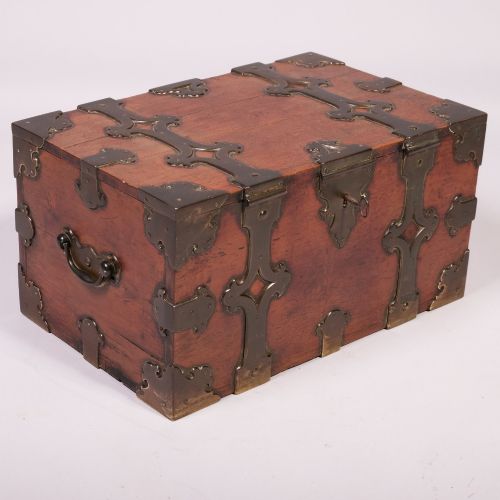
The pieces on this page span several centuries, with the nineteenth century heavily represented alongside earlier eighteenth-century examples and twentieth-century interpretations. Forms range from heavy campaign chests of drawers to intricately carved camphor wood trunks and lacquered coffars.
Origins vary from domestic Chinese workshops to export pieces tailored for Western markets, including Anglo-Chinese and Chinoiserie styles. Buyers are most likely to meet substantial camphor wood trunks intended for protecting garments from insects.
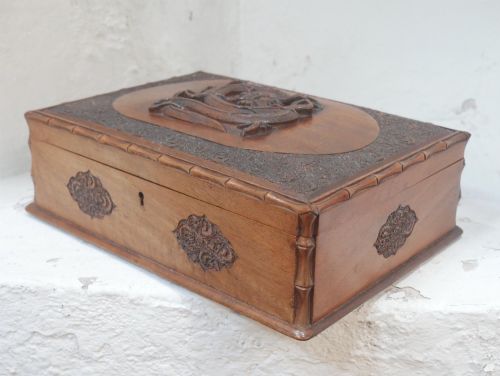
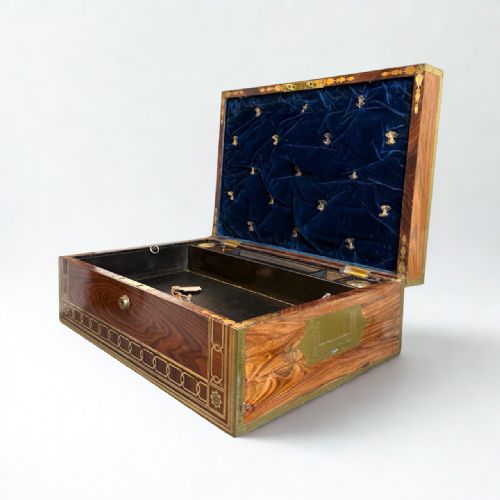
Beyond large blanket boxes, the selection includes tea caddies, writing boxes, and side cabinets incorporating traditional joinery. Each object reflects the utilitarian needs of its original owner combined with regional decorative arts.
Materials and construction
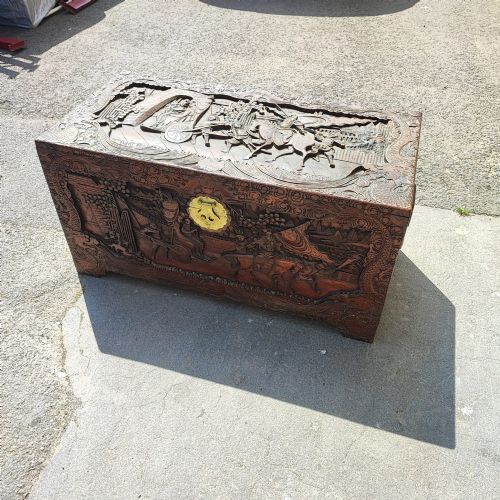
Camphor wood dominates the construction of these trunks, prized for its distinct fragrance and natural insect-repellent properties. Artisans also utilised dense hardwoods such as elm, rosewood, and huanghuali to build durable frames capable of withstanding long journeys.
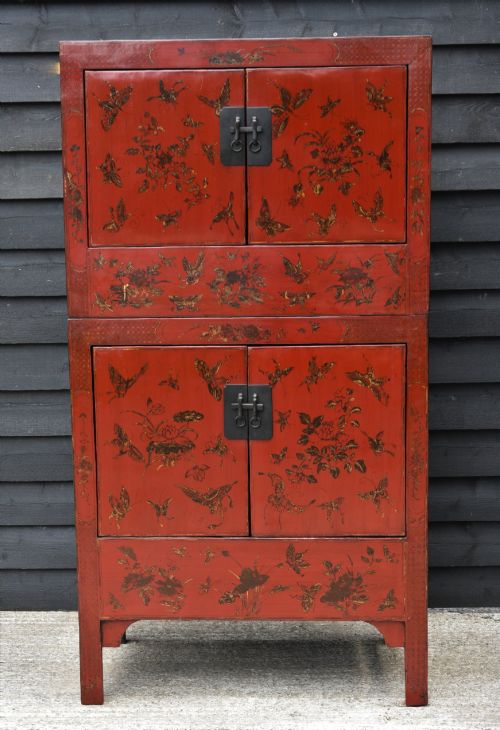
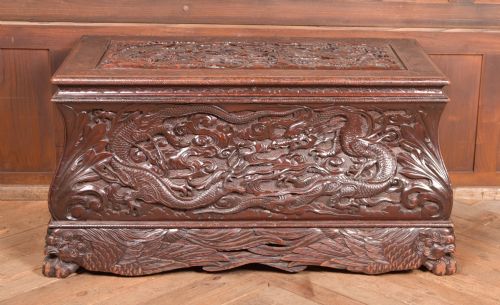
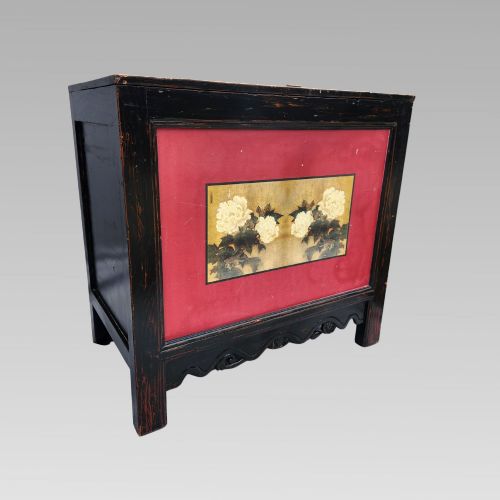
Surface decoration relies heavily on hand-carved low relief depicting dragons, floral motifs, and landscapes directly into the timber. Alternatively, surfaces receive multiple coats of black or red lacquer, sometimes enhanced with gold leaf, mother of pearl inlay, or painted Chinoiserie scenes.
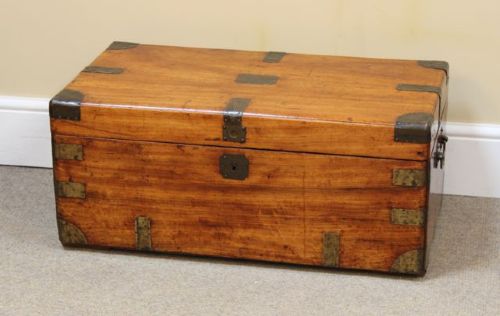
Metal hardware plays an essential structural and aesthetic role, utilising brass mountings, corner straps, and substantial locking plates. These metal elements secure the box joints and reinforce the corners for transit by sea or land.
Chinese Wooden Chest Retail Price Guide 2026
Typical asking prices for chinese wooden chest among the pieces listed under this phrase on Sellingantiques today, from the lower quarter to the upper quarter. They describe what is for sale here now, not the wider market.
Listings in this category span multiple centuries, ranging from eighteenth-century hardwood coffers to twentieth-century carved camphor wood trunks.
Distinctions in quality
The depth and crispness of the hand-carving separate standard utility boxes from superior pieces, where intricate details remain sharp and well-defined. Wood selection also dictates grade, with dense, well-figured hardwoods and aromatic camphor commanding greater appreciation than plain timber.
The integrity of the original finish, whether clear-sealed wood or layered lacquer with gold leaf, influences the character of the object. Pieces retaining their original brass mountings and functional locks demonstrate a higher degree of preservation.
Joinery technique defines structural excellence, with tight dovetail or mortise and tenon joints ensuring the chest remains square over generations. Cabinets and chests that maintain their original hardware without modern replacements sit at the upper end of the scale.
The Chinese Wooden Chest Glossary
- Camphor wood
- An aromatic timber native to Asia, traditionally utilised for storage chests because its natural oils deter moths and dampness. It often displays a distinct pale grain that darkens gracefully with age.
- Chinoiserie
- A European decorative style influenced by Chinese artistic traditions, frequently featuring painted or lacquered motifs of figures, landscapes, and pagodas. It appears on various cabinets and storage chests from the eighteenth century onward.
- Coffer
- A large box or chest traditionally used for holding valuables, textiles, or documents. These sturdy containers often feature reinforced corners and heavy lids.
- Campaign chest
- A modular piece of furniture designed to dismantle or fold for easy transport by military officers on campaigns. These chests typically incorporate brass flush handles and reinforced brass corners.
- Tea caddy
- A small ornamental box designed for storing dry tea leaves securely. Examples from this tradition often include internal compartments and fine decorative surfaces.
Chinese Wooden Chest: Frequently Asked Questions
How do I care for a camphor wood chest?
Keep the wood away from direct heat sources and strong sunlight to prevent the timber from drying out or splitting. Dust gently with a soft cloth and avoid harsh chemical polishes that might damage the natural finish.
The aromatic qualities of the wood can be gently refreshed by lightly sanding the interior with fine sandpaper if the scent fades over decades. Ensure the room maintains stable humidity levels to protect the traditional joinery.
Were these chests made for travel?
Many of these trunks and chests were built specifically for maritime trade and long-distance travel. Robust construction methods, heavy brass mountings, and durable timbers allowed them to endure arduous sea voyages.
Export pieces were frequently commissioned by foreign merchants and travellers visiting Chinese ports. Their sturdy build made them practical for shipping personal belongings back to Europe.
How can I tell the age of a Chinese wooden chest?
Dating relies on examining the construction techniques, tool marks, wear patterns, and the style of the brass hardware. Eighteenth-century examples often display different joinery nuances compared to early twentieth-century production.
Changes in lacquer composition and the specific motifs used in carved panels also help place a piece within a particular era. Comparing the hardware style to documented pieces provides further chronological context.