

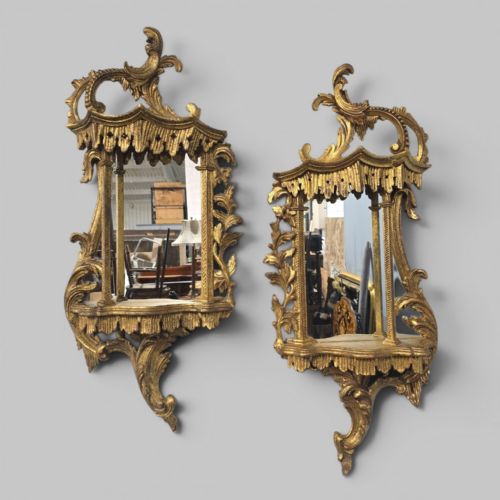
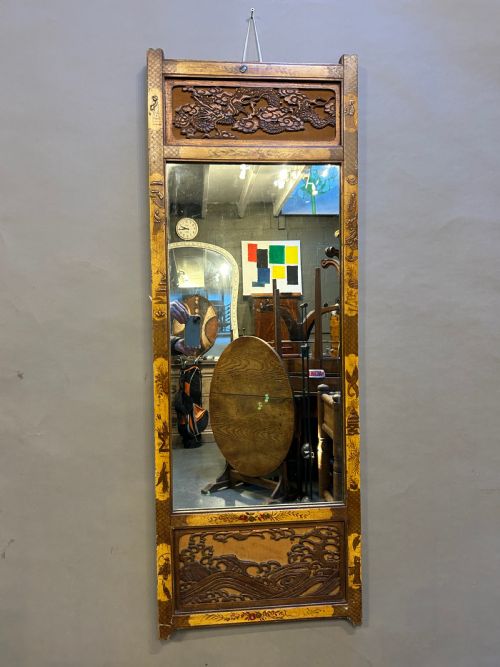


Chinese Style Mirror
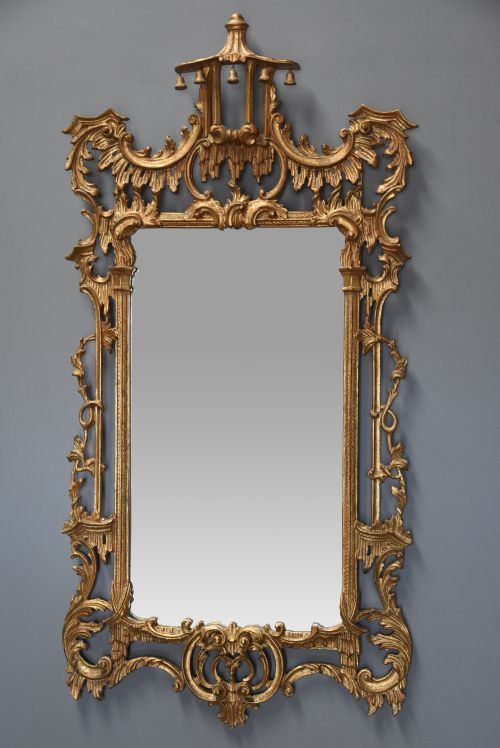
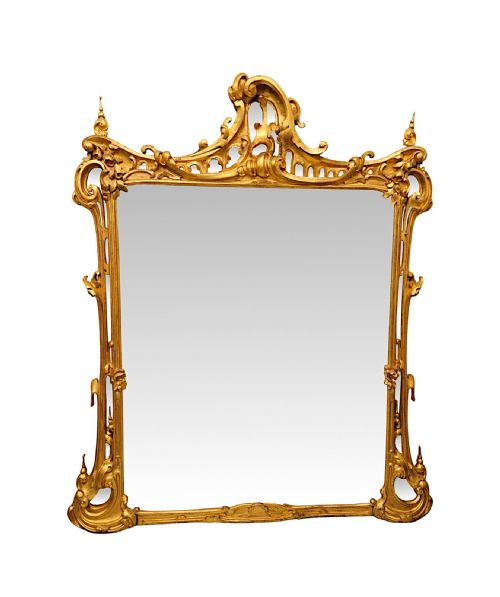
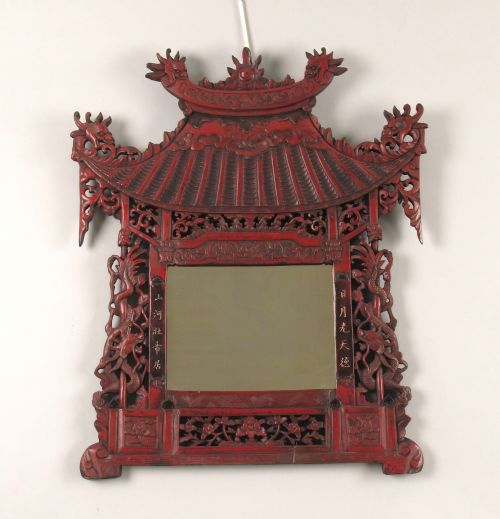
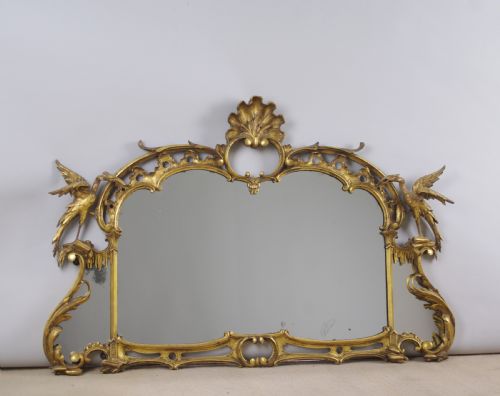
These chinese style mirror pieces bring together 19th century giltwood and carved lacquer forms that collectors prize for their distinct Chinoiserie character.
Chinese Style Mirror
When you search for a chinese style mirror, you enter a world of 19th century giltwood overmantels, 1920s wall mirrors, and red or black lacquer pagoda frames. These items capture the decorative ambition of historic Chinoiserie taste, offering striking focal points for a room.
On this page, you are most likely to meet Chinese Chippendale style carved giltwood wall mirrors alongside painted lacquer pieces from the Victorian era up to the mid-century. They range from large overmantel mirrors to oval wall glasses and console combinations.
The forms draw heavily on Qing Dynasty motifs, executed through British and European interpretations of oriental design. They suit traditional drawing rooms and eclectic modern interiors alike, bringing distinct silhouette and reflective depth.
How they were made
Makers shaped these frames primarily from wood and giltwood, applying detailed carving to create the characteristic pagoda tops, fretwork, and asymmetric motifs. Giltwood surfaces combine gold leaf laid over gesso and prepared timber grounds.
Chinese Style Mirror Retail Price Guide 2026
Typical asking prices for chinese style mirror among the pieces listed under this phrase on Sellingantiques today, from the lower quarter to the upper quarter. They describe what is for sale here now, not the wider market.
Pagoda roofs perched atop these mirrors let you house imaginary tiny emperors right above your mantelpiece.
What varies in quality
The crispness of the wood carving separates standard commercial pieces from the finest examples, particularly in the rendering of intricate fretwork and pagoda details. Deep, clean undercut carving demonstrates superior workshop skill compared to softer, more rounded mouldings.
The application and preservation of the giltwood or lacquer finish determine visual presence over time. Intact gold leaf with subtle burnishing or deep, stable lacquer layers command greater appreciation than worn or heavily retouched surfaces.
The Chinese Style Mirror Glossary
- Chinese Chippendale
- A decorative style combining English Rococo furniture forms with Chinese motifs such as pagodas, lattice work, and mandorlas. It dominated elite cabinetmaking in the eighteenth century and saw robust revivals.
- Chinoiserie
- European artistic style reflecting Chinese aesthetic influences, prominent in decorative arts, textiles, and architecture. It interprets oriental themes through Western perspectives.
- Giltwood
- Timber coated with gold leaf or powder over a prepared gesso base. It provides a luminous surface that catches ambient light.
- Lacquer
- A durable finish produced from resin or varnish applied in multiple thin coats to wood. It creates a lustrous, polished surface often associated with Asian decorative arts.
- Overmantel Mirror
- A large mirror designed to hang specifically above a fireplace mantelpiece. It typically reflects the width of the fireplace surround and anchors the room's decorative scheme.
Chinese Style Mirror: Frequently Asked Questions
What is a chinese style mirror?
A chinese style mirror is a decorative looking glass framed in carved giltwood, lacquer, or wood, reflecting Chinoiserie and Chinese Chippendale aesthetics.
These pieces use traditional motifs such as pagodas and fretwork, originating largely from the nineteenth and early twentieth centuries.
Where do I hang an overmantel mirror?
An overmantel mirror traditionally sits directly above a fireplace mantelpiece, serving as the central visual focus of the wall.
Its generous scale helps bounce light around the room and balances the physical weight of the fireplace below.
How do I tell periods apart?
Nineteenth-century examples often feature dense giltwood carving and heavy timber construction, while Victorian pieces show similar traditional craftsmanship.
Early twentieth-century items from the 1920s and 1930s sometimes introduce painted lacquer finishes and lighter proportions.
Are these mirrors fragile?
The carved wooden elements and giltwood surfaces require careful handling to prevent chipping or loss of the delicate fretwork.
Wall mounting must be secure due to the substantial weight of large timber and mirror glass assemblies.