



Chinese Relief Wood Carving
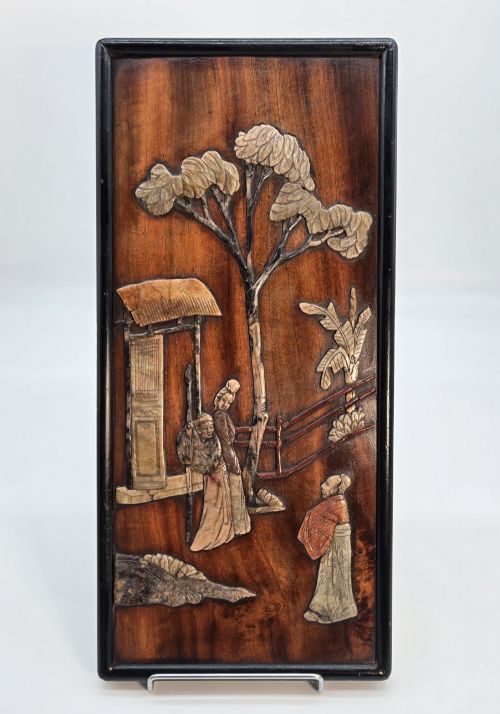
These Chinese relief wood carving pieces bring dense traditional craftsmanship into a room, offering deep pictorial scenes carved directly into hardwood, camphor wood and lacquer.
Chinese Relief Wood Carving
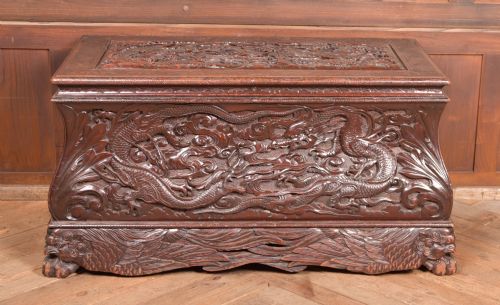
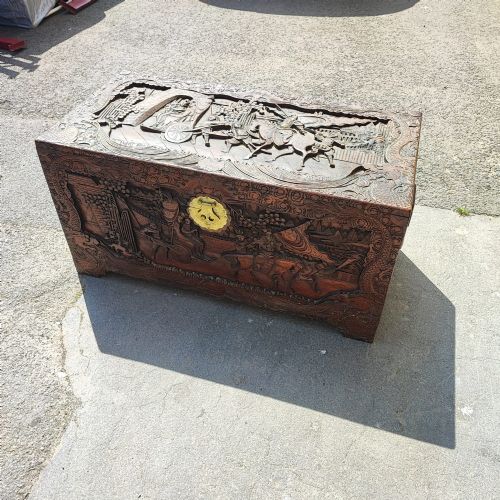
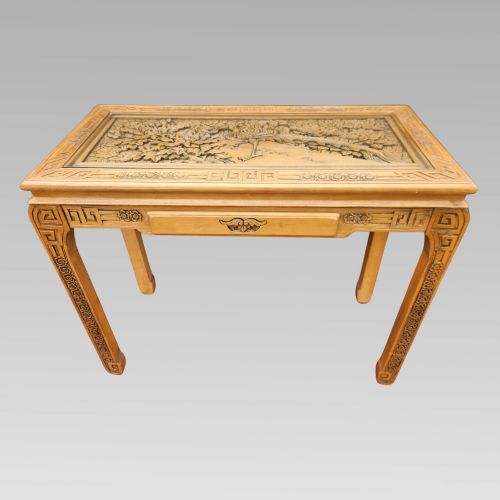
When searching for a Chinese relief wood carving, buyers encounter functional furniture and decorative panels spanning from the mid-nineteenth century through the early twentieth century. These items range from large storage chests and nests of tables to wall plaques and room dividers.
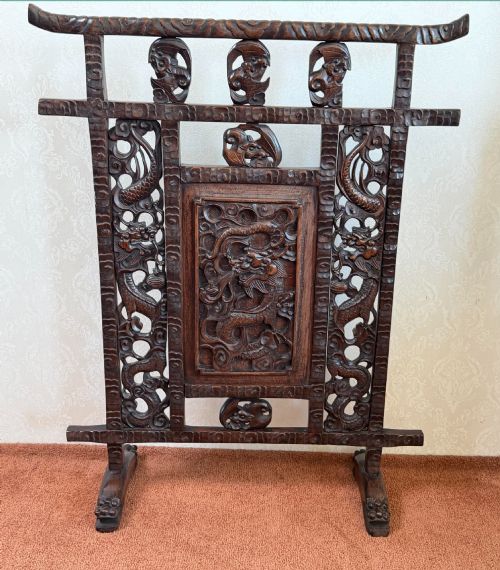
The most common forms on this page include camphor wood trunks, hardwood screens, and occasional tables featuring traditional oriental motifs. Such pieces served domestic storage and display purposes within both regional Chinese settings and export markets.
Materials and Construction
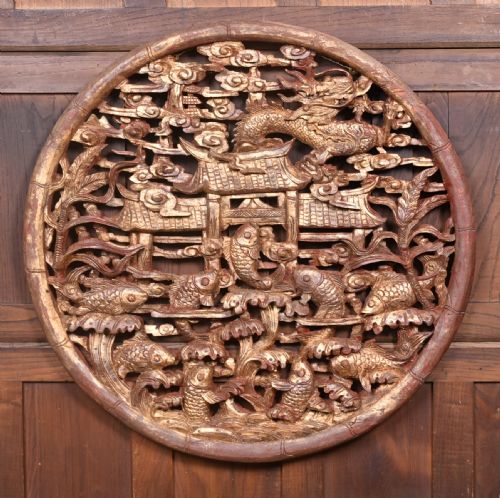
The objects rely heavily on dense timbers such as camphor wood, teak, elm, and hardwood, chosen for their stability and capacity to hold crisp, deep incisions. Artisans applied hand-carving techniques to shape panels, often combining high relief depth with pierced backgrounds to create layered pictorial narratives.
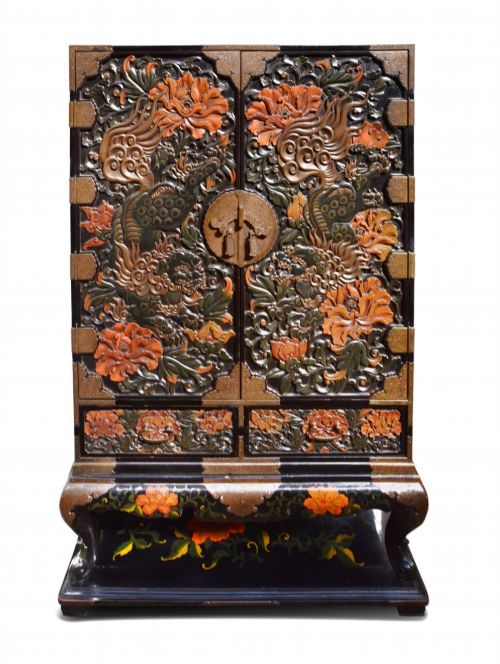
Surface treatments vary between natural wood finishes, applied lacquer, and occasional polychrome or gilt details. Joinery follows traditional methods suited to chests, cabinets, and folding screens without relying on modern metal fasteners.
Listings span multiple materials including brass, glass, lacquer, and various woods like teak and camphor wood.
Judging Quality and Depth
Quality rests upon the crispness of the chisel work and the depth of the relief relative to the panel thickness. Superior examples display sharply defined figures, balanced composition, and clean undercutting that creates true separation between foreground motifs and the background.
Material selection and structural integrity further separate standard items from finer works. Denser woods like zitan or selected hardwoods hold intricate detail better over time than softer alternatives, while well-preserved original lacquer or patinated wood surfaces retain greater visual coherence.
The Chinese Relief Wood Carving Glossary
- Relief carving
- A sculptural technique where figures and motifs project from a flat background panel. This method allows carvers to build complex multi-layered scenes.
- Camphor wood
- An aromatic timber frequently utilised for storage trunks and chests. Its natural scent helped protect contents from insects.
- Chinoiserie
- European interpretation and imitation of Chinese artistic traditions and motifs. It appears across various decorative furniture types.
- Nest of tables
- A set of graduated tables designed to slide underneath one another for compact storage. They frequently feature carved tops and legs.
- Zitan
- A dense, heavy hardwood prized in traditional Chinese furniture making. It accepts fine detail work and develops a deep patina.
Chinese Relief Wood Carving: Frequently Asked Questions
What are Chinese relief wood carving panels used for?
These panels functioned primarily as decorative wall hangings, architectural elements in temple or domestic interiors, or structural components within screens and cabinets.
Today, they are mounted on walls or displayed to introduce tactile texture and traditional narrative art into domestic interiors.
How do I care for camphor wood trunks?
Camphor wood requires stable indoor humidity away from direct heat sources to prevent timber movement or splitting. Dusting with a dry cloth maintains the surface without needing heavy chemical polishes.
Allowing the wood to breathe preserves the natural aroma that initially protected textiles stored inside.
Are these pieces from the Qing Dynasty?
Certain items originate from the late Qing period, while others date across the nineteenth and early twentieth centuries under Victorian or later manufacturing periods.
Examining the construction methods, timber choice, and carving style helps place an object within its specific decade or era.
What is the difference between export and domestic pieces?
Export pieces often catered to Western tastes through specific forms like nests of tables, card cases, or Anglo-Indian styles. Domestic pieces typically followed traditional regional Chinese furniture forms such as compound cabinets and altar tables.
Both categories share high standards of hand-carved relief work but serve different functional histories.