





Antique Chinese Wall Panels
Antique chinese wall panels bring tangible craft and texture to an interior, offering framed embroideries, carved wood and painted silks that span centuries.
Antique Chinese Wall Panels
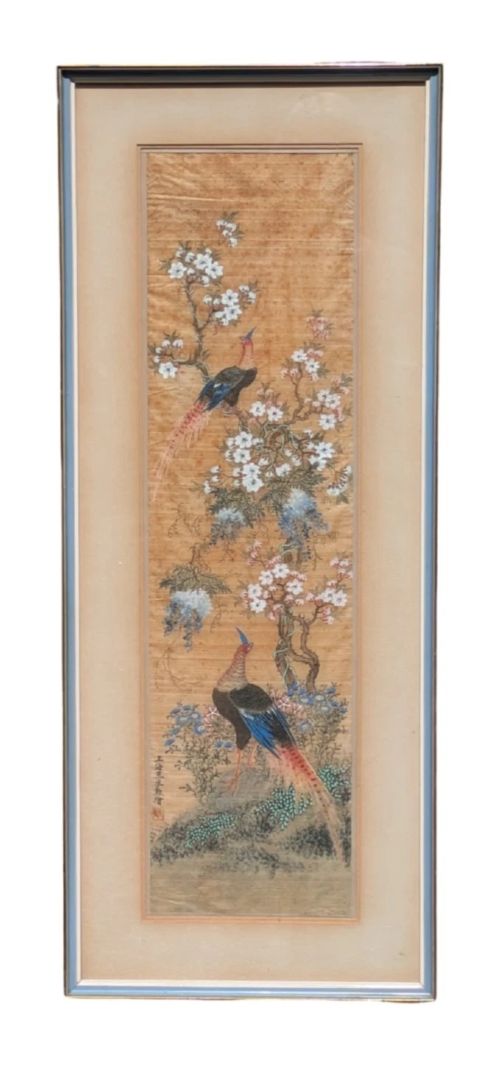
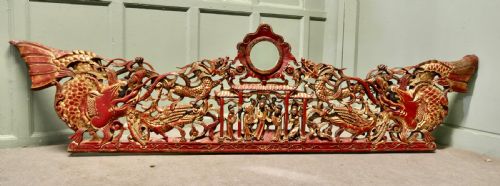
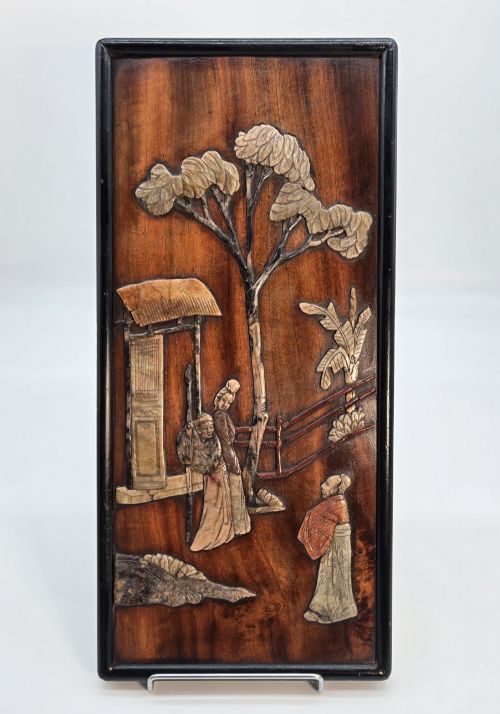
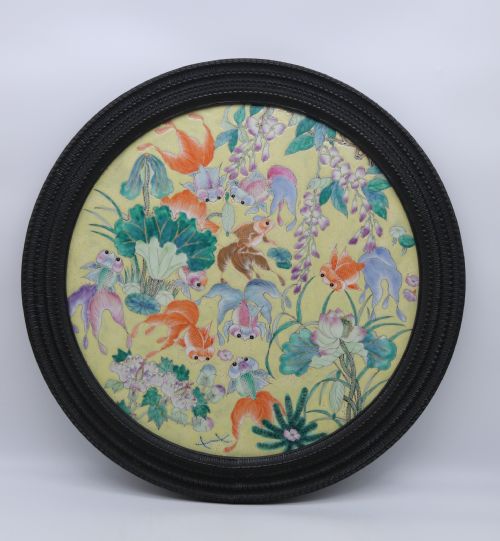
When buyers search for antique chinese wall panels, they encounter a diverse selection of decorative items fashioned for display. The pieces on this page encompass carved wooden plaques, temple panels, embroidered silk textiles and painted works.
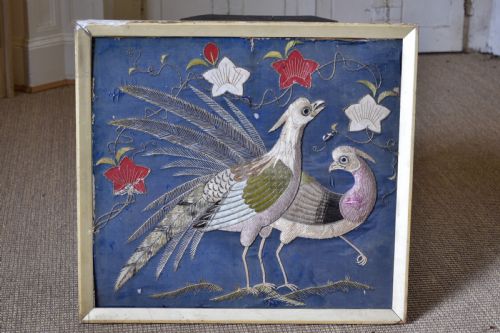
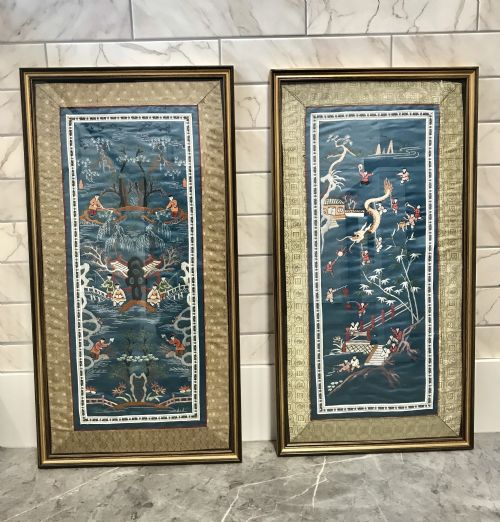
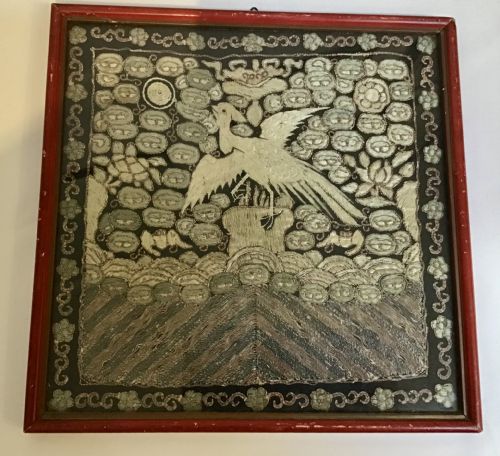
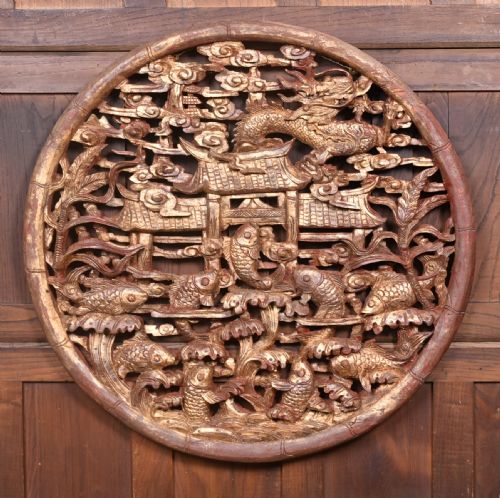
The materials and forms vary considerably, ranging from framed silk rank badges and pheasant embroideries to carved gilt wood pediments and lacquer panels. Dating spans from the eighteenth century through to the mid-twentieth century, with nineteenth-century examples appearing frequently.
Object types include wall art, mirrors, textile panels and architectural fragments such as painted cart doors. Buyers find both individual items and matched pairs designed for symmetrical hanging.
How they were made
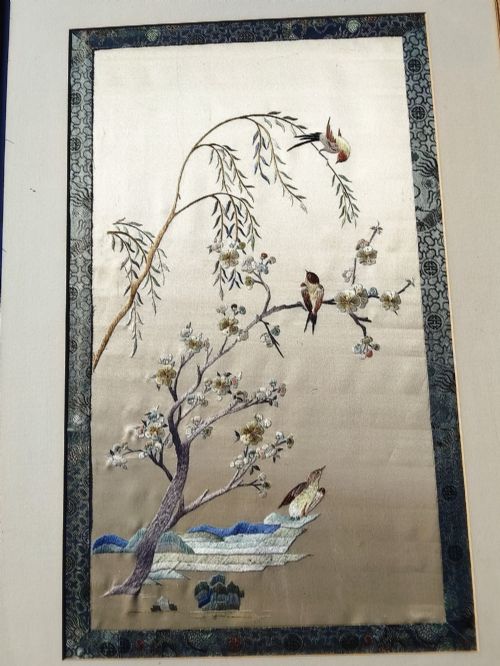
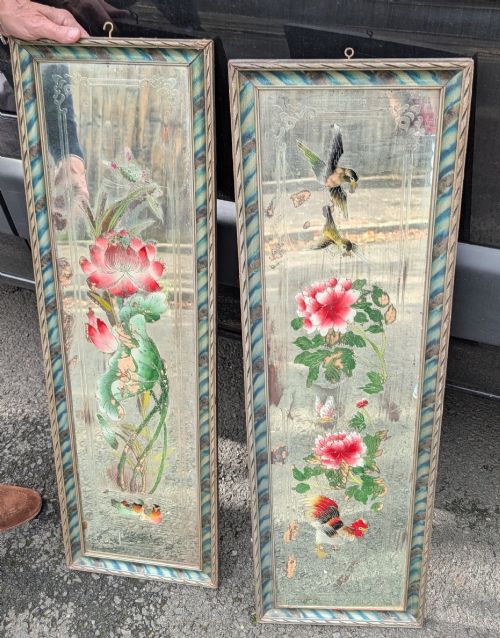
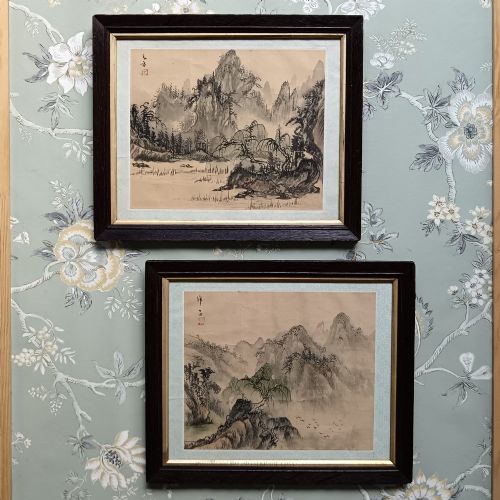
Textiles rely on fine silk, utilised for hand-sewn embroideries depicting figures, dragons, trees, flowers, garden birds and mandarin ducks. Watercolour and ink appear on silk and paper supports, alongside reverse paintings on glass and lacquer work.
Mandarin ducks and domestic pheasants share wall space with imperial dragons across these embroidered silk panels.
What varies in quality
The precision of the hand carving separates standard architectural woodwork from exceptional sculptural panels, where depth and detail in the wood determine visual impact. Finer items demonstrate superior control in the rendering of figures, dragons and botanical motifs.
Textile quality rests on the tightness of the hand-sewn silk embroidery and the complexity of the composition, such as rank badges or detailed bird scenes. Preservation of original frames, glass and pigment layers also influences the standing of an individual piece.
The Antique Chinese Wall Panels Glossary
- Rank badge
- A square embroidered patch indicating the status of an official in imperial China. These textiles often appear framed as wall art.
- Coromandel work
- A type of incised lacquer work where designs are cut into a dark ground and filled with colours. Pieces often show export styles.
- Shan Shui
- Traditional Chinese painting style representing scenery or natural landscapes such as mountains and rivers. These watercolours are frequently executed on silk.
- Temple panel
- Carved wooden architectural woodwork sourced from religious structures. Such panels frequently display deep relief carving and gilt surfaces.
- Reverse painting on glass
- A technique where an image is painted directly onto the back of a glass pane to be viewed from the front. This method creates a glossy, reflective surface finish.
Antique Chinese Wall Panels: Frequently Asked Questions
How do I hang heavy carved panels?
Wooden panels and architectural fragments require secure fixings into wall studs or appropriate masonry anchors to bear the weight safely. Professional framing brackets help distribute the load evenly.
Heavier items like temple pediments or screens need dedicated support systems rather than standard picture wire.
Where should I place silk embroideries?
Silk textiles and watercolours require placement away from direct sunlight to prevent fading of the pigments and threads. Stable indoor humidity levels protect the delicate organic materials.
Displaying them behind protective glass keeps dust and atmospheric pollution away from the hand-sewn surfaces.
How are different periods identified?
Dating relies on stylistic markers, framing methods, and the nature of the pigments or wood utilised. Eighteenth-century pieces often show distinct architectural functions, while nineteenth-century works include diverse export formats.
Signatures, inscriptions and construction techniques also provide clues regarding the era of manufacture.
Can I clean antique lacquer work?
Lacquer surfaces tolerate gentle dusting with a soft, dry microfibre cloth to remove surface particles. Moisture and chemical cleaners damage the aged finish and underlying pigment.
Professional conservators should handle any deeper cleaning or structural stabilization required for fragile panels.