



Chinese Relief Carved Pot
A Chinese relief carved pot is a tactile vessel bearing deep sculptural detail, prized for its naturalistic carving and rich material presence.
Chinese Relief Carved Pot
When you search for a Chinese relief carved pot, you encounter vessels shaped from organic and metallic materials, primarily spanning the Victorian era, the nineteenth century, and the sixteenth century Ming Dynasty. These pieces emerge from traditions such as the Chinese scholars studio and Chinese export workshops, functioning historically as brush pots, water droppers, planters, and decorative urns.
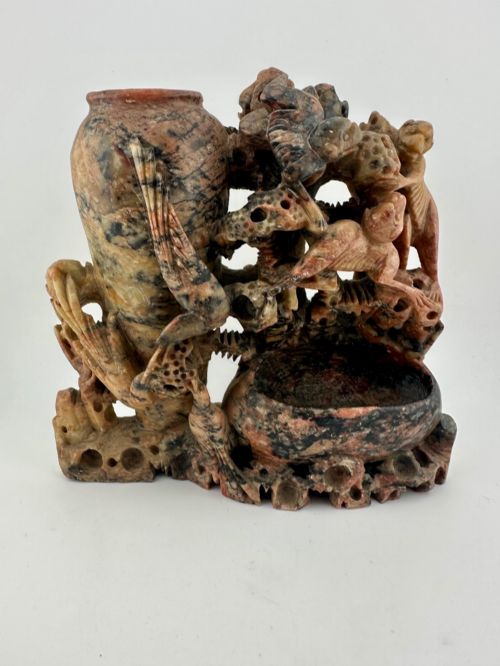
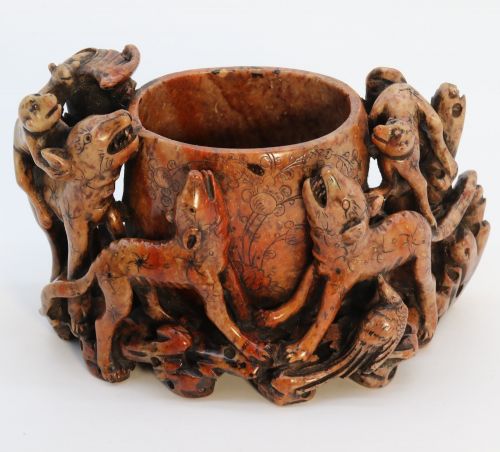
The objects on this page most frequently appear as brush pots or jardinieres carved deeply into bamboo or cast in bronze. Alongside these, soapstone and brass examples surface, taking forms from simple circular lidded boxes to large censers and ewer-form water droppers.
The aesthetic bridges domestic utility and scholarly contemplation, reflecting Qing Dynasty and Ming Dynasty sensibilities through dragon motifs and botanical carving. Each piece carries the distinct hallmarks of its period, whether through the weighty presence of nineteenth century cast bronze or the intricate cylindrical work of bamboo carvers.
How they were made
The creation of these vessels relies on subtractive carving and metal casting techniques suited to the chosen medium. Bamboo pots are carved directly into the dense woody culm, utilising the natural hollow form and varying wall thickness to achieve deep relief layers.
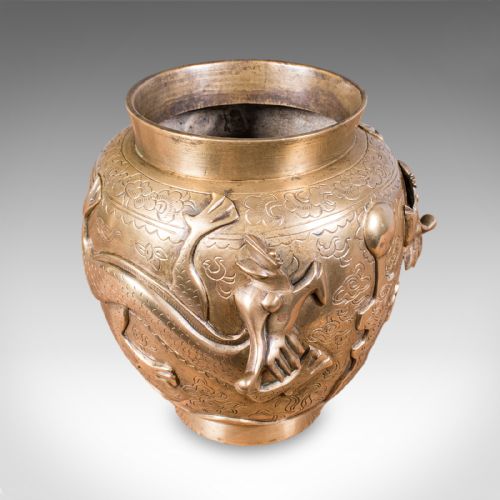
Metal vessels such as bronze bowls, posy vases, and ewer-form water droppers involve casting methods that capture fine surface details like dragon motifs. Soapstone is worked with hand tools to exploit the stone's softness, producing smooth surfaces and undercut relief work.
Chinese Relief Carved Pot Retail Price Guide 2026
Typical asking prices for chinese relief carved pot among the pieces listed under this phrase on Sellingantiques today, from the lower quarter to the upper quarter. They describe what is for sale here now, not the wider market.
A two and a half kilogram bronze bowl proves that scholar's desk accessories could double as minor weightlifting equipment.
What varies in quality
Quality rests in the depth and control of the carving or casting, where precision defines the upper tier of objects. The crispness of a dragon motif or the profuse detail across a bamboo surface separates skilled execution from simpler production.
The choice of material and structural weight dictates the tactile experience of the piece, particularly in bronze bowls and large bamboo cylinders. Proportion and balance in utilitarian scholar objects further distinguish finer examples from standard decorative items.
The Chinese Relief Carved Pot Glossary
- Brush pot
- A cylindrical vessel traditionally used in East Asian studies to hold writing brushes on a scholar's desk. These pieces are frequently carved from bamboo or cast in bronze.
- Jardiniere
- A large decorative pot or bowl designed to hold plants or flowers. In these listings, they appear primarily in bronze.
- Shuizhi
- A traditional Chinese water dropper used in calligraphy to mix ink. They often take sculptural forms such as ewer-form vessels.
- Censer
- An incense burner designed for ritual or decorative use. These items appear in heavy cast bronze forms from the nineteenth century.
Chinese Relief Carved Pot: Frequently Asked Questions
What were Chinese relief carved pots used for?
These vessels served various practical and scholarly functions, from holding calligraphy brushes on a desk to containing water for ink preparation. Others functioned as planters, posy vases, or incense burners.
Over time, many of these objects transitioned into pure decorative pieces, valued for their intricate carving and material weight within a domestic setting.
What is a Ming Dynasty water dropper?
A Ming Dynasty water dropper is a small scholar's vessel, such as a tea pot ewer-form piece, used to add precise amounts of water to an inkstone. They are typically cast in bronze with detailed sculptural elements.
These sixteenth century examples represent early periods seen in the evidence, combining utility with refined metalwork.
How do I care for antique bronze and bamboo?
Bronze objects require minimal intervention, benefiting from gentle dusting to preserve their historic patination and surface detail. Avoid harsh cleaning agents that strip the metal's natural finish.
Bamboo pieces should be kept away from extreme humidity fluctuations and direct heat sources to prevent the natural material from splitting.