




Chinese Porcelain Lamps
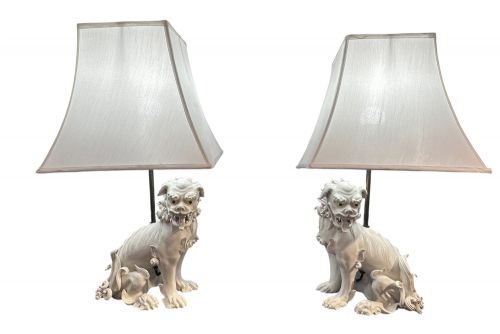
Chinese porcelain lamps are decorative lighting formed from antique ceramic vessels, offering interiors colour, texture and historical form.
What these lamps are
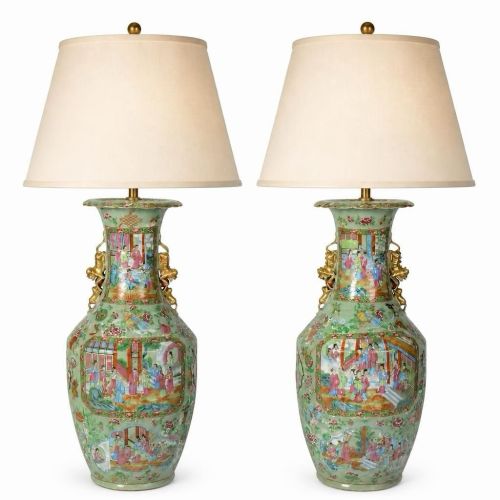
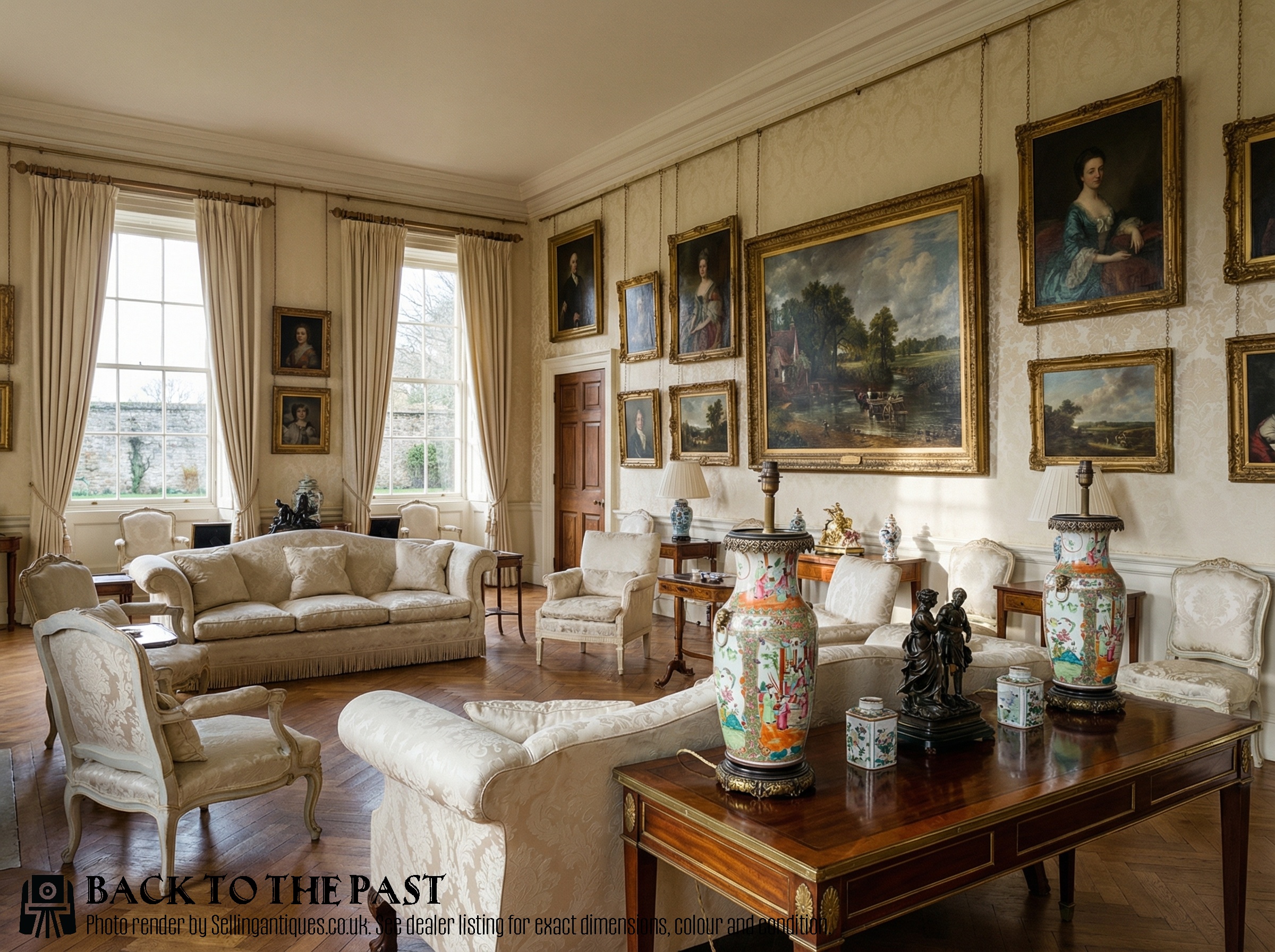
Chinese porcelain lamps are table lamps created from antique vases, jars and vessels originating from the nineteenth century and earlier eras. The pieces recorded here predominantly take the form of pairs, frequently mounted on bases or fitted with metal mounts for domestic illumination.
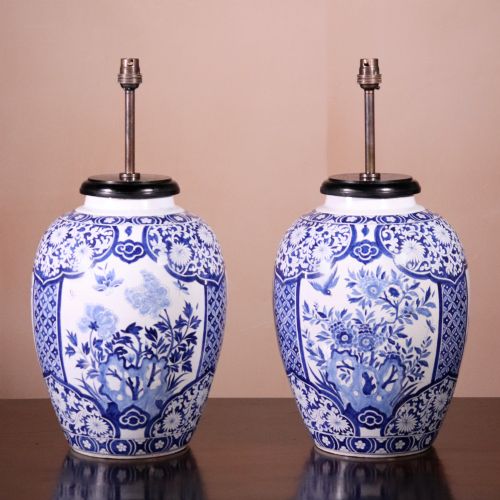
The styles encompass Chinese Export, Victorian Chinoiserie and broader Chinoiserie interpretations, alongside specific decorative schemes like Canton Famille Rose, blue and white, and yellow and green ground designs. Surviving examples frequently utilise large-scale baluster or vase forms that command attention in a room.
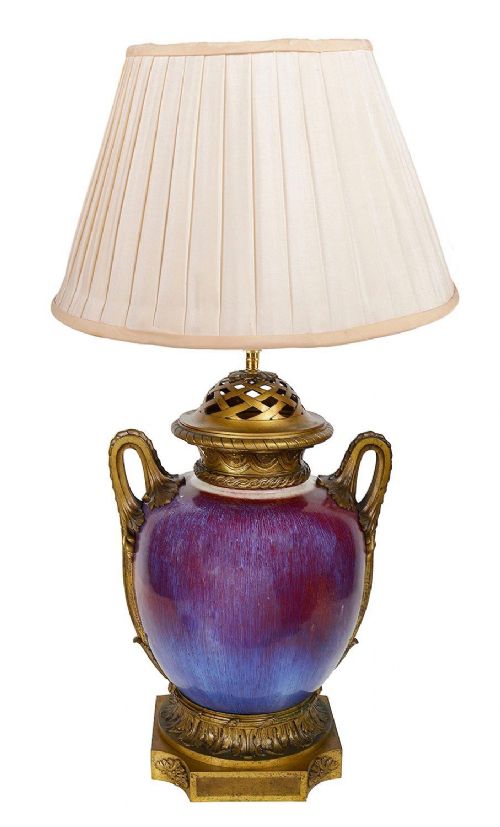
Origins span genuine nineteenth-century Chinese production as well as nineteenth-century European adaptations, including French mounts and pieces attributed to Samson of Paris. Buyers encounter both direct vase conversions and specialised ceramic bodies designed explicitly for mounting.
Materials and construction
The foundation of every piece is fired ceramic or porcelain, painted or glazed in distinct palettes including Famille Rose, celadon, blue and white, and armorial styles. These bodies are combined with secondary materials such as ormolu, brass, bronze, glass, wood and fabric shades.
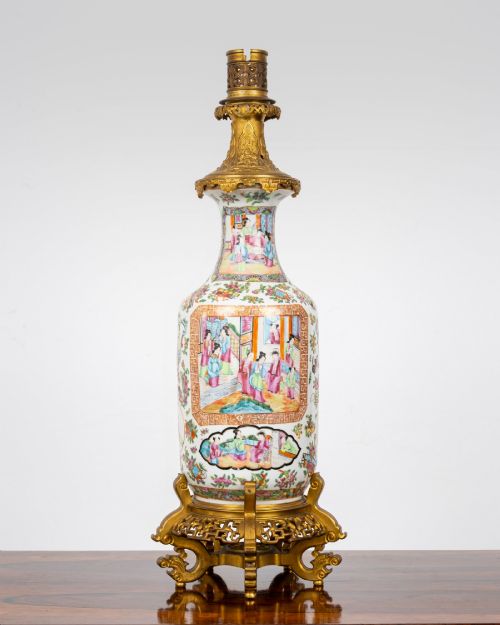
Mounting techniques involve securing the ceramic vessel within metal framework, frequently utilising ormolu mounts at the base or collar to elevate the status of the lamp. Metalwork and electrical wiring are later additions to historical vases, adapting rigid display items into functional table lighting.
Retail Price Guide 2026
Typical UK retail prices for chinese porcelain lamps, calculated from the Sellingantiques database of over a million retail prices indexed since 2003. This retail price guide relies exclusively on Sellingantiques data; no external sources or auction records are used, so the figures do not describe the wider market.
Recorded materials span porcelain, ceramic, brass, glass, ormolu, wood and fabric, appearing across nineteenth-century styles.
Distinctions in quality
Quality rests upon the artistic merit of the underlying porcelain painting, the crispness of the ceramic body and the integration of any metal mounts. Hand-painted detail in schemes like Famille Rose displays varied brushwork precision and depth of enamel colour.
The sophistication of the secondary materials, particularly chased ormolu or heavy bronze mounts, distinguishes standard conversions from superior examples. Scale and proportion between the ceramic vessel and its mountings dictate the visual harmony of the finished lamp.
Samson of Paris
The Chinese Porcelain Lamps Glossary
- Famille Rose
- A palette of opaque enamel colours dominated by pink, introduced in Chinese ceramics during the Qing dynasty. This palette permits nuanced shading of floral and figural scenes.
- Celadon
- A term for ceramics featuring a pale green jade-like glaze originating in China. The glaze achieves its tone through iron oxide interacting in a reducing kiln.
- Ormolu
- Gilded bronze used for decorative mounts on furniture and ceramics. This technique involves applying a mercury and gold amalgam to bronze and heating it.
- Chinoiserie
- The European interpretation and imitation of Chinese artistic traditions, popular in decorative arts during the eighteenth and nineteenth centuries. It manifests in fantastical landscapes and motifs.
- Baluster
- A vase form with a rounded lower body tapering to a narrow neck, resembling a architectural baluster. This silhouette provides stability and balanced visual weight.
Frequently Asked Questions
Are these lamps converted from old vases?
Many Chinese porcelain lamps are created by mounting antique vases and vessels with electrical fittings and hardware. This practice adapts historical ceramics for contemporary domestic use.
Evidence shows pieces ranging from nineteenth-century Cantonese vases to French bronze-mounted creations adapted from earlier porcelain bodies.
What periods do these lamps date from?
The pieces recorded here predominantly date from the nineteenth century, including specific dates like 1880 and 1890 alongside broader nineteenth-century designations.
Stylistic indicators such as Famille Rose enamels and ormolu mounts help anchor these ceramics within their Victorian and nineteenth-century production windows.
Do they usually come in pairs?
A significant portion of the available and archived selection consists of matched pairs rather than single lamps. Pairs are particularly common among large-scale baluster vase conversions.
Matching pairs provide symmetrical illumination and decorative balance for side tables, mantelpieces or buffets.
What materials accompany the porcelain?
Porcelain bodies are frequently paired with metal components such as ormolu, brass and bronze mounts. Additional materials recorded in the construction include glass, wood and fabric shades.
These mixed-media combinations reflect both nineteenth-century European mounting traditions and subsequent adaptations for lighting.