


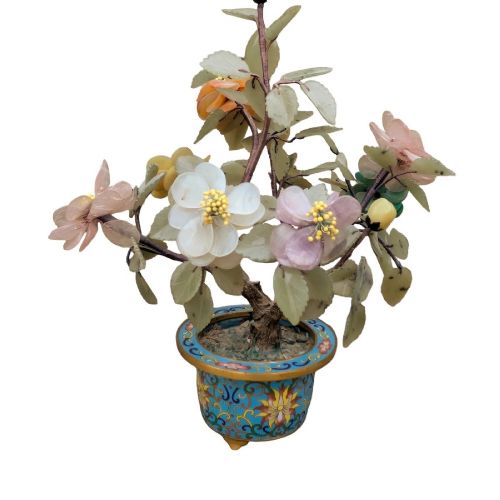


Chinese Planter Pot
These pieces of a chinese planter pot span the eighteenth, nineteenth, and early twentieth centuries in porcelain, bronze, and brass.
Chinese Planter Pot
A chinese planter pot serves as a vessel for holding indoor plants, bonsai trees, or floral arrangements within a home or garden space. The examples gathered here take the form of jardinières, cachepots, fish bowls, and flower urns designed to house roots and soil or to conceal standard nursery pots.
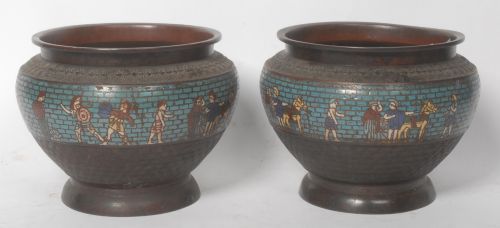
The objects originate from varied periods ranging from eighteenth-century Qianlong productions to Victorian and twentieth-century interpretations. Many pieces align with the Qing Dynasty or employ styles such as Chinoiserie, Chinese Export, and Asian Revival.
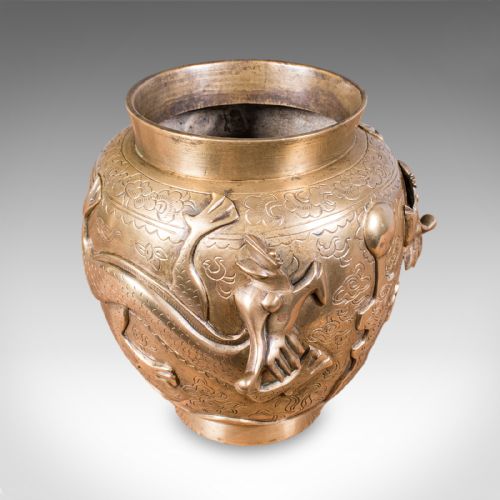
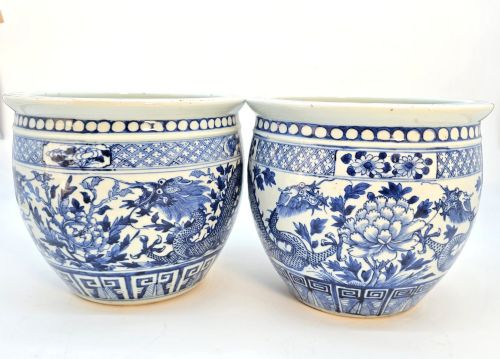
Buyers frequently encounter robust bronze bowls and champlevé enamel vessels alongside delicate blue and white porcelain or Canton Famille Rose ceramics. Formats vary from small desk pots and hexagonal planter trays to huge floor-standing jardinieres and associated hardwood planter tables.
Materials and construction
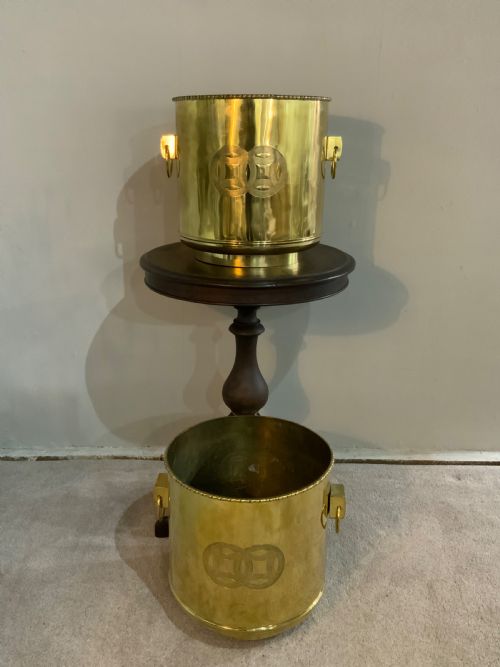
Metals form a substantial group within the evidence, utilising cast bronze and polished brass shaped into heavy bowls, urns, and cachepots. Artisans frequently decorated these metal surfaces with champlevé enamel or cloisonné wirework to introduce intricate polychrome patterns.
Ceramic pieces rely on porcelain, pottery, and earthenware bodies finished with glazes, cobalt blue and white painting, or polychrome enamel palettes such as Famille Rose and Imari. Hand-carved organic elements also appear, incorporating hardstones, jade, and carved timber for sculptural bonsai arrangements.
Chinese Planter Pot Retail Price Guide 2026
Typical asking prices for chinese planter pot among the pieces listed under this phrase on Sellingantiques today, from the lower quarter to the upper quarter. They describe what is for sale here now, not the wider market.
The listings span multiple centuries, incorporating Victorian items alongside 18th-century, 19th-century, and 20th-century examples.
Factors of quality
Execution of surface decoration dictates the standing of an individual piece, whether through the precision of cloisonne wirework, the crispness of bronze casting, or the control evident in hand-painted ceramic motifs. Pieces carrying distinct seal marks or specific period attributions often demonstrate superior artistic intent.
Substance and structural integrity separate robust functional vessels from lighter decorative items, with heavy bronze bowls and substantial porcelain fish bowls requiring considerable technical skill to fire or cast without distortion. The presence of matching components, such as original drip trays or integrated stands, elevates the coherence of the object.
The Chinese Planter Pot Glossary
- Jardiniere
- An ornamental pot or stand for holding flowers or plants, typically ceramic or metal. These vessels form the primary category of large plant holders seen across the selection.
- Cachepot
- An ornamental pot used to conceal an ordinary flowerpot, lacking drainage holes in the base. Pairs of these pots often appear in bronze or enamel finishes.
- Champleve
- An enamelling technique where metal is gouged out to hold enamel paste before firing. This method creates vibrant patterned surfaces on many bronze vessels.
- Famille Rose
- A major palette of Chinese ceramic enamels introduced in the eighteenth century, dominated by opaque pink. Pieces utilising this palette display soft floral and avian motifs.
- Cloisonne
- Enamelling technique in which thin metal wire is soldered to a metal base to create compartments for paste. The resulting cells are filled with coloured glass and fired.
Chinese Planter Pot: Frequently Asked Questions
What is a chinese planter pot used for?
These vessels house live plants, miniature trees, or cut floral displays inside living spaces. They function both as direct growing pots and as decorative outer containers.
Larger ceramic fish bowls and heavy bronze jardinieres were traditionally positioned on stands or floors to display specimen plants. Smaller cachepots and desk bowls served to hold seasonal posies or decorative arrangements on tables.
How do I care for antique metal and porcelain planters?
Metal vessels require gentle dusting and occasional cleaning with appropriate soft cloths to preserve the bronze or brass surface. Harsh chemical polishes should be avoided to protect patination and enamel inlay.
Porcelain and glazed ceramic pots need mild soapy water and soft sponges to remove dirt safely. Using a plastic liner inside older vessels prevents moisture from damaging porous interiors or historic surfaces.
Are these pots suitable for outdoor garden use?
Most antique porcelain and decorated bronze vessels are best kept indoors or in sheltered garden rooms. Frost and extreme weather can crack historic ceramics or damage delicate enamel work.
Heavier unglazed bronze or solid brass bowls handle covered outdoor settings better, though monitoring for moisture accumulation remains important. Storing delicate hardstone bonsai arrangements inside protects fragile components from wind and rain.
How can I distinguish Qing Dynasty pieces from later revival items?
Qing Dynasty items often exhibit the material density, specific glaze characteristics, and traditional hand-painting techniques associated with eighteenth and nineteenth-century production. Examination of base wear, manufacturing seams, and seal marks helps indicate age.
Revival pieces from the late nineteenth and early twentieth centuries adopt historical styles but frequently reveal different casting methods or modern manufacturing traits. Comparing decorative motifs against dated examples aids in establishing chronological placement.