








Chinese Marble Top Plant Stand
A Chinese marble top plant stand brings dense tropical hardwoods and cool stone into an interior, offering a sturdy stage for urns and heavy foliage.
Chinese Marble Top Plant Stand
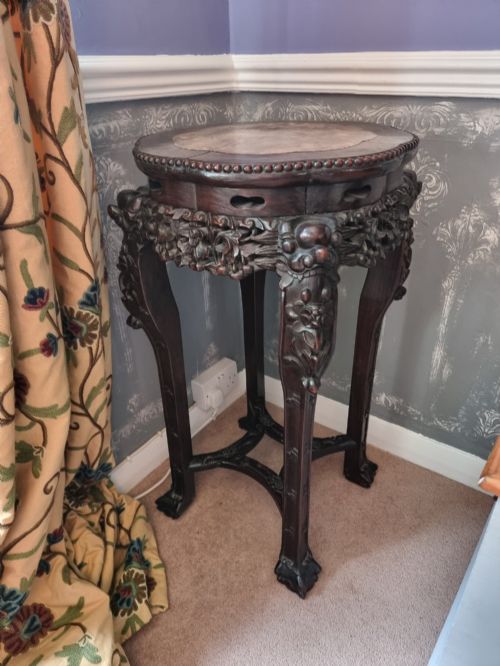
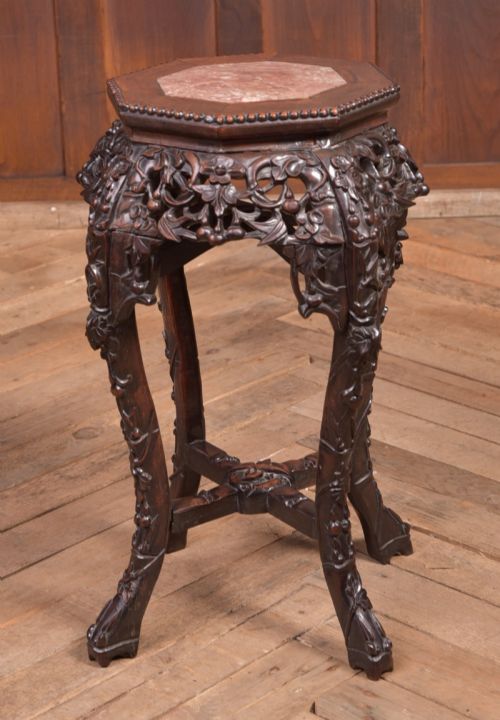
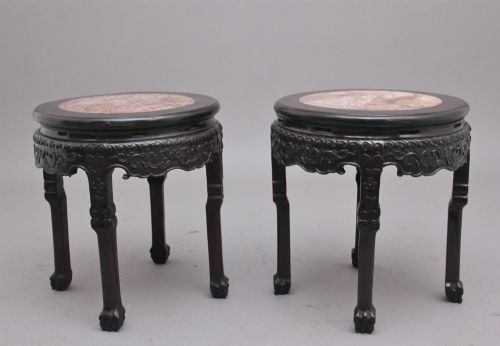
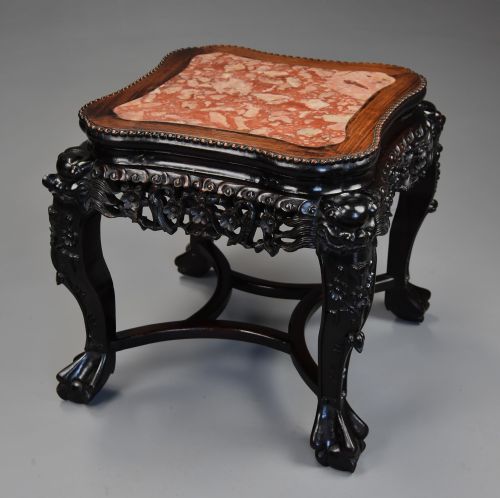
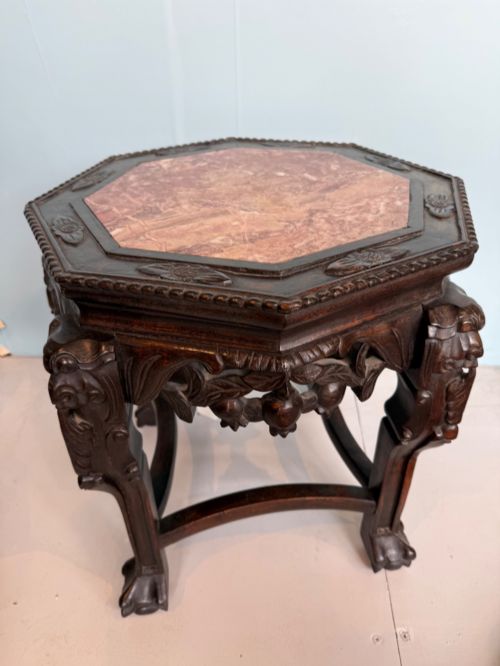
When you search for a Chinese marble top plant stand, you encounter low tables, tall pedestals, and occasional stands designed to elevate pottery and flora within the home. The pieces appearing here predominantly span the nineteenth century and the Victorian era, reflecting both traditional Chinese craftsmanship and export production destined for Western drawing rooms.
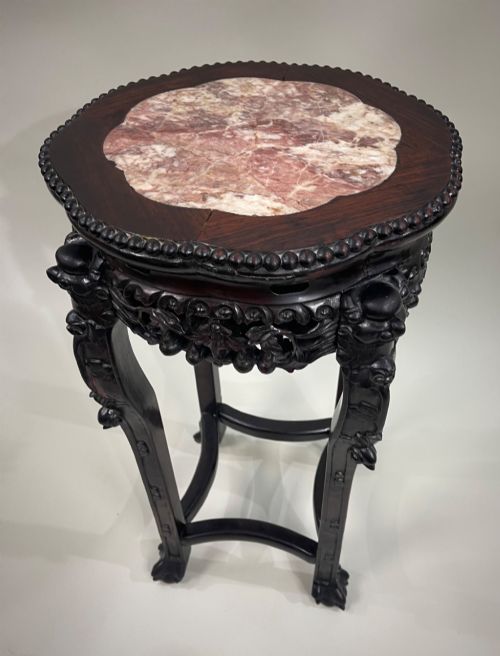
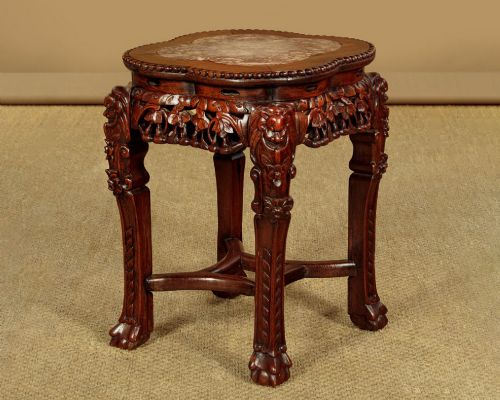
Forms range from compact square and rectangular low tables to tall pedestals and cylindrical pot stands. Many examples incorporate shaped marble inset tops, while others utilise deep quartz or feature intricate mother-of-pearl inlay alongside conventional plant and vase stand silhouettes.
Materials and construction
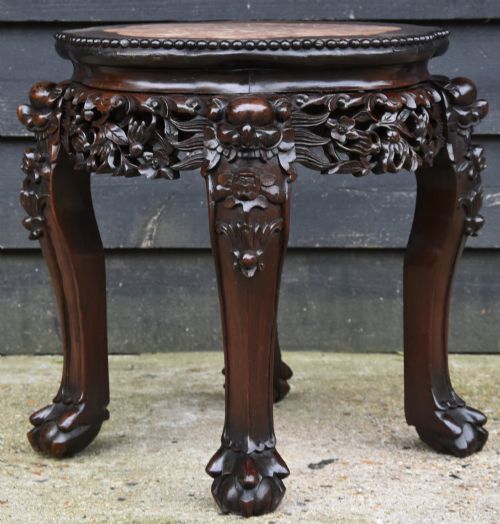
Maker workshops construct these objects from heavy, dense timbers such as rosewood, padouk, hongmu, and rootwood, paired with smooth inset marble or variegated rouge stone. These durable materials allow for deep, robust carving around aprons, legs, and stretchers without compromising the structural integrity of the stand.
Cabinetmakers join dense hardwoods using traditional joinery techniques, accommodating the natural movement of timber around rigid stone inserts. Surfaces are smoothed and polished to highlight the natural grain of the wood, contrasting sharply against the cool, pale or veined surface of the inset marble.
Chinese Marble Top Plant Stand Retail Price Guide 2026
Typical asking prices for chinese marble top plant stand among the pieces listed under this phrase on Sellingantiques today, from the lower quarter to the upper quarter. They describe what is for sale here now, not the wider market.
Distinctions in craftsmanship
The distinction between standard utility items and exceptional pieces lies in the crispness and depth of the woodcarving, alongside the selection of the timber and stone. Superior examples display deeply undercut floral or organic motifs in heavy padouk or rosewood, with precisely fitted variegated rouge marble inserts that sit completely flush with the surrounding frame.
Simpler versions rely on plain turned legs and minimal decoration, utilising standard hardwood with basic polish and flatter stone inserts. The weight of the timber, the complexity of the shaped aprons, and the tightness of the joinery ultimately determine the calibre of each stand.
The Chinese Marble Top Plant Stand Glossary
- Hongmu
- A dense, heavy tropical hardwood used in traditional Chinese furniture manufacture. It often develops a rich dark patina over time.
- Jardiniere
- A large ornamental pot or container for plants or flowers. These stands were specifically proportioned to support such heavy vessels.
- Padouk
- A sturdy and durable exotic hardwood prized for its reddish hue and density. It provides a stable foundation for carved pedestals.
- Rouge marble
- A decorative limestone featuring deep reddish and grey tones. It is frequently chosen for the contrasting inset tops of nineteenth-century stands.
- Rootwood
- Timber derived from the root mass of a tree, displaying gnarled, twisting natural patterns. It is utilised for decorative and irregular rustic tables.
Chinese Marble Top Plant Stand: Frequently Asked Questions
What were Chinese plant stands used for?
These pieces functioned primarily to elevate heavy ceramic planters, jardiniere bowls, and decorative urns off the floor. This placement protected wooden household surfaces from damp soil and displayed prized botanical specimens at eye level.
Over time, homeowners repurposed them as occasional tables for lamps, wine, or decorative ornaments in nineteenth-century reception rooms.
How do I identify a nineteenth-century stand?
Nineteenth-century pieces typically display heavy tropical hardwoods like rosewood or padouk combined with hand-carved Qing Dynasty motifs. The construction relies on traditional joinery designed to hold heavy stone inserts securely without modern adhesives.
Examining the underside and the wear on the timber reveals the hand-finished nature characteristic of this period.
Are the marble tops original to the tables?
In most cases, the marble or quartz top is original to the stand, cut specifically to fit the recessed channel in the wooden frame. The stone is heavy enough to remain in place by its own weight.
Slight variations in the fit or veining reflect the individual hand-fitting process typical of export and domestic workshops of the era.
How do I care for a hardwood stand?
Protect the dense timber by avoiding direct sunlight and sudden temperature changes that can dry out the wood. Dust regularly with a soft, dry cloth and occasionally apply a neutral wax if the surface appears dry.
The marble insert can be wiped clean with a damp cloth, ensuring no moisture seeps into the surrounding wooden joinery.