



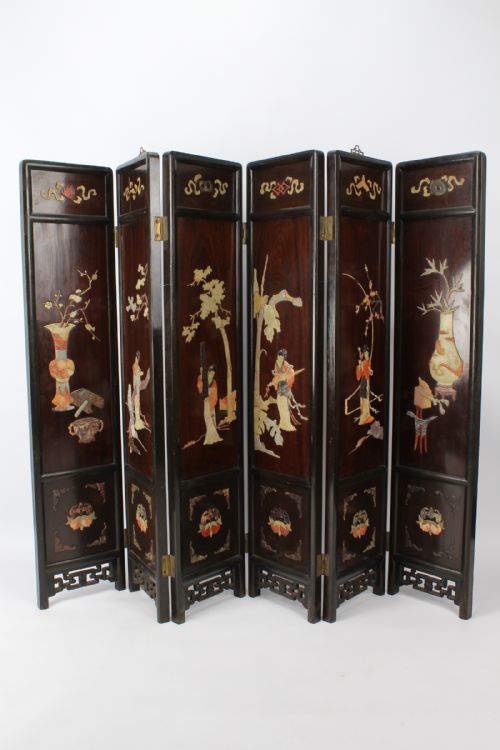


Chinese Lacquer Panel
A chinese lacquer panel brings tactile depth and rich surface texture to a room, ranging from folding screens to framed wall art.
Chinese Lacquer Panel
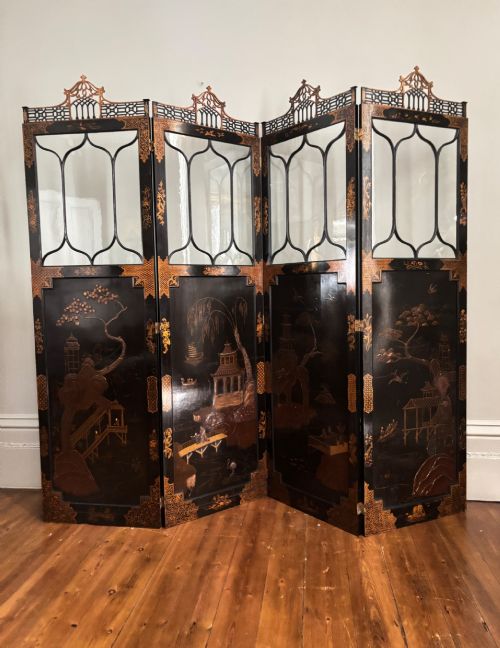
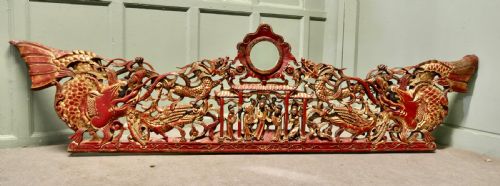
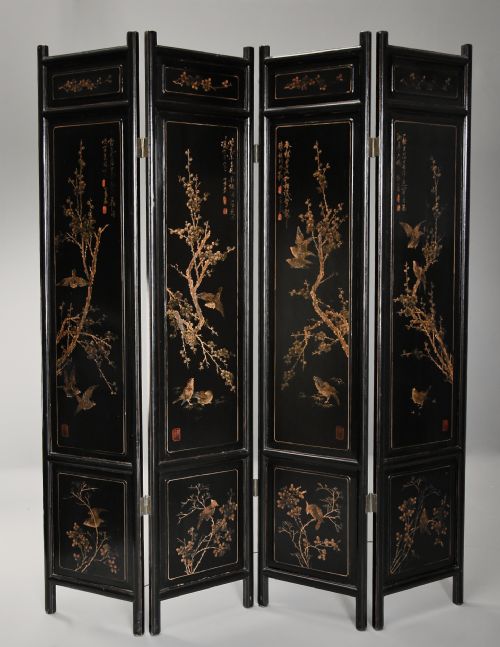
A chinese lacquer panel encompasses multi-fold folding screens, wall plaques, temple pediments and standalone wooden panels dating from the eighteenth century through to the mid twentieth century. Buyers most commonly encounter nineteenth and early twentieth century examples, including black lacquered room dividers, fire screens and decorative wall hangings.
The selection extends from massive eight-fold Coromandel screens down to matched pairs of framed panels and low reception tables incorporating older decorated elements. These pieces cross various stylistic movements, appearing in traditional Qing dynasty forms, Victorian Chinoiserie interpretations, and Chinese export Art Deco designs.
Materials and construction
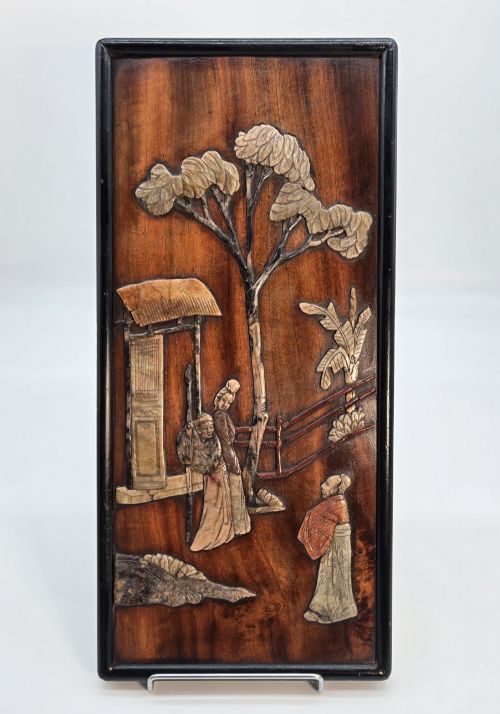
Makers built these pieces upon solid timber and hardwood bases, applying successive layers of lacquer to achieve a smooth, resilient foundation. Artisans then integrated decorative elements such as gold leaf, carved hardstones, soapstone relief, brass fittings, and mother-of-pearl or abalone inlay to depict birds, foliage and narrative scenes.
Techniques varied across regional workshops, incorporating deep carved wood panels, incised Coromandel work where coloured pigments filled carved recesses, and applied papier mâché details on specific Victorian iterations.
The current selection spans from eighteenth-century Coromandel work to mid-twentieth-century dressing screens, utilising brass, gold leaf, hardstone, and lacquered wood.
Assessing craftsmanship
Quality rests in the crispness of the carving, the stability of the timber substrate, and the depth and integrity of the lacquer surface. Superior examples demonstrate meticulous hand-applied inlay work, secure hardstone mounting, and harmonious composition across multiple folds or paired panels.
Lesser pieces show crude surface painting, heavy restoration to the lacquer, or unstable framing where panels have warped over time. The distinction lies in whether the decorative relief retains its sharp definition and the lacquer maintains its deep lustre.
The Chinese Lacquer Panel Glossary
- Coromandel
- A Chinese incised lacquer technique where the design is carved into the lacquer ground, filled with colour, and sealed. This method creates a recessed, matte pictorial surface across screens and large panels.
- Chinoiserie
- European decorative style reflecting Chinese artistic motifs and techniques. It appears frequently in nineteenth-century British adaptations of oriental panel work.
- Hardstone
- Minerals such as jade, agate, or soapstone carved into relief elements and applied to panels. These stones introduce varied colour and tactile dimension to the composition.
- Bantam work
- A type of polychrome incised lacquer resembling Coromandel work. It relies on bright pigments set against a dark lacquer ground.
- Temple pediment
- An architectural wooden carving designed for sacred structures. These large panels were later adapted as decorative wall art.
Chinese Lacquer Panel: Frequently Asked Questions
How do I clean a lacquer panel?
Dust the surface gently with a dry, soft microfibre cloth to remove loose particles without scratching the delicate lacquer.
Avoid using water, chemical polishes, or abrasive cleaners, which can permanently damage the finish and inlay work.
Are these panels fragile?
While built on sturdy timber or hardwood bases, the outer lacquer and inlaid hardstones require careful handling to prevent chipping.
Keep them away from direct sunlight and excessive humidity changes to protect the wood from warping.
How are multi-fold screens supported?
Large folding screens utilise sturdy brass or metal hinges connecting each leaf, allowing the structure to stand in a zig-zag configuration for stability.
Position the folds at gentle angles so the weight distributes evenly across the floor without straining the hardware.
Can wall plaques be hung directly?
Most wall plaques and framed panels are equipped with secure hanging fixings or heavy wooden frames designed to bear the weight.
Ensure wall fixings anchor directly into solid masonry or studwork due to the substantial density of the hardwood bases.