


Chinese Jade Jewellery
These pieces of chinese jade jewellery bring together carved stone and precious metal in earrings, rings, and pendants from the eighteenth century to the mid-century.
Chinese Jade Jewellery
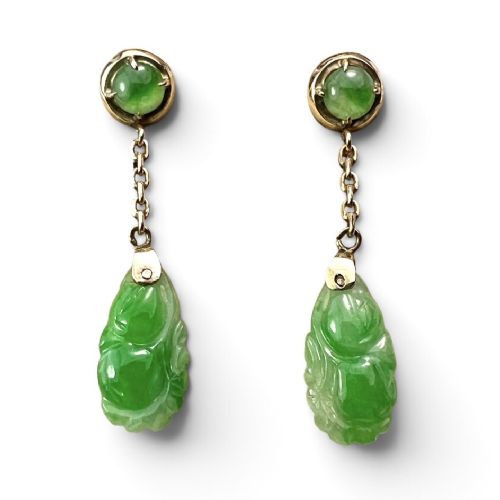
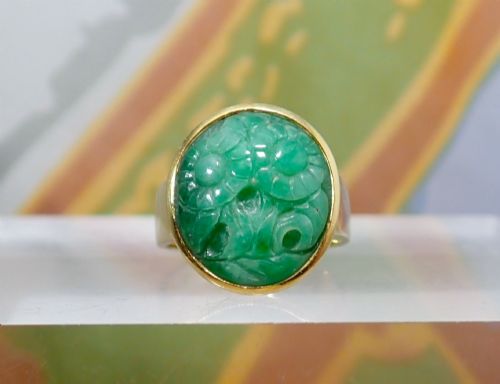
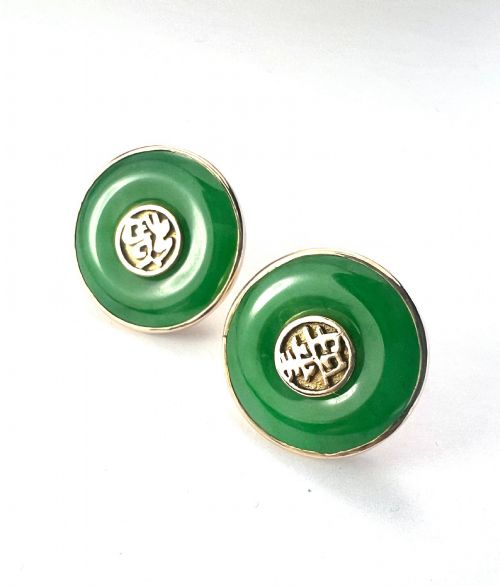
When you search for chinese jade jewellery, you encounter a selection of rings, earrings, pendants, and necklaces spanning the Victorian, Edwardian, and Art Deco periods, alongside Chinese Republic Period works. The pieces you are most likely to meet on this page include carved jadeite and nephrite pendants, drop earrings set in gold, and panel rings from the early twentieth century.
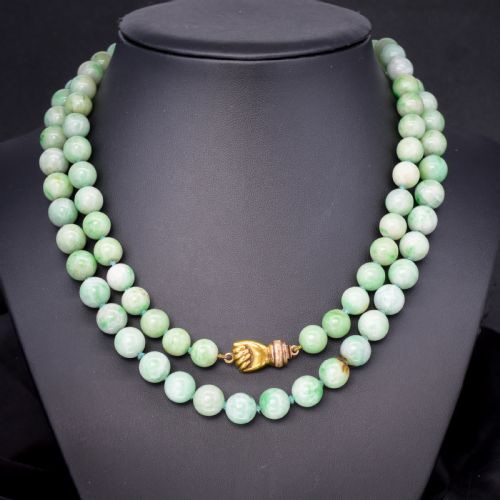
The materials range from white jade and natural green jadeite to yellow gold, platinum, and diamonds, reflecting both traditional Chinese motifs and Western jewellery trends of the twentieth century. Forms such as the bangle, belt buckle, and beaded strand necklace appear alongside figural pendants depicting dragons, deities, and auspicious symbols.
Objects originate from various eras, including the eighteenth-century Qianlong period and the mid-century Asian revival. Each item demonstrates the distinct lapidary traditions and metalwork of its specific decade, from Victorian clusters to mid-century modern mountings.
Assessing quality and execution
The fineness of the carving defines the visual appeal of the stone, separating basic commercial work from pieces with deep relief, balanced proportions, and crisp detailing in motifs like dragons and deities. Translucency, colour saturation, and the natural grain of the jadeite or nephrite also influence the desirability of the raw material.
The integration between the carved stone and the precious metal mount determines structural success, where secure bezels and balanced gold or platinum work demonstrate superior craftsmanship. The preservation of the original surface polish and the absence of structural repairs maintain the integrity of the piece.
Listings feature materials spanning jadeite, nephrite jade, white jade, gold, platinum, and diamonds across multiple centuries.
The Chinese Jade Jewellery Glossary
- Jadeite
- A pyroxene mineral and one of the two distinct mineral species recognised as jade, known for bright green and white colour variations.
- Nephrite
- An amphibole mineral and the more traditional Chinese jade material, typically showing tougher fibrous structures and creamy or spinach-green tones.
- Republic Period
- A historical era in China spanning from 1912 to 1949, producing decorative arts and jewellery that fused traditional motifs with international influences.
- Pixiu
- A mythical hybrid creature often depicted in Chinese carvings as a protector that attracts wealth and wards off evil.
- Torus
- A ring-shaped object with a circular cross-section, frequently utilised in earrings and pendant designs.
Chinese Jade Jewellery: Frequently Asked Questions
How do I date chinese jade jewellery?
Dating relies on the style of the metal mount, the cut of accompanying gemstones like diamonds, and the specific motifs used in the carving. Art Deco and Edwardian pieces show distinct metalwork characteristics compared to eighteenth-century examples.
Examining the construction methods of the gold or platinum settings provides further clues to the decade of manufacture.
What is the difference between jadeite and nephrite?
Jadeite and nephrite are two different mineral species with distinct chemical compositions and crystal structures. Jadeite tends to display brighter translucent greens, while nephrite often shows a tougher, fibrous composition with a softer lustre.
Both materials were utilised extensively across different periods of Chinese carving.
How should I care for jade jewellery?
Clean jade pieces using warm water and a soft cloth, avoiding harsh chemical cleaners or ultrasonic machines that might compromise older settings. Store individual items separately to prevent softer metals or gemstones from scratching the polished stone surface.
Regular inspection of prong and bezel settings ensures the carved stone remains secure.
What motifs appear on these pieces?
Common motifs include dragons, deities, and auspicious symbols intended to convey blessings, protection, and prosperity. These designs reflect traditional Chinese symbolism adapted into wearable forms such as pendants and belt buckles.
Figural elements like the figa hand also appear on nineteenth-century beaded strands.