



Chinese Immortals Carving
A Chinese immortals carving captures legendary figures in timber, horn, and stone, bringing centuries of myth and craftsmanship into your home.
Chinese Immortals Carving
When you search for a chinese immortals carving, you encounter sculptural works depicting Daoist and Buddhist figures, sages, and deities. These pieces emerge primarily from the Qing Dynasty through the late nineteenth and early twentieth centuries.
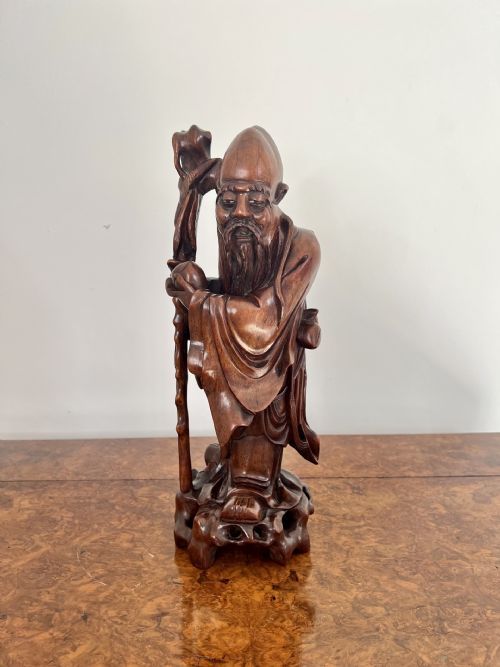
The selections on this page span several physical formats, including freestanding sculptures, table lamps adapted from root wood, libation cups, and vessel groups. Hardwood, root wood, bamboo, and various hardstones constitute the principal mediums for these figurative representations.
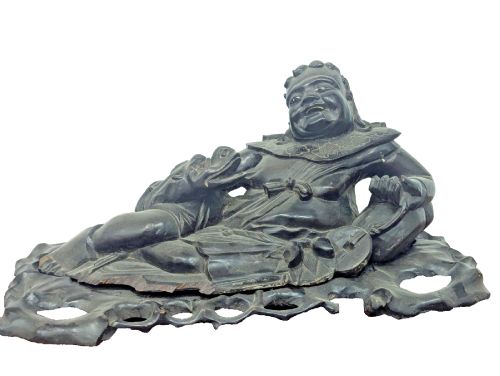
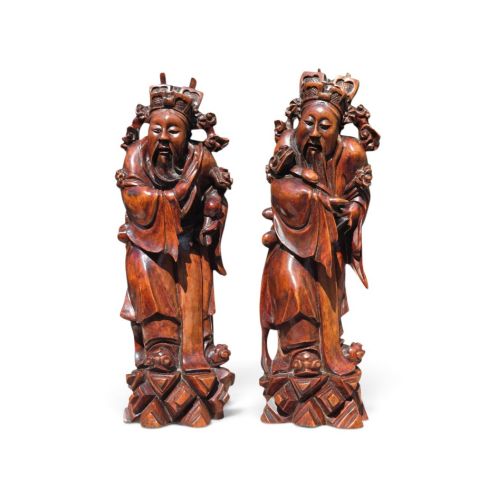
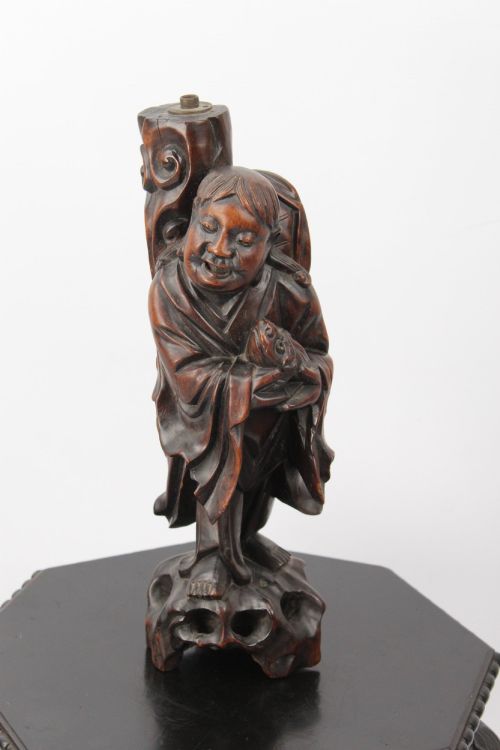
Makers shaped these subjects using traditional Chinese methods, rendering recognizable iconography such as Liu Hai with his toad or Budai with his sack. Individual figures appear alongside matched pairs and larger group arrangements from the eighteenth century onwards.
Materials and Working Methods
Carvers utilised dense timbers including hardwood, burr root wood, and bamboo, working with the natural grain and knots of the material to define robes and postures. Root wood carvings often follow the organic contours of the timber to form figures and table lamps.
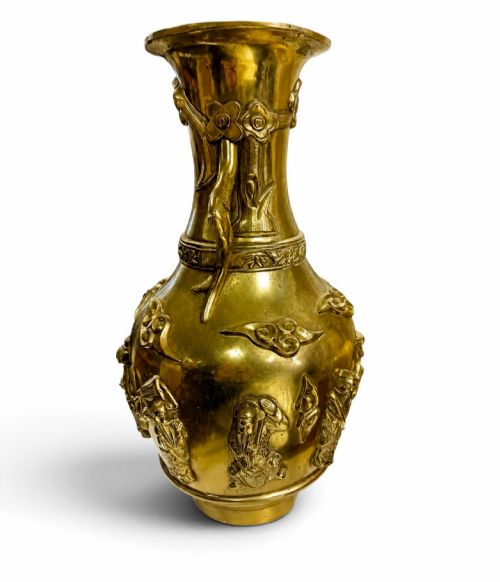
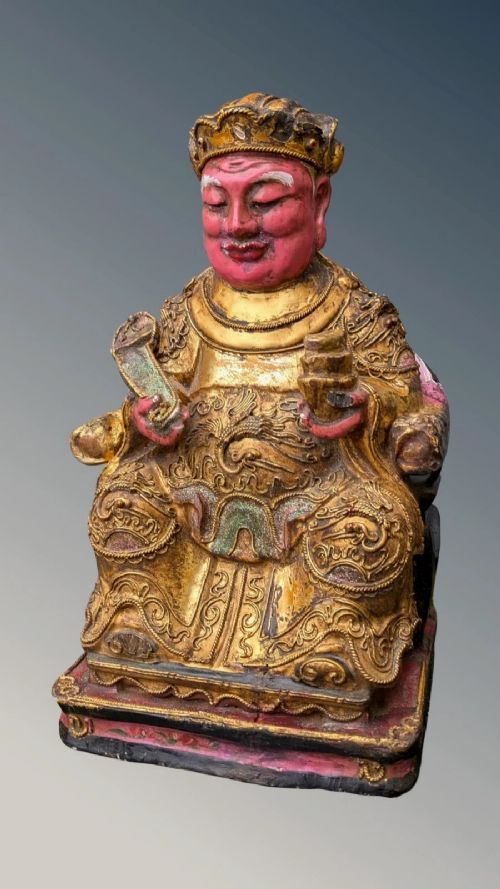
Other examples employ mineral mediums such as jadeite, hardstone, horn, and copper alloy cast with high-relief detailing. Giltwood, gesso, and gold leaf additions appear on specific figures alongside polychrome painted surfaces.
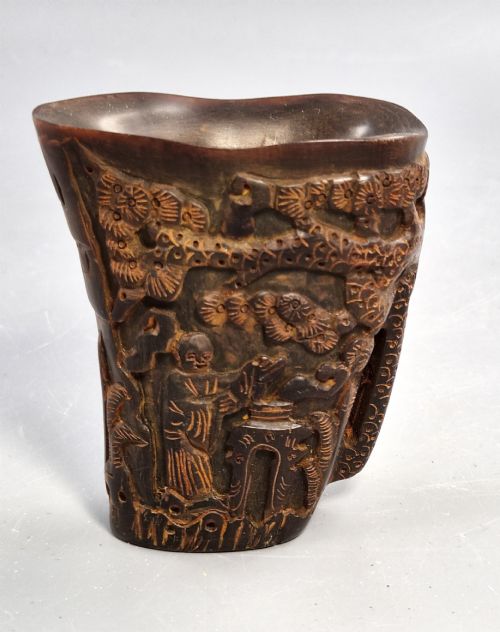
Tool marks reveal hand-chiselling and detailed relief work, particularly on libation cups and baluster vases depicting Daoist immortals. Artisans balanced structural integrity with intricate undercut foliage and attendant mythical creatures.
Several root wood carvings double as functional table lamps, allowing a centuries-old scholar to illuminate your evening reading.
Assessing Standard and Execution
Handling the material reveals whether the composition possesses balanced weight and deliberate undercutting rather than hasty surface texturing. Pieces that retain a deep patina from age demonstrate careful historic handling and superior finishing.
The Chinese Immortals Carving Glossary
- Daoist Immortal
- A legendary figure who achieved spiritual transcendence and physical longevity in Chinese tradition. These personages frequently appear in groupings with specific attributes like peaches or staffs.
- Root Wood
- Timber formed from the root mass of a tree, chosen for gnarled and eccentric shapes. Carvers adapt these organic forms directly into figurative sculptures and lamp bases.
- Libation Cup
- A ceremonial vessel used for pouring liquid offerings, often carved from horn or jade. Historical examples display intricate high-relief scenes wrapping around the body.
- Hardstone
- A non-precious mineral substance harder than ordinary marble, such as jadeite or agate. Artisans polish these materials to highlight natural colour variations within figurative carvings.
- Patina
- The surface sheen and coloration developed by materials through handling and ageing over decades. A rich patina indicates long-term preservation of the original finish.
Chinese Immortals Carving: Frequently Asked Questions
How were root wood figures made?
Artisans selected gnarled tree roots and utilised the natural twists and burls to dictate the posture of the immortal or scholar.
Carvers then pared away excess timber while retaining the organic shape of the root for the base or surrounding elements.
How do I date a carving?
Dating relies on stylistic markers associated with the Qing Dynasty or Republic period, combined with material characteristics and surface wear.
Examining the tool marks, the depth of the patina, and the specific iconography helps place the piece within the nineteenth or early twentieth century.
Where should I place a lamp?
Root wood and hardwood lamp conversions function well on side tables or desks where their sculptural form can be viewed closely.
Ensure the placement keeps the carved wood away from direct heat sources to protect the historic material and finish.