

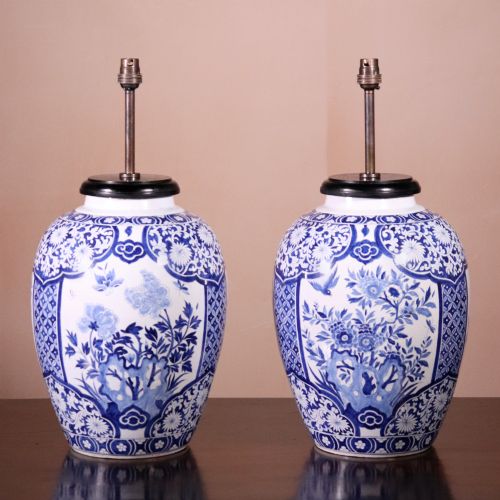


Chinese Floral Porcelain Light
These Chinese floral porcelain light examples bring together hand-painted botanical motifs and practical domestic illumination from the nineteenth and twentieth centuries.
Chinese Floral Porcelain Light
A chinese floral porcelain light typically takes the form of a converted jar, ginger jar, or baluster vase mounted as a table lamp. The listings on this page show pieces predominantly dating from the nineteenth century and the early twentieth century, alongside specific interpretations from the eighteen-eighties and nineteen-twenties.
Makers and decorators utilised classic ceramic formats, notably blue and white, famille verte, and famille rose palettes, painting alternating bands of flowers and traditional botanical scenes across the porcelain body. These domestic items frequently incorporate brass, ormolu, wood, fabric, and silk components to complete the lighting structure.
The aesthetic bridges traditional Qing Dynasty and Chinoiserie styles with nineteenth-century European mounting practices, creating decorative objects designed for period interiors. Buyers encounter both single lamps and matched pairs, often adapted from lidded vases or ginger jars.
How they were made
The primary bodies utilise fired porcelain painted with enamel colours in families such as famille rose and famille verte, alongside traditional cobalt blue underglaze decoration. Potters shaped these pieces into baluster forms, octagonal vases, and jars before applying detailed floral motifs.
Mounting traditions combined the ceramic vessel with metal elements like brass and ormolu, while wooden bases and fabric or silk shades completed the assembly. European workshops often adapted imported Chinese vases into lamps during the nineteenth century, adding electrical or oil-fitting hardware.
Chinese Floral Porcelain Light Retail Price Guide 2026
Typical asking prices for chinese floral porcelain light among the pieces listed under this phrase on Sellingantiques today, from the lower quarter to the upper quarter. They describe what is for sale here now, not the wider market.
Several ginger jars happily abandoned their original lids to become illuminated conversation pieces on nineteenth century side tables.
What varies in quality
Quality rests in the precision of the hand-painted floral enamel work and the crispness of the porcelain form, whether dealing with a ginger jar or an octagonal baluster vase. Finer examples display meticulous brushwork across alternating bands of flowers and rich polychrome palettes.
The integration of secondary materials like ormolu mounts, brass fittings, and turned wood bases also shapes the character of the piece. Superior specimens maintain a harmonious balance between the antique ceramic body and the subsequent nineteenth or twentieth-century lighting adaptation.
Samson Porcelain
The Chinese Floral Porcelain Light Glossary
- Famille Rose
- A palette of opaque enamels dominated by pink or rose colours, introduced in the Qing Dynasty. This technique allowed for subtle shading and detailed floral painting.
- Famille Verte
- A porcelain decoration style utilising a dominant green enamel alongside other colours. It is frequently seen on nineteenth-century vases and jar lamps.
- Baluster
- A jar or vase form with a rounded body tapering to a narrower neck, resembling an architectural baluster. Many table lamps on this page utilise this exact silhouette.
- Ormolu
- Gilt bronze mounts applied to furniture and porcelain during the nineteenth century. These metal additions elevate the decorative status of converted vase lamps.
- Chinoiserie
- European artistic styles reflecting Chinese motifs and decorative techniques. Makers in France and Britain produced items in this manner throughout the period.
Chinese Floral Porcelain Light: Frequently Asked Questions
What is a chinese floral porcelain light?
These objects are decorative table lamps formed from antique porcelain vessels, such as ginger jars and baluster vases, painted with floral motifs. They date primarily from the nineteenth and early twentieth centuries.
Many started life as lidded vases before being adapted into lamps with brass, ormolu, and fabric components.
How do I identify a famille rose lamp?
Famille rose pieces feature a distinctive palette of opaque enamels where pink or rose is prominent. The decoration typically includes naturalistic flower arrangements and botanical bands.
These ceramics often date from the nineteenth century and reflect Qing Dynasty painting traditions.
Were these lamps made in China or Europe?
The evidence shows porcelain vessels originating from Chinese traditions alongside European interpretations like Samson porcelain from the late nineteenth century. Many pieces combine Asian ceramic bodies with Western mounting techniques.
Conversion into lighting often took place in Europe during the nineteenth and twentieth centuries.
How do I style a jar lamp at home?
Jar lamps serve as focal points on side tables, cabinets, or desks, pairing traditional ceramic bodies with fabric or silk shades. Their botanical patterns suit both period interiors and eclectic modern spaces.
Matched pairs offer symmetry when placed on matching surfaces or mantelpieces.