
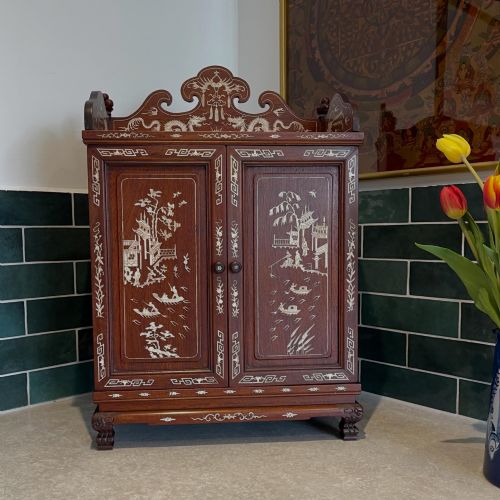


Chinese Export Chest
These Chinese export chest pieces combine utilitarian travel utility with elaborate decorative finishes designed for Western markets.
Chinese Export Chest
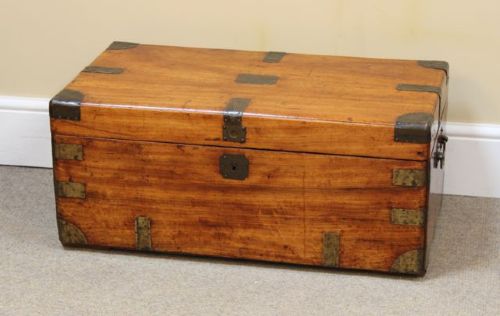
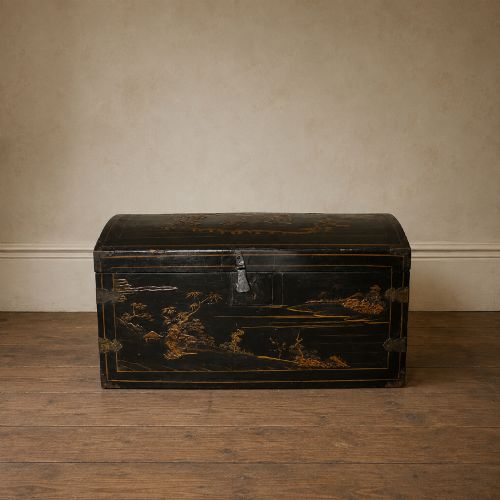
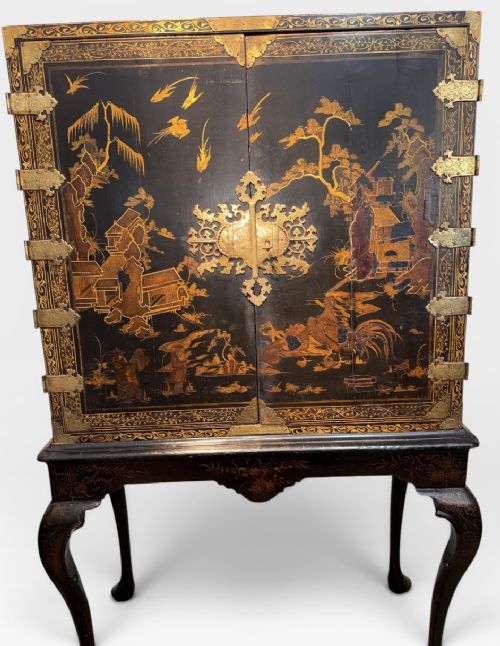
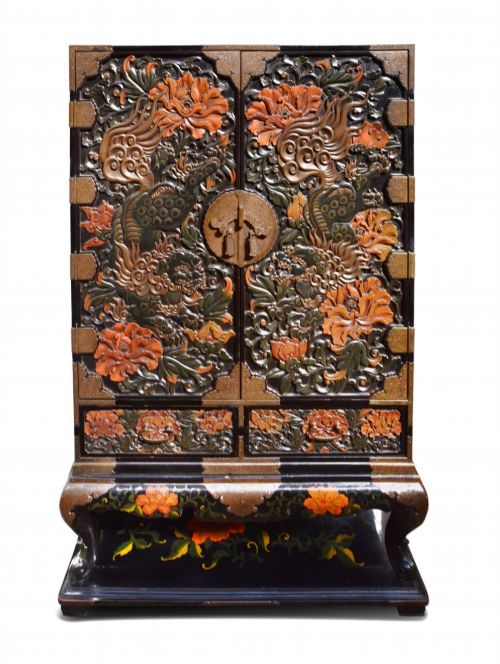
A Chinese export chest is a portable container or storage unit made in China specifically for international trade and travel. The selection includes camphor wood trunks, lacquer cabinets, leather trunks, and compartmentalised tea caddies.
The nineteenth century provides the highest volume of surviving examples on this page. These often take the form of military campaign chests, brass-bound travel trunks, and table cabinets.
Makers produced these objects using characteristic regional woods and decorative schemes intended to withstand long sea journeys. Buyers encounter pieces ranging from plain camphor wood boxes to gilt-decorated lacquer coffers.
Materials and construction
Camphor wood serves as the primary timber for trunks and chests due to its natural insect-repelling properties. Cabinetmakers combined this aromatic wood with exterior applications of lacquer, leather, and polychrome paint.
Brass corners, straps, and flush-fitting handles reinforced the structural joints for military and maritime transport. Gilt decoration and gold leaf were applied over black or red lacquer surfaces to create ornate pictorial scenes.
Chinese Export Chest Retail Price Guide 2026
Typical asking prices for chinese export chest among the pieces listed under this phrase on Sellingantiques today, from the lower quarter to the upper quarter. They describe what is for sale here now, not the wider market.
Judging the execution
Quality separates standard utility trunks from bespoke merchant pieces through the intricacy of the carving and the precision of the brass binding. Superior examples display tightly fitted dovetail joints and crisp hand-carved detailing on the camphor panels.
The preservation of the original lacquer and gilt decoration dictates the visual standard of finished cabinets and coffers. Retaining intact hardware and original leather linings distinguishes the most accomplished survivals from later alterations.
The Chinese Export Chest Glossary
- Camphor wood
- An aromatic timber native to Asia used traditionally for chests to protect stored textiles from moths. Its distinct scent remains identifiable decades later.
- Campaign chest
- Modular furniture designed to separate into stacked sections for military transport. Brass corners and recessed handles protect the edges during transit.
- China Trade
- The historical commerce between Qing dynasty China and Western nations. Goods produced under this system reflect a blend of Eastern materials and Western functional demands.
- Secretaire
- A chest or cabinet incorporating a fitted writing drawer with small compartments and a drop-front desk surface. These combine storage utility with a dedicated writing space.
- Lacquer
- A durable varnish applied in multiple layers to wood surfaces and polished to a hard finish. Asian export pieces frequently utilised black or red lacquer ornamented with gold leaf.
Chinese Export Chest: Frequently Asked Questions
Why use camphor wood for chests?
Camphor wood naturally repels moths and insects, making it the ideal timber for protecting garments and linens during long ocean voyages.
The wood also releases a distinct aromatic scent that preserves the interior contents over long periods of static storage.
What is a campaign chest?
A campaign chest is a piece of portable furniture designed to dismantle into separate sections for transport by military officers on active service.
These units typically feature recessed brass handles and reinforced corners to withstand frequent movement and rough handling.
How do I care for a lacquer chest?
Lacquer surfaces require protection from direct sunlight and extreme humidity changes to prevent the finish from drying and cracking.
Dusting with a dry microfiber cloth maintains the sheen without stripping the delicate gilt decoration underneath.
Were these chests made in China?
Chinese workshops manufactured these pieces specifically for export to European and American markets during the eighteenth and nineteenth centuries.
The design adapts traditional Chinese joinery methods to suit Western tastes and functional domestic requirements.