



Chinese Display Charger
A chinese display charger commands attention on any wall or table with its expansive painted surface and centuries of ceramic tradition.
Chinese Display Charger
A chinese display charger is a large decorative plate intended primarily for exhibition rather than service at the dining table. When you search for this phrase, you encounter substantial circular vessels spanning several centuries of Asian and European ceramic artistry.
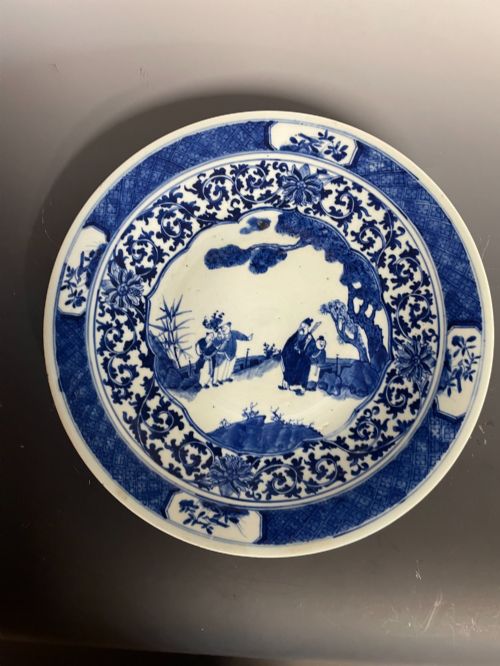
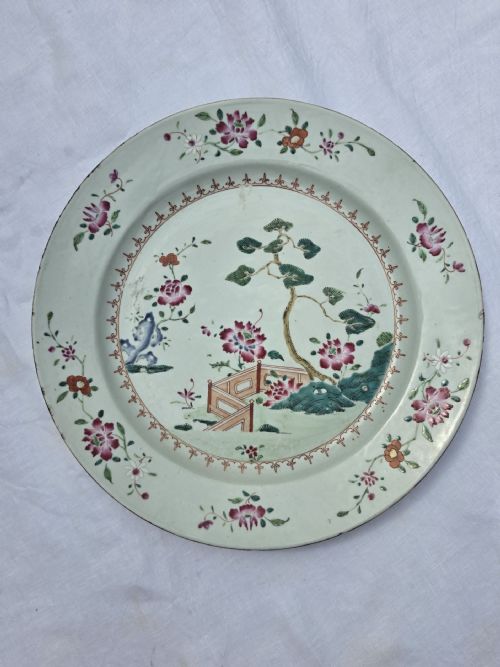
The selections on this page range from early monochrome celadon dishes to vibrant polychrome enamelled platters. You will frequently meet pieces decorated in cobalt blue and white alongside elaborate famille rose and canton medallion designs.
Materials and Techniques
These works rely primarily on hard-paste porcelain and ceramic bodies formed by hand or mould. Artisans then applied cobalt underglaze pigments before firing at high temperatures to achieve durable vitrified surfaces.
Many examples incorporate overglaze enamel painting or cloisonne work to build complex polychrome scenes. Selected metal platters in brass and bronze also appear among the wider category of decorative display pieces.
Current listings feature pieces spanning the Yuan Dynasty through the Victorian era, utilising porcelain, celadon glaze, and brass.
Assessing Quality
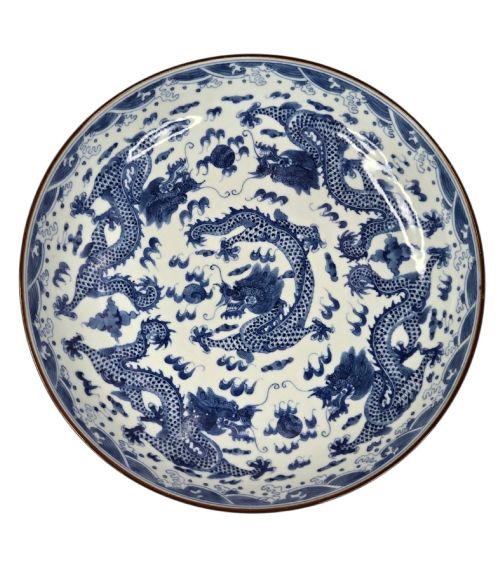
The standard of a chinese display charger rests upon the precision of its brushwork and the clarity of the glaze. Master painters executed intricate court scenes and dragon motifs with a fluidity that elevates the object far beyond standard utilitarian ware.
Consider also the structural integrity of the ceramic body and the depth of the firing colour. Superior pieces exhibit minimal distortion from the kiln combined with a luminous surface resonance that remains stable across centuries.
Bluett and Sons·Minton
The Chinese Display Charger Glossary
- Charger
- A large decorative plate or platter traditionally used for display. These pieces exceed standard dining dimensions to showcase elaborate painted compositions.
- Cobalt Underglaze
- A pigment applied to the raw ceramic body before glazing and firing. This technique allows the deep blue decoration to become permanently sealed beneath the glass surface.
- Famille Rose
- A palette of opaque enamel colours dominated by pink or rose hues introduced during the eighteenth century. It permits delicate shading on floral and figural subjects.
- Celadon
- A transparent jade-green glaze applied over a pale ceramic body. The finish mimics the appearance of precious stone through subtle crackle patterns and tonal variations.
- Kangxi
- A significant imperial period of the Qing dynasty spanning the late seventeenth and early early eighteenth centuries. Wares from this era are celebrated for vibrant cobalt tones and exceptional potting.
Chinese Display Charger: Frequently Asked Questions
What is a chinese display charger?
A chinese display charger is an oversized decorative ceramic plate created for visual presentation rather than everyday dining use. These substantial vessels measure significantly wider than standard dinner plates.
They often feature complex hand-painted motifs including imperial dragons, court scenes, and botanical arrangements designed to be mounted on walls or supported on plate stands.
How do I hang a charger safely?
Hanging a large charger requires a specialised spring-loaded plate hanger that distributes weight evenly across the rim. Ensure the mounting bracket fixes securely into solid wall framing rather than simple plaster.
Avoid adhesives or clips that exert localized pressure on the ceramic body or obscure the painted border details.
How do I date a blue and white charger?
Dating a blue and white charger involves examining the cobalt tone, the potting weight, and any reign marks on the reverse. Earlier periods often display deeper sapphire hues and heavier potting with unglazed foot rims.
Stylistic shifts in floral scrolls and dragon claws provide further clues to distinguish eighteenth-century pieces from later nineteenth-century interpretations.
Can I use these chargers for food?
Historic display chargers are generally unsuitable for serving food due to fragile historic glazes and potential lead content in older enamels. Many antique pieces also carry fine hairline fractures or surface wear from centuries of handling.
Enjoy these objects strictly as decorative works of art to preserve their physical condition.