


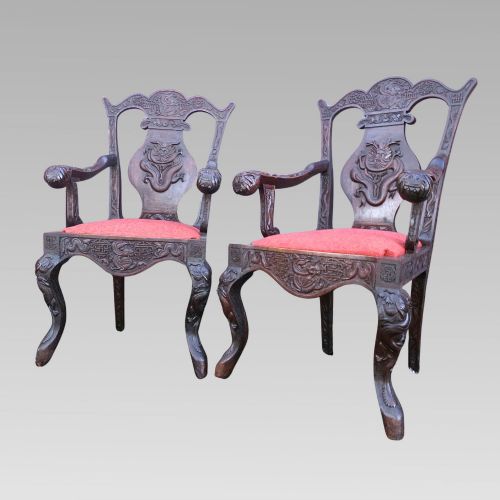


Chinese Carved Accent Chair
A chinese carved accent chair brings dynamic form and deep-carved relief to a room, offering both traditional seating and sculptural presence.
Chinese Carved Accent Chair
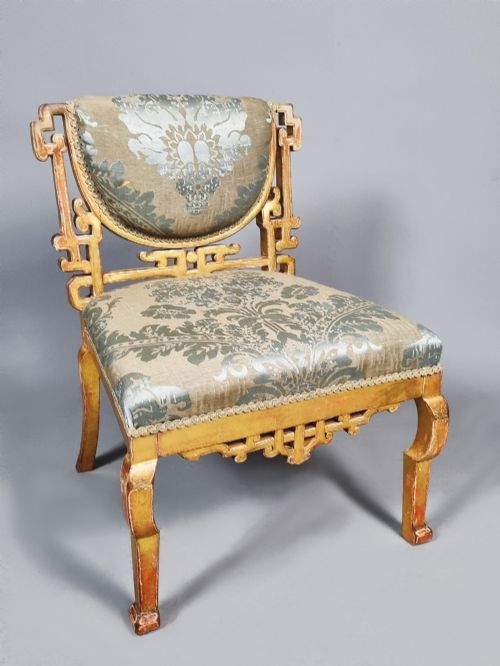
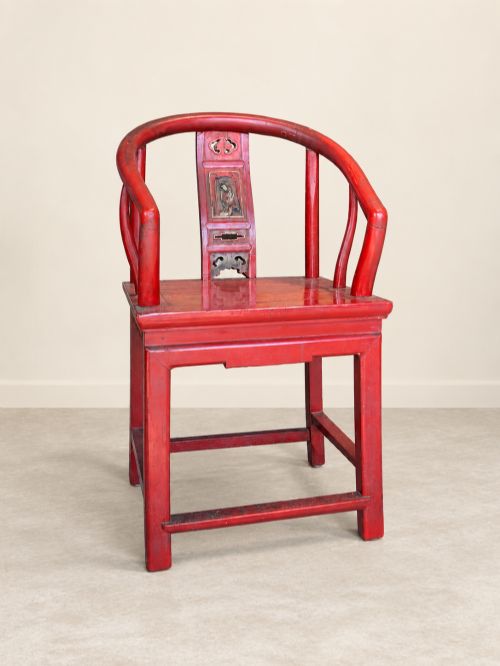
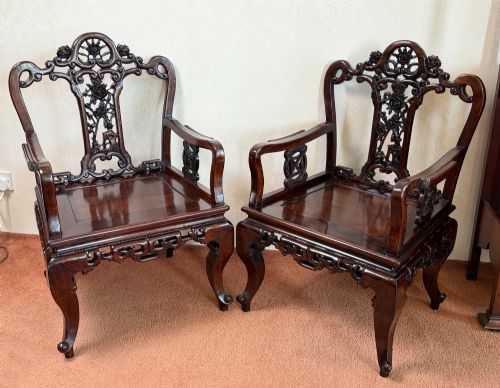
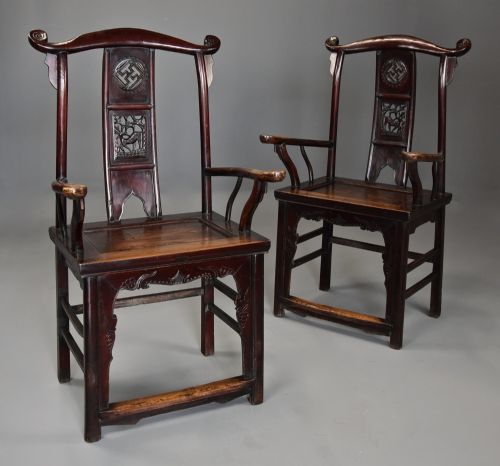
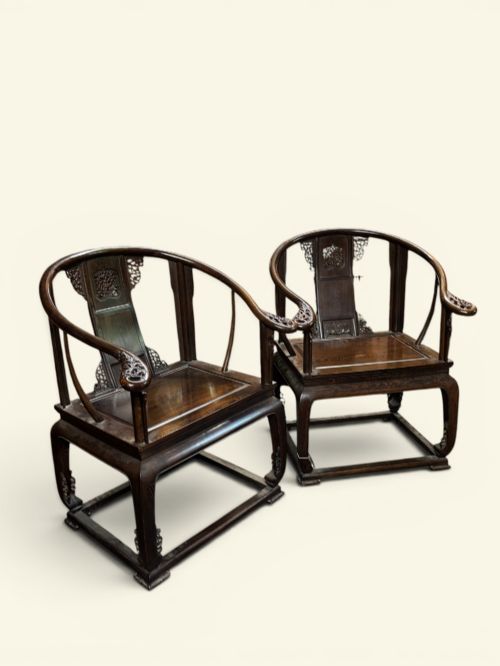
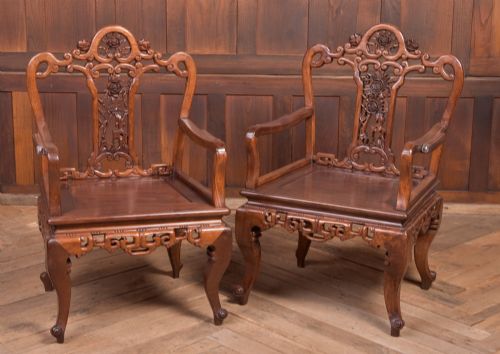
A chinese carved accent chair encompasses a range of seating forms, from nineteenth-century hardwood armchairs to eighteenth-century export examples. Buyers encounter various seating types on this page, including yoke-back scholars chairs, horseshoe-back armchairs, and throne chairs.
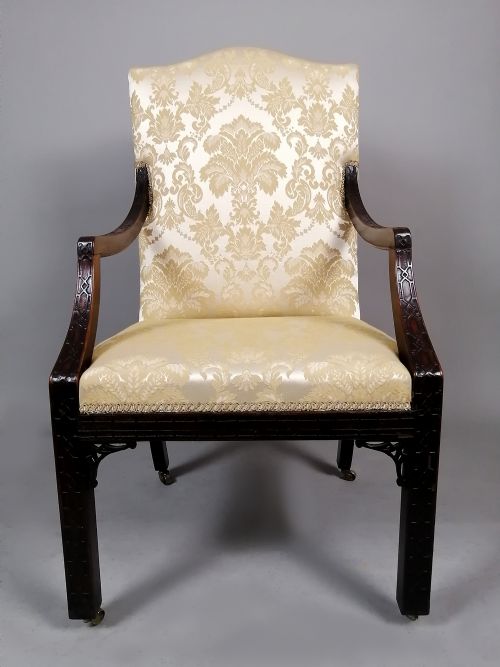
The selection includes specific regional and stylistic expressions, such as elm lamp hanger chairs, lacquer finishes, and Chinese Chippendale interpretations in mahogany and teak. These pieces serve as functional accent seating while displaying intricate woodwork and traditional joinery.
Most entries date from the nineteenth century, with notable representation from the Qing dynasty and late Victorian periods. Forms vary from simple side chairs to elaborate corner armchairs and folding seats.
Materials and Construction Techniques
Construction relies heavily on dense hardwoods, rosewood, hongmu, and elm, providing structural integrity for intricate hand-carvings. Artisans utilised mortise and tenon joinery to create stable frames without relying on modern metal fasteners.
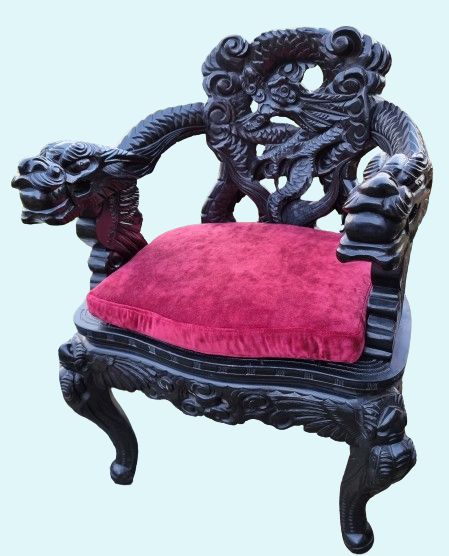
Surface treatments range from natural wood patinas to applied red lacquer, occasionally accompanied by painted details, gilding, fabric, cane, or velvet upholstery. Carving techniques include deep relief work depicting dragons, floral motifs, and geometric patterns on splats and crestrails.
Some nineteenth-century elm chairs were built with folding frames, proving that ancient scholars also appreciated portable lawn furniture.
Distinctions in Quality
Quality rests in the crispness and depth of the hand-carving, particularly on the backsplats, arms, and crestrails where intricate dragons or floral motifs appear. Superior examples maintain tight, original joinery and substantial timber weight, reflecting the density of the chosen hardwood.
The preservation of original surface finishes, such as red lacquer or natural wood patinas, elevates a piece significantly over later refinishing efforts. Proportion and balance in eccentric forms, such as corner armchairs or horseshoe-backs, further separate standard examples from finer scholarly iterations.
Waugh and Son
The Chinese Carved Accent Chair Glossary
- Yokeback armchair
- A chair featuring a crestrail that curves upwards at the ends, resembling a traditional Chinese yoke. This design supports the sitter's shoulders and appears frequently on scholars chairs.
- Hongmu
- A category of dense, dark tropical hardwoods utilised in traditional Chinese furniture making. It translates literally to red wood and provides exceptional weight and durability.
- Horseshoe-back armchair
- A seating form characterised by a continuous, curved crestrail and armrest sweeping in a single circular arc. It offers ergonomic support and represents a classic Ming and Qing dynasty form.
- Chinese Chippendale
- An eighteenth-century European stylistic interpretation incorporating Chinese fretwork and motifs into mahogany and giltwood seating. It demonstrates cross-cultural design exchange during the Georgian period.
- Lamp hanger chair
- A traditional form of Chinese armchair featuring a high, straight back with an overhanging top rail. The protruding ends resemble supports used for hanging oil lamps.
Chinese Carved Accent Chair: Frequently Asked Questions
How do I care for lacquer finishes?
Original red lacquer surfaces require gentle dusting with a soft, dry cloth and protection from direct sunlight and extreme humidity fluctuations. Avoid chemical polishes and abrasive cleaners that can damage the delicate historic layers beneath.
Maintaining a stable indoor climate helps preserve both the lacquer and the underlying elm or hardwood structure for years to come.
What distinguishes Qing dynasty chairs?
Qing dynasty chairs often showcase heavier proportions, denser hardwoods like hongmu, and more elaborate, deep-relief carvings of dragons and symbolic motifs. They reflect the formal court aesthetics and advanced woodworking techniques of their era.
These pieces command attention as focal points in a room due to their substantial presence and intricate decorative detailing.
Where should I place an accent chair?
An accent chair works effectively in entryways as a hall chair, in libraries as a reading seat, or as a sculptural element in a living room corner. Their varied forms, including horseshoe-backs and corner armchairs, allow them to fit into tighter spatial layouts.
Pairing one with a simple side table highlights the craftsmanship of the carved wood and lacquer work.