





Oriental Hardwood Seat
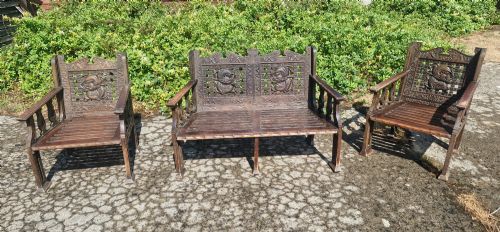
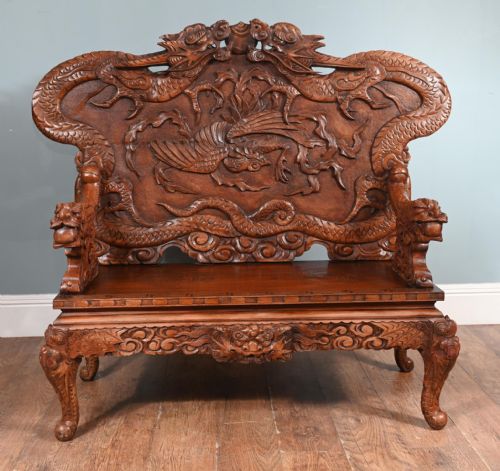
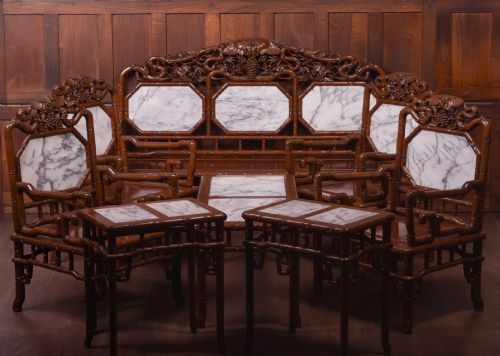
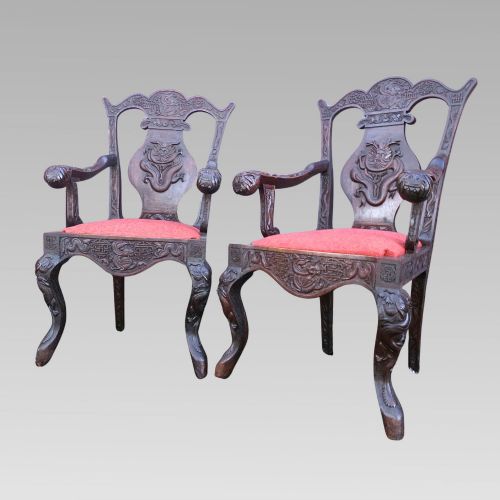
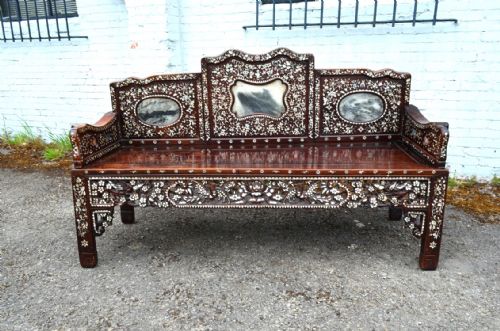
When you search for an oriental hardwood seat, you find heavily carved benches, armchairs, and stools originating from nineteenth and early twentieth century workshops.
Oriental Hardwood Seat
An oriental hardwood seat encompasses substantial seating designed across various Asian and colonial traditions, notably featuring Chinese Qing dynasty export pieces alongside Anglo-Indian and Middle Eastern examples. Benches, armchairs, and window seats dominate the form, often created as singular statement items or matched parlour suites.
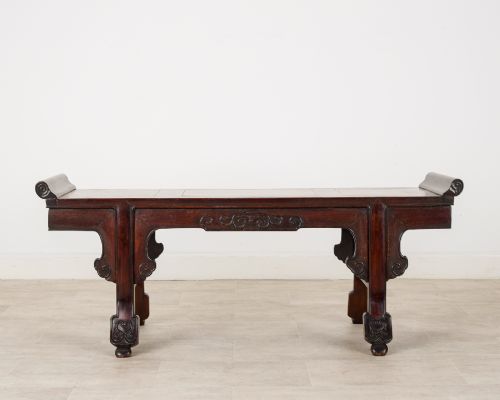
The pieces appearing most frequently on this page date from the nineteenth century through the early twentieth century, utilising dense timbers like rosewood, hongmu, and elm. Their primary purpose ranged from formal hall seating to practical window furniture and low occasional chairs within domestic interiors.
How they were made
Carpenters constructed these seats using dense tropical hardwoods such as hongmu, teak, rosewood, and elm, often joining components through traditional interlocking joinery without metal nails. Artisans carved intricate motifs directly into the timber surface, depicting dragons, foliage, and geometric patterns.
Surface ornamentation frequently incorporated contrasting materials, including inlaid mother of pearl, brass wire, marble inserts, and layers of cinnabar lacquer. These decorative elements required specialised inlay techniques and multi-stage polishing to achieve a durable finish.
Several armchairs incorporate folding X-frames, proving that nineteenth-century travellers insisted on portable luxury.
What varies in quality
The depth and crispness of the wood carving separate standard production from superior examples, as master carvers achieved greater dimensionality and relief in the foliage and figures. The choice of timber also dictates grade, with heavy, figured hongmu commanding higher regard than plainer elm or mixed fruitwoods.
The precision of inlaid elements like mother of pearl and brass wire demonstrates the maker's skill, where tight joints and complete retention of small tesserae indicate superior craftsmanship. Additionally, structural integrity in the joinery of horseshoe chairs and folding frames distinguishes pieces that withstand daily use.
The Oriental Hardwood Seat Glossary
- Hongmu
- A traditional Chinese term denoting dense, dark hardwoods such as rosewood and related species. These heavy timbers provided a stable foundation for intricate carving.
- Cinnabar lacquer
- A decorative coating derived from the sap of the lacquer tree mixed with mercuric sulphide to produce a rich red colour. Artisans applied numerous coats before carving detailed scenes into the hardened surface.
- Horseshoe chair
- A seating form featuring a curved backrest and armrail sweeping downward in a continuous circular arc. This design requires advanced joinery to shape the timber smoothly.
- Mother of pearl
- An iridescent inner shell layer used for marquetry inlay. Craftsmen cut thin pieces to form floral or geometric patterns set flush into the hardwood surface.
- Qing Dynasty
- The final imperial dynasty of China, lasting from sixteen-forty-four to nineteen-twelve. Furniture from this era often exhibits deep relief carving and formal symmetry.
Oriental Hardwood Seat: Frequently Asked Questions
How do I date an oriental hardwood seat?
Dating relies on stylistic clues, joinery methods, and the specific timber varieties recorded in the piece. Nineteenth-century examples often display denser native hardwoods and deeper, hand-chiselled relief work compared to later iterations.
Changes in export markets and trade influences during the late Qing dynasty and early twentieth century also altered decorative motifs. Comparing the construction techniques against documented periods helps establish an accurate timeframe.
Are these seats comfortable for daily use?
Many traditional benches and armchairs were built primarily for formal reception rooms rather than lounging. Their upright wooden backs and carved armrests encourage an erect posture.
Adding loose cushions or squabs can improve comfort for modern seating arrangements. The solid timber construction provides robust support regardless of daily wear.
How should I care for the wood and inlay?
Maintain the timber by keeping pieces away from direct heat sources and rapid humidity fluctuations. Regular dusting with a soft, dry cloth preserves the polished surface.
Avoid using harsh chemical polishes that might degrade delicate mother of pearl inlay or lacquer work. Periodic application of appropriate wax protects the natural grain.
What is the difference between an export piece and domestic furniture?
Export items created during the nineteenth century frequently adapted traditional forms to suit Western interior tastes. These pieces often combined Chinese carving styles with proportions tailored for European homes.
Domestic furnishings remained strictly aligned with local cultural customs and architectural settings. Both categories utilised similar dense hardwoods and skilled joinery techniques.