

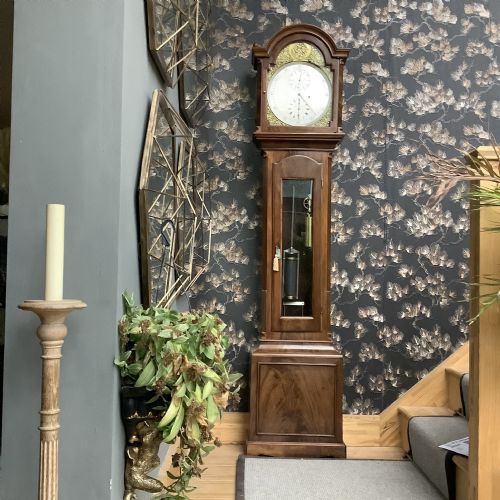
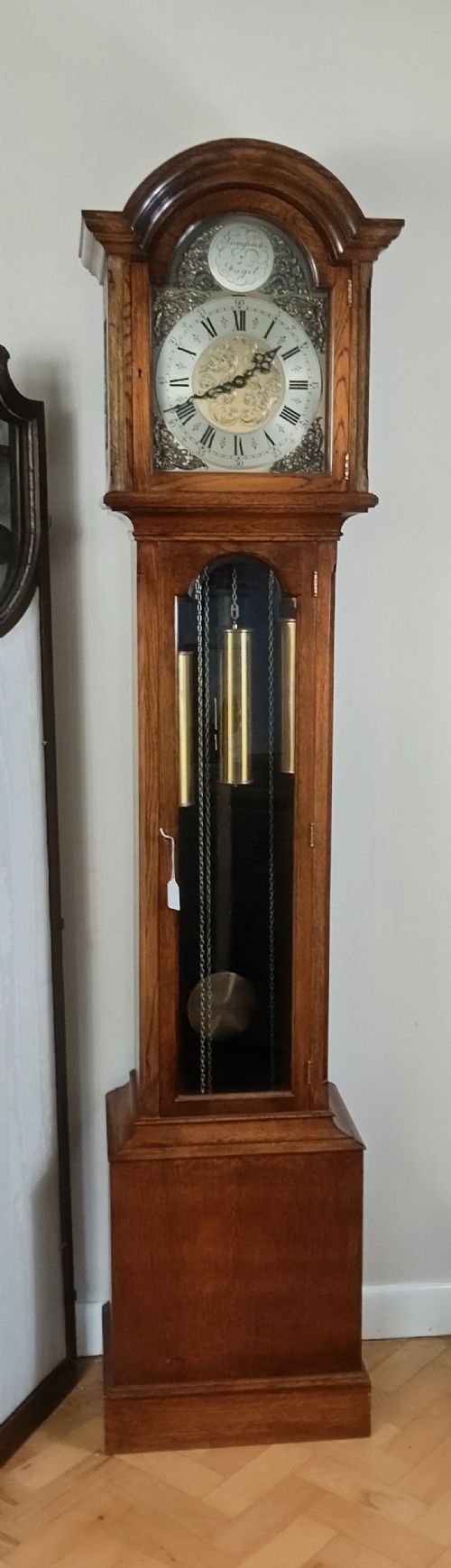
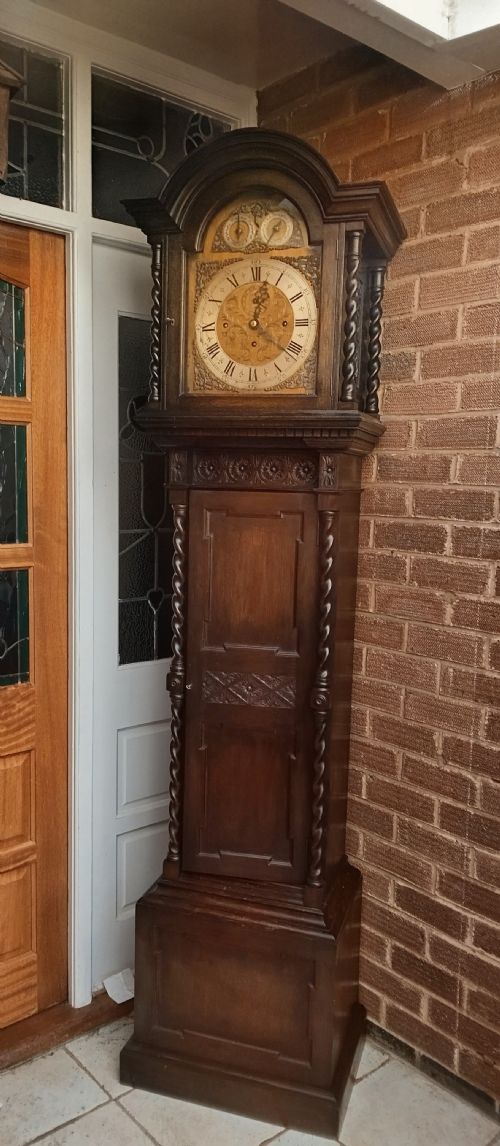
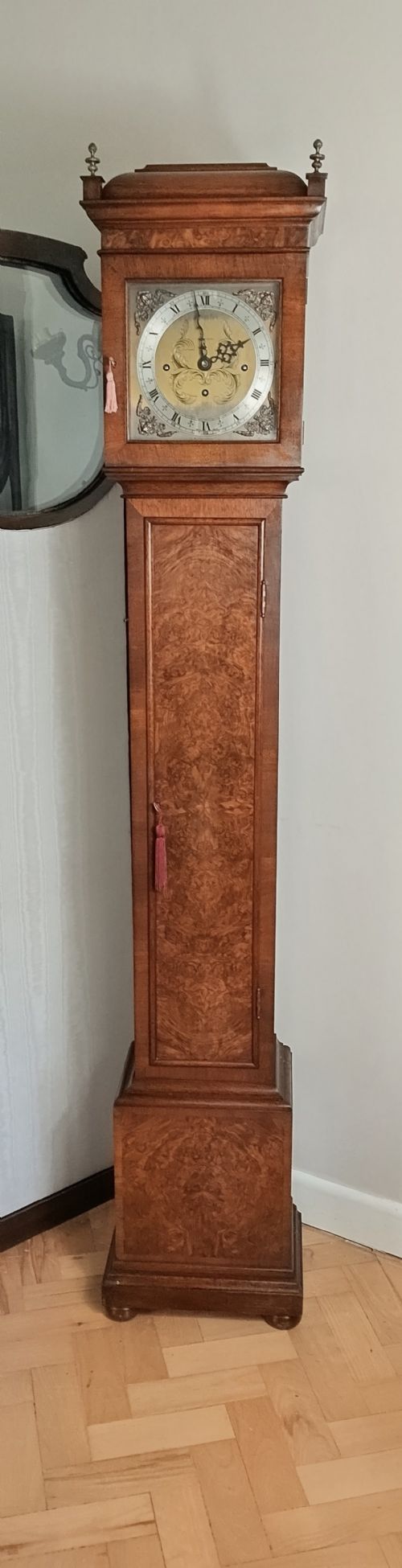
Chiming Longcase Floor Clock
A chiming longcase floor clock brings deep resonant bells and steady mechanical rhythm into a room, offering both fine cabinetry and intricate timekeeping.
Chiming Longcase Floor Clock
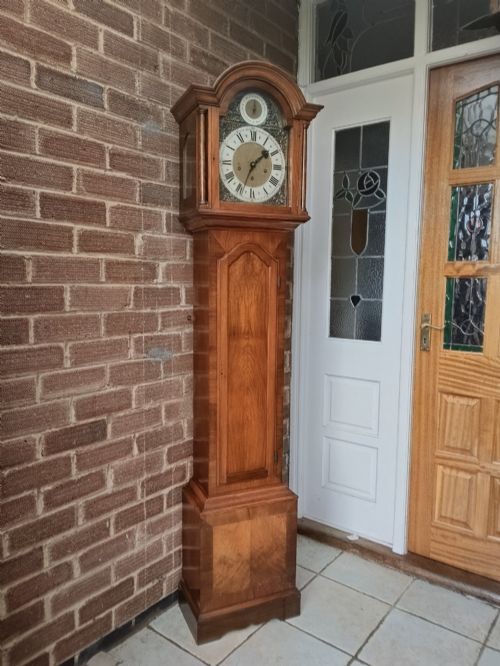
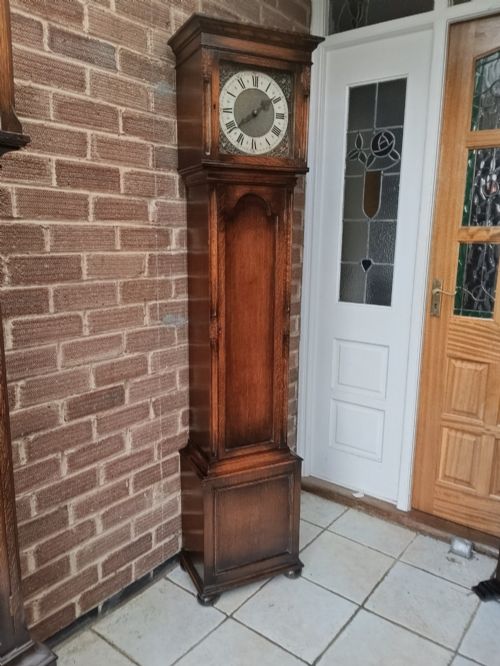
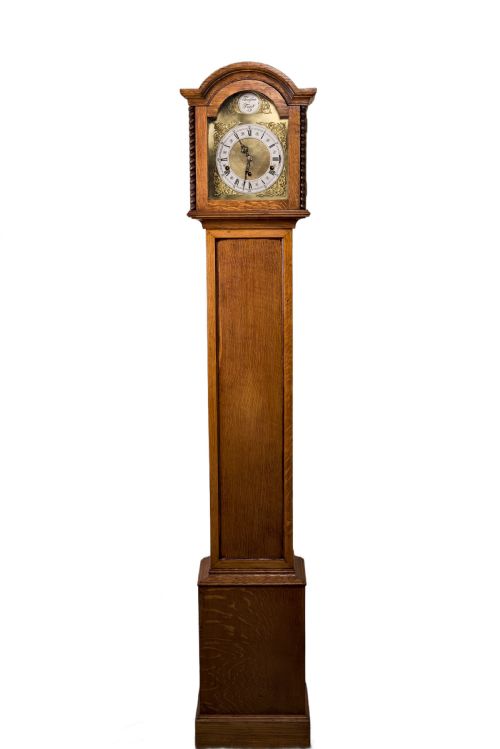
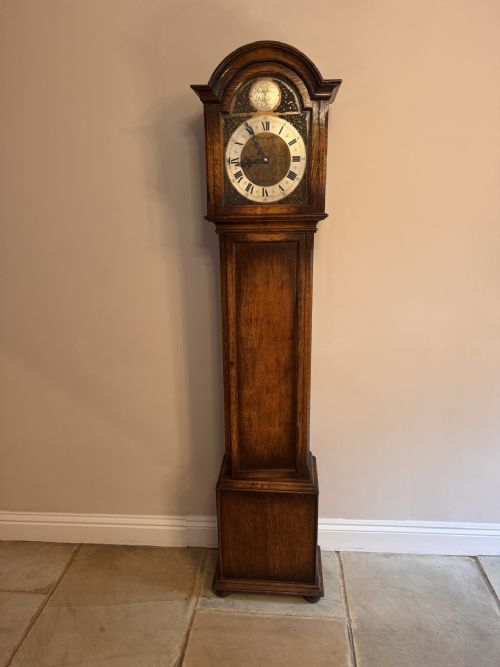
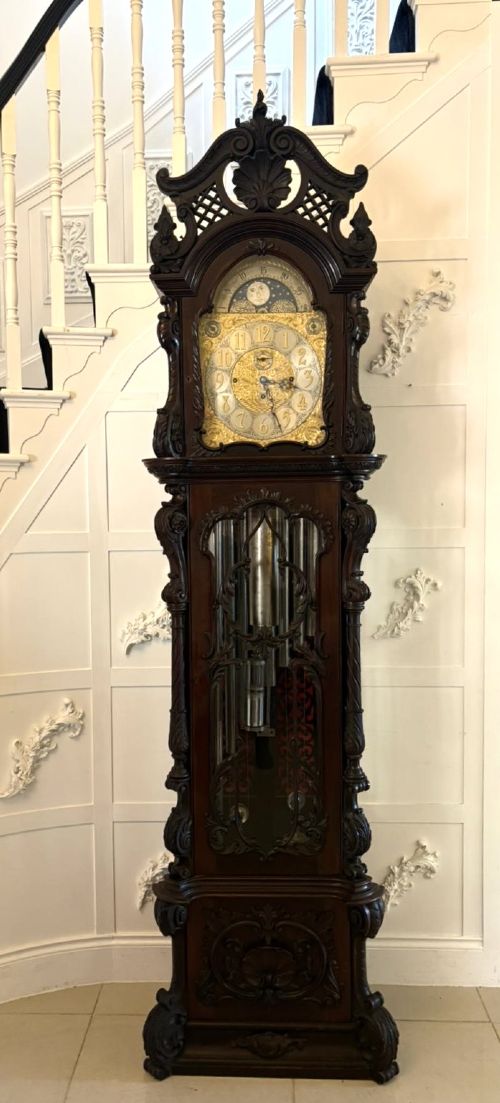
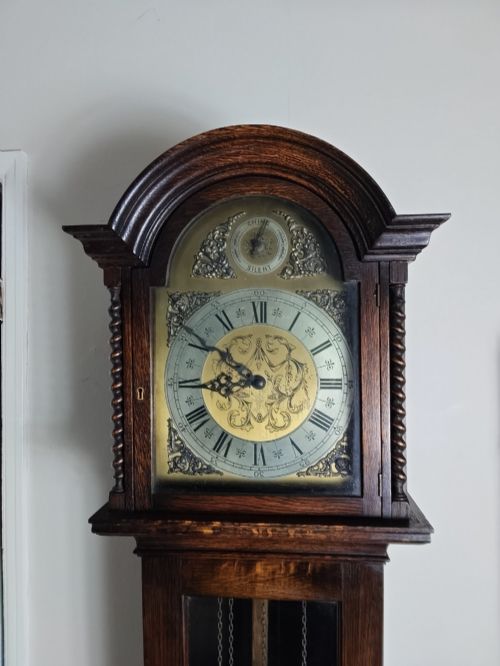
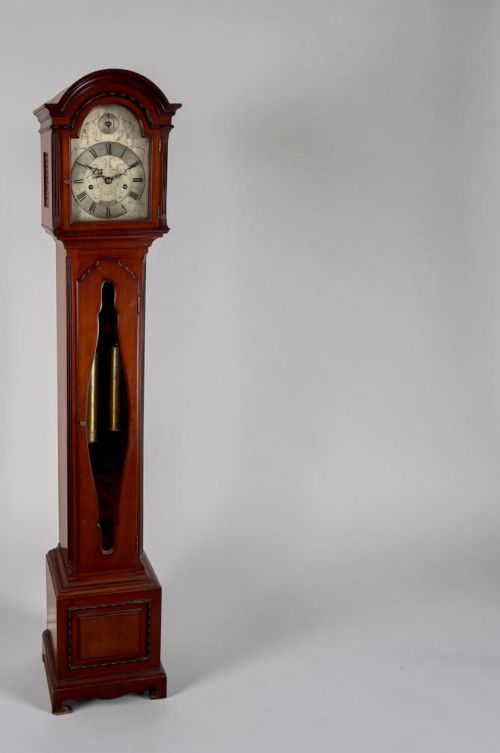
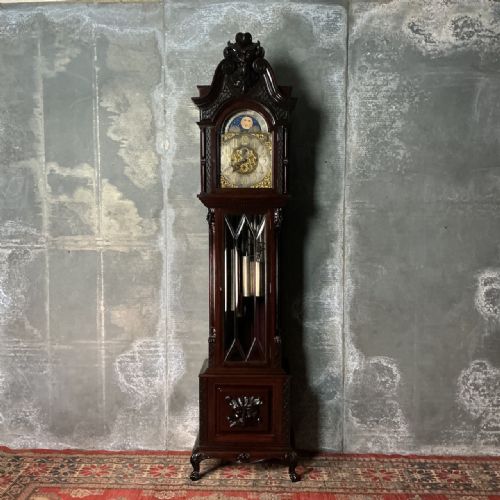
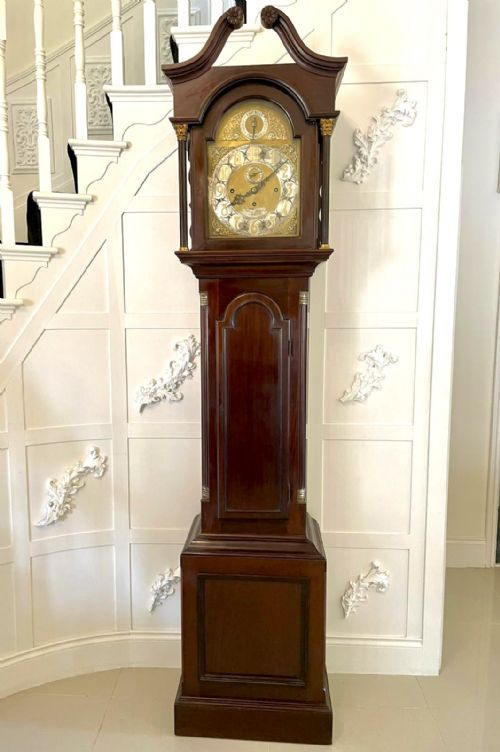
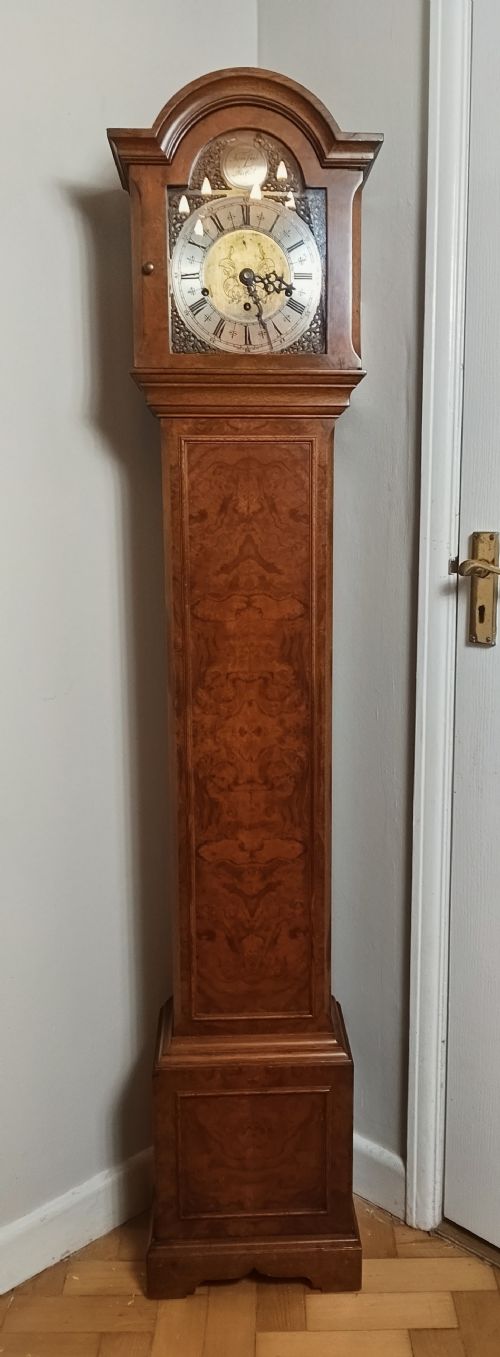
A chiming longcase floor clock stands tall in timber cases, housing weight-driven movements designed to sound the hour and quarters. Buyers seeking a chiming longcase floor clock will encounter grander full-sized grandfather clocks alongside more compact grandmother clocks.
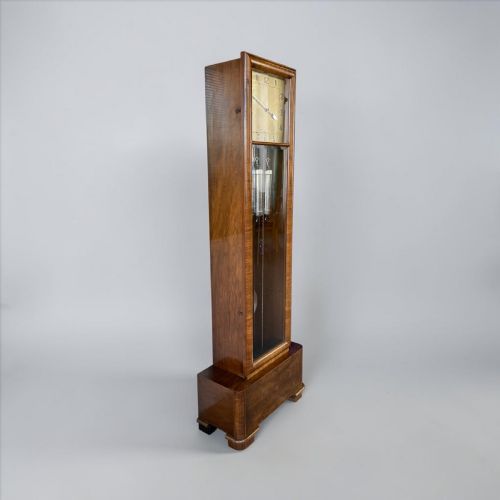
The selections span the nineteenth century through the Edwardian era and into the Art Deco period of the 1920s and 1930s. Oak, mahogany, and burr walnut dominate the cases, often enclosing complex mechanisms that play multiple tunes on bells or tubular gongs.
Originating from British workshops alongside German Black Forest production, these floor-standing timepieces combine architectural presence with musical engineering. Most examples on this page date from the Edwardian years up to the 1930s, reflecting a strong period of musical clockmaking.
Materials and Construction
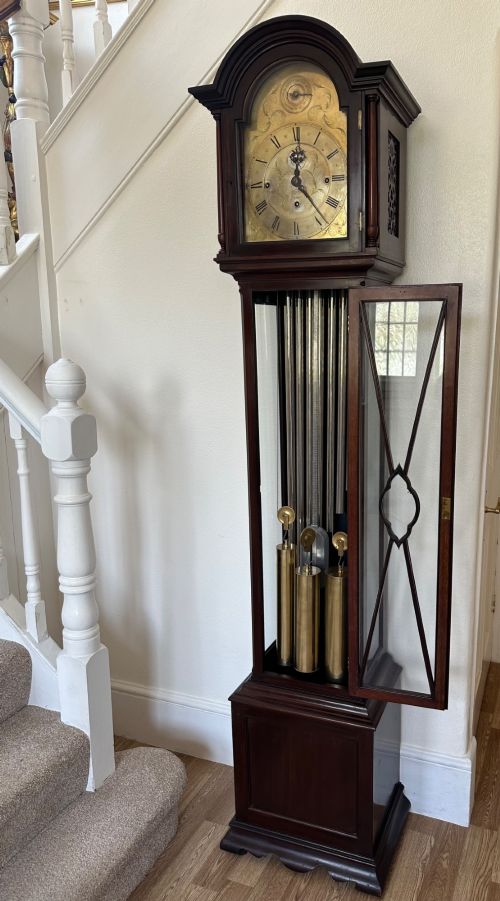
Cabinetmakers built the tall cases from solid and veneered hardwoods, employing rich selections of mahogany, oak, and burr walnut. Brass dials, bezels, and pendulum bobs provide metallic contrast against the timber surfaces, while glass doors protect the delicate movements within.
The internal mechanics rely on heavy iron or lead weights suspended by lines or chains, driving gear trains of brass and steel. Musical variations incorporate elaborate mechanisms with multiple gongs, bells, or tubular rods to produce quarter chimes and specific melodies.
Chiming Longcase Floor Clock Retail Price Guide 2026
Typical asking prices for chiming longcase floor clock among the pieces listed under this phrase on Sellingantiques today, from the lower quarter to the upper quarter. They describe what is for sale here now, not the wider market.
The object forms recorded here range from grander grandfather clocks to compact grandmother clocks and specialised regulator movements.
Distinctions in Quality
The refinement of the cabinetwork separates standard production from superior examples, visible in the matching of burr walnut veneers and the crispness of carved mahogany details. Intricate marquetry inlay and well-proportioned smaller proportions denote greater maker ambition.
Musical complexity dictates another tier of distinction, moving from simple hour strikes to three-train movements playing multiple tunes on eight bells or nine tubular gongs. Signed movements from established bell-founding and clockmaking firms elevate the standing of the piece.
Gillett & Johnston·Winsor Bishop Norwich·Elliott·Bravingtons·Enfield
The Chiming Longcase Floor Clock Glossary
- Grandmother clock
- A smaller, more slender version of the traditional longcase clock, typically standing lower in height. This form gained popularity during the early twentieth century.
- Tubular bell
- Metal tubes suspended inside the clock case that are struck by hammers to produce deep, resonant chimes. They replaced traditional bells in many larger Edwardian and later movements.
- Three train
- A clock movement with three separate gear trains powering the timekeeping, the hour strike, and the musical chime melody. This configuration drives the quarter chimes.
- Marquetry
- Decorative woodwork where pieces of contrasting veneer are applied to form pictorial patterns on the clock case. Edwardian makers utilised this technique extensively.
- Carillon
- A mechanism that plays a sequence of musical notes or tunes on a set of bells. Certain German and British examples utilise this system.
Chiming Longcase Floor Clock: Frequently Asked Questions
How do I wind a chiming longcase clock?
Winding involves using a key or pulling the chains to draw the heavy iron or lead weights back to the top of the case. Care must be taken not to overwind the springs or pull weight lines beyond their limit.
Most eight-day movements require weekly attention, while triple weight musical models demand steady handling of each train to maintain proper chime synchronization.
What is the difference between a grandfather and grandmother clock?
Grandfather clocks generally measure over six feet in height, possessing a commanding physical presence suitable for large hallways. Grandmother clocks feature smaller proportions and shorter cases, designed to fit restricted ceiling heights.
Both types share similar weight-driven mechanisms and chiming options, differing primarily in the scale of the wooden cabinetry.
Where should I place a longcase clock in my home?
Select an interior wall away from direct sunlight, central heating vents, and exterior doors to protect the wood and movement from sudden temperature shifts. A stable, level floor is essential for the pendulum to swing evenly.
Placing the clock in a quiet room allows the full resonance of the bells or tubular gongs to be appreciated without competing household noise.
How can I tell the period of a longcase clock?
Examine the timber choice, dial design, and case architecture, noting the heavy carvings of Victorian examples versus the cleaner geometric lines of 1930s Art Deco pieces. Edwardian models frequently feature inlaid marquetry and smaller proportions.
Signatures on the brass dial or movement backplate often provide direct evidence of the maker and production era.