


Chime Floor Clock Oak
These chime floor clock oak pieces combine striking musical movements with substantial timber cases, offering both practical timekeeping and deep traditional presence.
Chime Floor Clock Oak
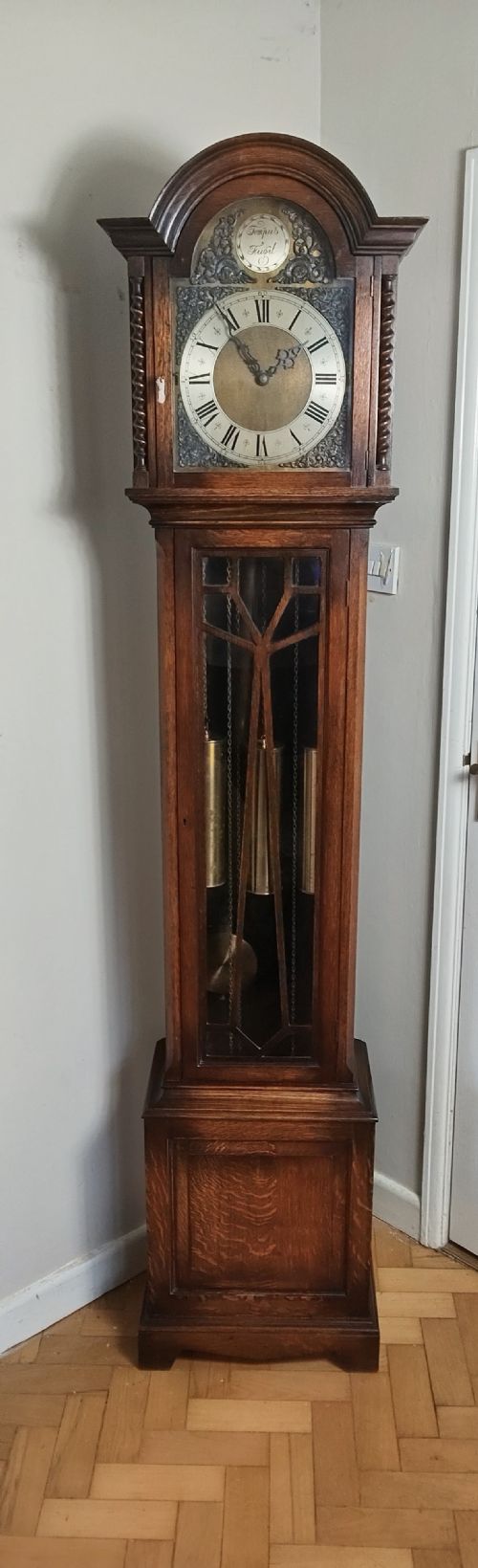
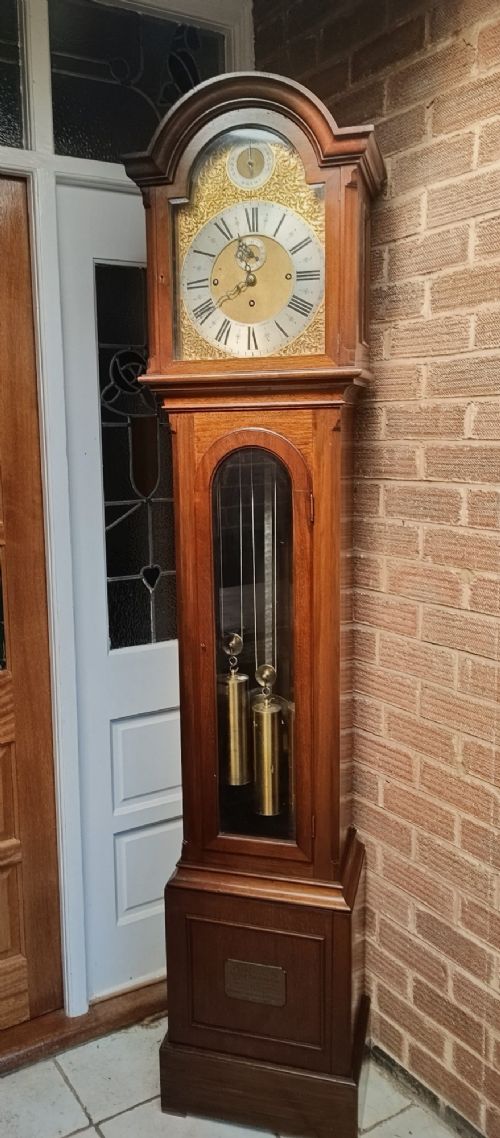
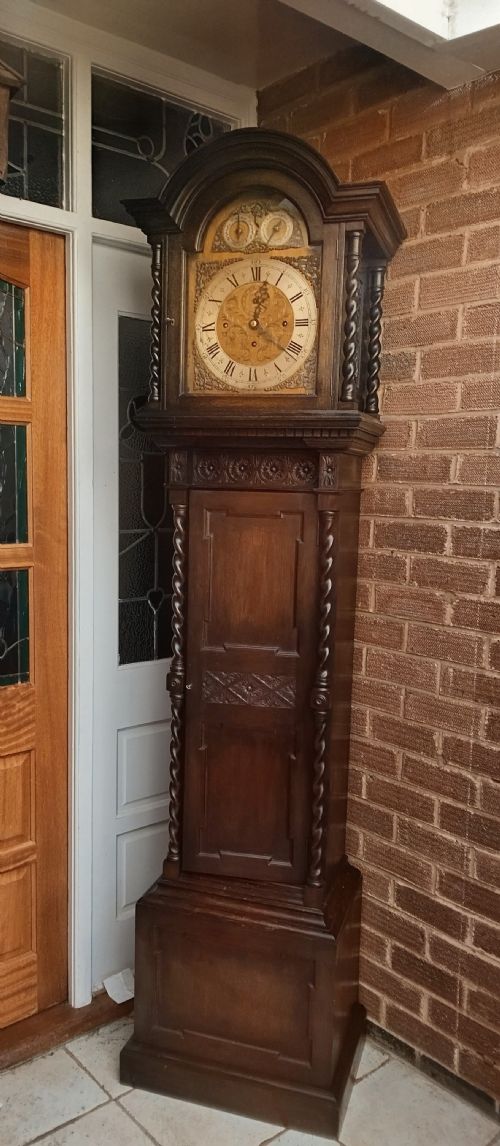
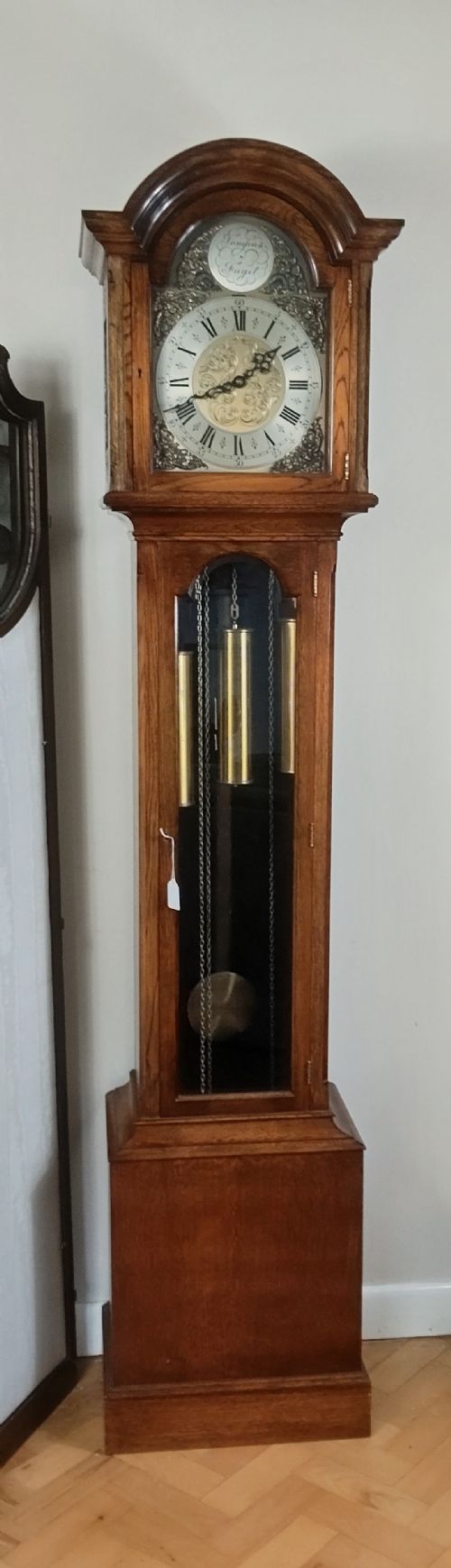
A chime floor clock oak search reveals tall case timepieces housing mechanical movements designed to chime quarters, hours, or specific musical tunes. Most examples on this page date from the Edwardian era through the 1930s, featuring grandfathers and smaller grandmother clocks.
The architectural styles span Jacobean Revival, Art Deco, and English Traditional, reflecting the shifting tastes of the early twentieth century. Cases range from imposing tall grandfather clocks to more compact grandmother clocks suited to domestic spaces.
Origins include English workshops alongside continental makers such as Black Forest German production. Materials primarily focus on oak timber paired with brass dials and glass door panels.
Quality factors in movement and case
Quality rests in the complexity of the chiming mechanism, moving from simple hour strikes to triple-weight musical movements playing multiple tunes on bells or gongs. Heavier gauge brass and refined gear trains indicate superior craftsmanship in the movement.
Cabinetwork quality appears in the depth of carving, the grain selection of the oak timber, and the proportion of the hood and trunk. Signed dials from notable makers or retailers also elevate the standing of an individual piece.
Some Edwardian grandmother clocks were built remarkably slim just to fit the narrow hallways of interwar suburban homes.
Elliott·Bravingtons·Enfield·Harrods·W Prior Skipton
The Chime Floor Clock Oak Glossary
- Grandfather clock
- A tall floor-standing pendulum clock enclosed in a wooden case, typically standing over six feet high. The long case houses the weights and pendulum.
- Grandmother clock
- A smaller, more slender version of the traditional grandfather clock, produced frequently during the Edwardian period and the early twentieth century. It serves rooms with lower ceilings.
- Longcase clock
- The formal horological term for any weight-driven pendulum clock housed in a tall wooden case. They are synonymous with grandfather and floor clocks.
- Regulator clock
- A precision pendulum clock built to maintain high timekeeping accuracy. These movements often feature fine adjustments on the pendulum and dial.
- Triple weight
- A movement driven by three separate weights operating the timekeeping train, the hour strike, and the chiming or musical melodies. Each weight requires periodic manual winding.
Chime Floor Clock Oak: Frequently Asked Questions
How do I wind a chiming floor clock?
Winding involves using a key to raise the weights inside the trunk via the winding arbor on the dial face. Care must be taken not to overwind the springs or pull the weight chains too abruptly.
For triple-weight models, each weight controls a different function, so all three must be raised according to the manufacturer instructions to keep both time and chimes operational.
What is the difference between a grandfather and grandmother clock?
The primary distinction lies in overall height and proportion. Grandfather clocks are taller and broader, designed for large hallway spaces.
Grandmother clocks are scaled down in stature, making them suitable for smaller domestic rooms while retaining mechanical chiming movements.
How do tubular bells differ from gongs?
Tubular bells consist of suspended metal tubes struck by hammers to produce a resonant, cathedral-like chime. Gongs are typically coiled steel rods mounted internally that yield a shorter tone.
Both systems were utilised across early twentieth-century clocks to play melodies or quarter-hour sequences.
Where should I place an oak floor clock?
Floor clocks require a stable, level surface against a solid wall to ensure the pendulum swings evenly and keeps accurate time. Avoid placing them in areas prone to dampness or direct sunlight which can affect the oak case.
Adequate clearance is also necessary around the base and hood for opening doors during winding.