
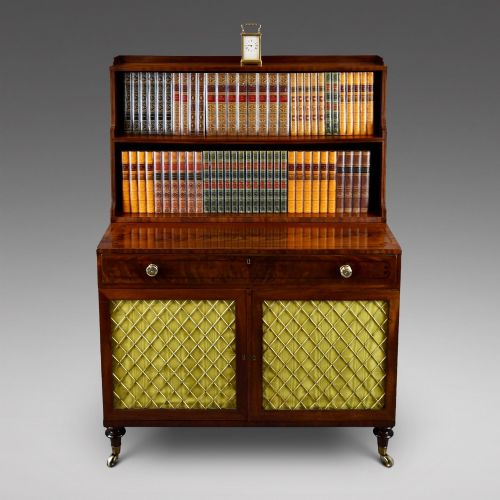
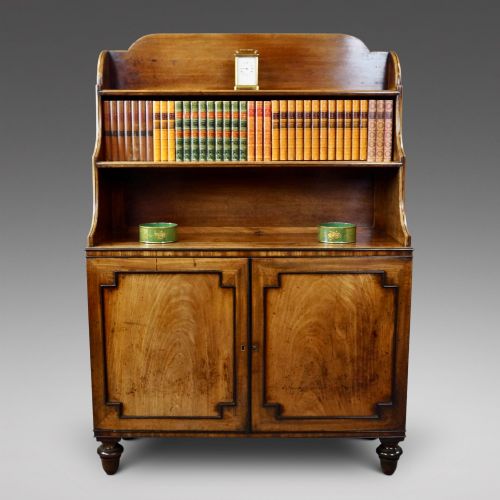
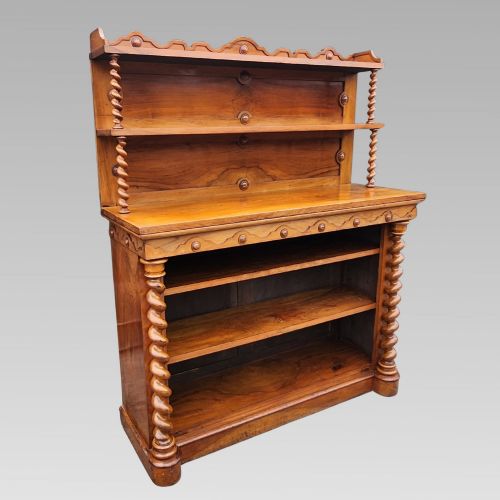
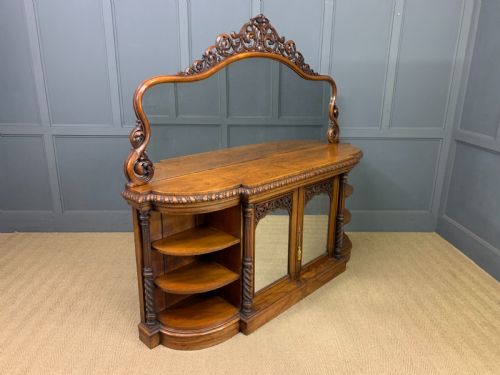
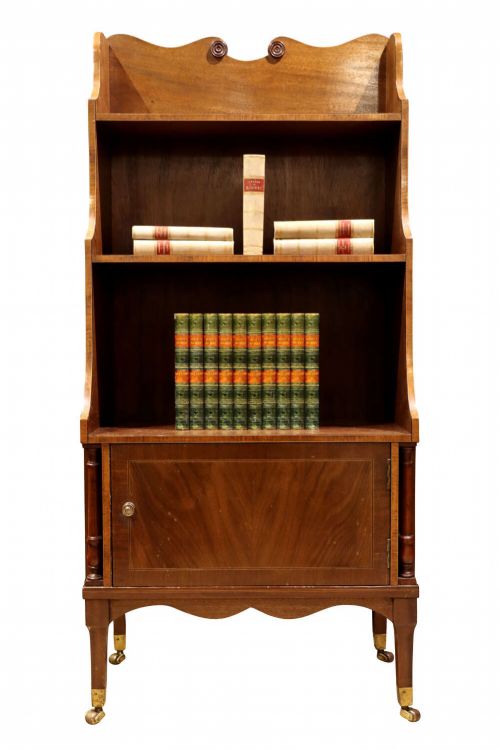


Chiffonier with Open Shelves
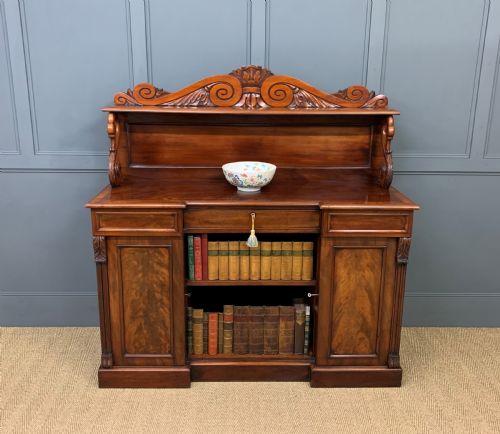
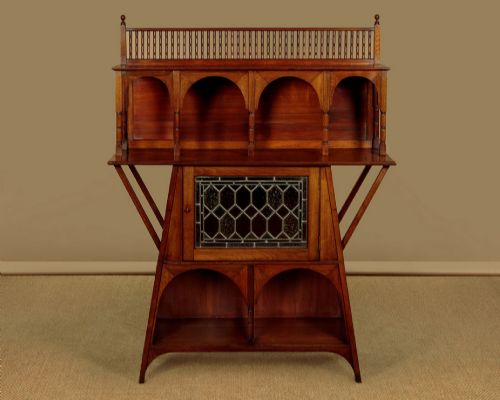
These chiffonier with open shelves pieces combine lower enclosed storage with display space above, offering a practical centrepiece for any room.
Chiffonier with Open Shelves
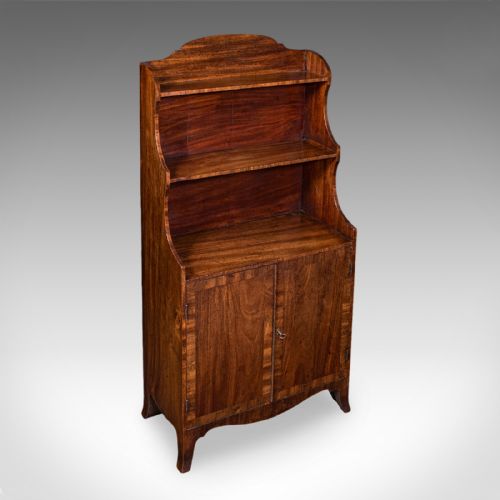
A chiffonier with open shelves bridges the gap between a sideboard and a bookcase, providing both cupboard storage below and tiers for display above. The pieces gathered here span from the Georgian and Regency periods through to the Victorian, Edwardian, and early twentieth century. Most examples utilise mahogany, flame mahogany, or satinwood, often standing on brass castors.
The form appears in various guises across these eras, including waterfall bookcases, cabinets with open tops, and Credenzas. Buyers encounter standard upright proportions alongside petite formats designed for smaller spaces. These items served traditionally to hold books, china, or decorative ornaments in principal reception rooms.
Materials and construction
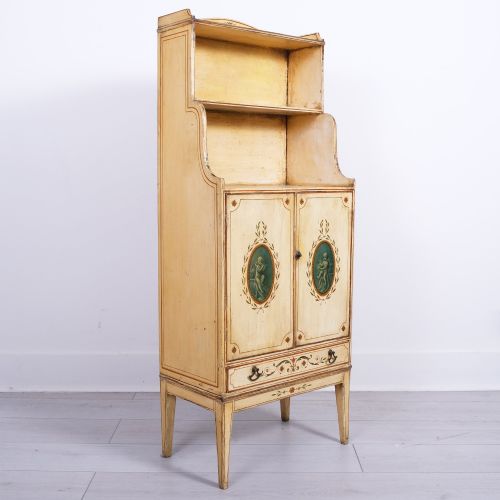
Cabinet makers relied heavily on timber selection, utilising solid mahogany, burr walnut, and rosewood, sometimes accented with satinwood stringing or painted decoration. Grain patterns such as flame mahogany received careful book-matching across cupboard doors to create visual symmetry.
Woods recorded across the selection include mahogany, flame mahogany, satinwood, burr walnut, rosewood, oak, and painted wood.
Assessing the standard
Quality rests in the crispness of the timber mouldings and the precision of the joinery connecting the open shelves to the lower cabinet. Superior examples display carefully chosen timber veneers with consistent grain continuity across the facade.
The sophistication of decorative details distinguishes the finer pieces. Finely painted panels, delicate satinwood inlay, and intact original brass castors indicate workshop execution of a higher order.
Robert Strahan
The Chiffonier with Open Shelves Glossary
- Waterfall bookcase
- A set of open shelves that progressively recede in depth from bottom to top, creating a stepped profile reminiscent of a cascading waterfall. This style gained popularity during the Regency and Victorian periods.
- Flame mahogany
- A veneer cut from the fork of a mahogany tree where the branch meets the trunk, producing a distinctive, fiery wave pattern. Cabinet makers prized this figure for principal display surfaces.
- Satinwood
- A durable, yellowish timber native to India and Ceylon, frequently employed for stringing, banding, or as a primary veneer in high-status neoclassical furniture.
- Credenza
- A sideboard or cabinet, originally Italian in origin, featuring enclosed cupboards and occasionally open display sections. Victorian iterations often incorporate glass doors and elaborate marquetry.
- Stringing
- A narrow strip of contrasting wood inlaid into the surface of furniture to form decorative borders or outlines. It requires steady hand-cutting and precise channel routing.
Chiffonier with Open Shelves: Frequently Asked Questions
What is a chiffonier with open shelves?
It is a hybrid furniture form combining a closed lower cupboard with stepped or tiered open shelving above. This arrangement allowed owners to store household items out of sight while displaying books or ornaments.
Craftsmen built these pieces primarily in mahogany, rosewood, and walnut across the eighteenth, nineteenth, and early twentieth centuries.
How do I date a chiffonier?
Dating relies on observing timber choices, construction methods, and stylistic markers specific to periods like George III, Regency, or Victorian. Regency and George III examples often show lighter proportions and satinwood details, while Victorian pieces lean towards heavier burr walnut or deep mahogany.
Hardware inspection also helps, as original brass castors and locks correspond to specific manufacturing eras.
Where should I place one at home?
These pieces suit living rooms, studies, or dining rooms where both surface display and concealed storage prove useful. The open shelves hold books or ceramics, while the lower cupboards keep clutter hidden.
Due to their varying scales, from petite formats to larger Credenzas, measuring available wall space ensures the proportions complement the room.