



Chiaroscuro Portrait Artwork
These chiaroscuro portrait artwork pieces capture dramatic plays of light and shadow, offering buyers deep psychological intensity and rich historical atmosphere.
Chiaroscuro Portrait Artwork
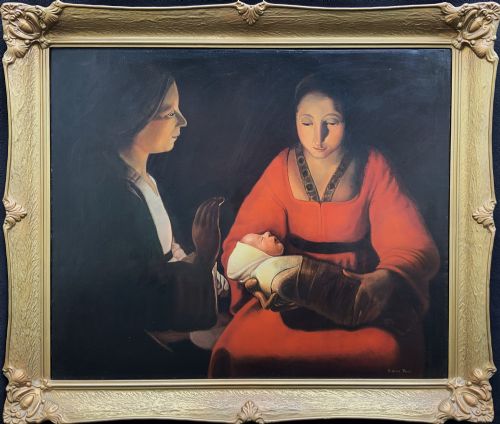
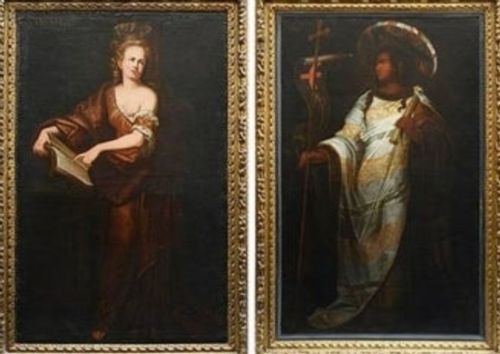
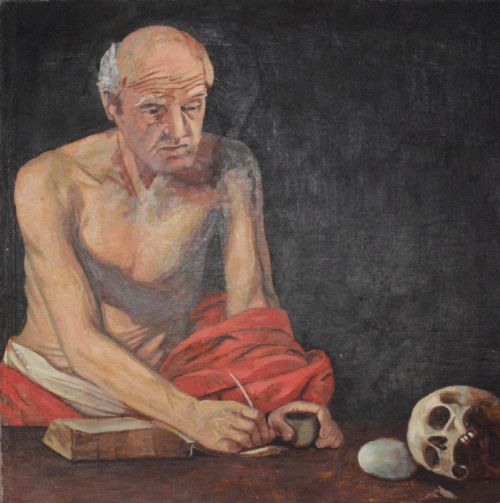
Buyers seeking chiaroscuro portrait artwork encounter oil paintings spanning from the seventeenth century through to mid-century revivals. The selection frequently includes large-scale oil on canvas works and panel paintings depicting religious figures, mythological subjects, and historical personages.
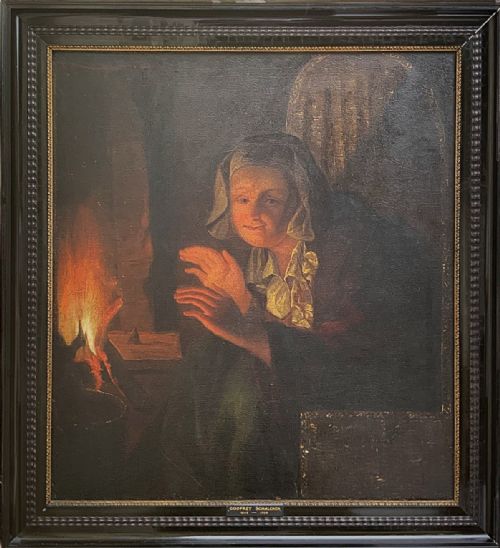
Many examples draw direct inspiration from the Dutch Golden Age and Baroque traditions, often presenting close studies after masters such as Rembrandt and Georges de La Tour. These canvases emphasise deep shadows pierced by single light sources to create theatrical focus upon the face.
The objects vary from grand eighteenth-century pairs down to intimate nineteenth-century and mid-century studies. Traditional realists and regional schools are heavily represented, bringing heavy framing in giltwood or plain wood.
Materials and technique
Frames are constructed from wood, frequently enhanced with gilt or giltwood surrounds that complement the dark palettes of the compositions. Support structures utilise stretcher frames for canvas or solid timber boards for panel works.
Materials recorded across the inventory include oil paint, canvas, wood, and giltwood.
Evaluating quality
The integrity of the original canvas or panel surface and the depth of the surviving pigment layers define the longevity of the object. Period framing suited to the age of the painting further elevates the overall presence.
Georges de La Tour·Godfried Schalcken·Rembrandt van Rijn·Quirijn Van Brekelenkamp·Bartolomeo Schedoni·William Tate·Joseph Wright of Derby
The Chiaroscuro Portrait Artwork Glossary
- Chiaroscuro
- An artistic technique using strong contrasts between light and dark to give a three-dimensional volume to figures. This method creates dramatic tension across the portrait.
- Impasto
- Paint applied thickly to a canvas, standing out from the surface. This technique allows highlights to catch actual room light.
- Panel painting
- A painting executed on a flat wooden board rather than canvas. These rigid supports are common in earlier Dutch works.
- Giltwood
- Wood carved and covered with thin gold leaf or a gold-colored metallic finish. It provides traditional framing for Baroque and revival paintings.
- School
- A group of artists sharing a similar style, time period, or geographic region under the influence of a master. Listings frequently note Italian or Dutch examples.
Chiaroscuro Portrait Artwork: Frequently Asked Questions
How do I hang a heavy oil painting?
Secure heavy canvas works directly into wall studs using rated picture wire and sturdy brass fixings. Ensure the weight is evenly distributed across multiple wall hooks.
Keep these canvases away from direct heat sources and strong sunlight to protect the aged oil paint and gilt wood frames.
What does after a master mean?
This phrase indicates the painting is a later study or copy created in the style of a well-known artist. These works often preserve compositions that would otherwise be difficult to acquire.
Such pieces reflect the enduring influence of the original painter across subsequent centuries.
How should I clean an oil painting?
Dust the canvas very gently with a soft, dry artist brush to remove loose particles. Avoid using water, household cleaners, or chemical solvents on the painted surface.
Consult a professional conservator if the varnish has darkened or if the paint layer shows cracking.
Why are many works unsigned?
Many historical paintings, particularly studio works and copies after famous masters, were produced without artist signatures as standard workshop practice. Attribution relies instead on stylistic analysis, materials, and subject matter.
This lack of a signature does not diminish the age or decorative quality of the piece.