
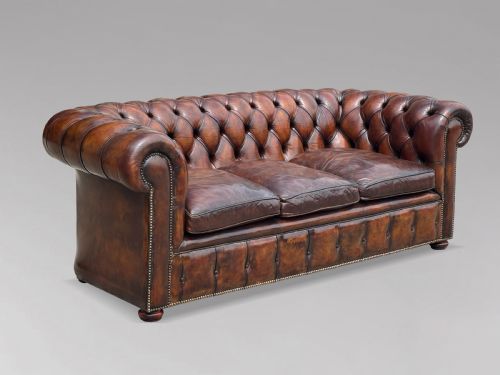

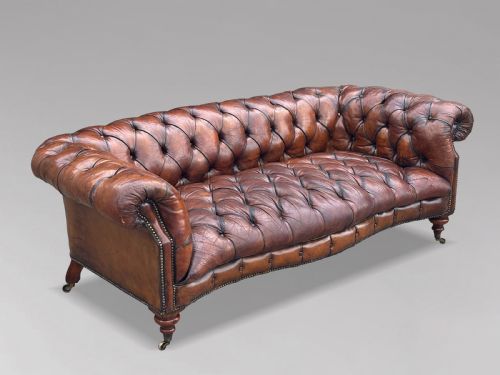
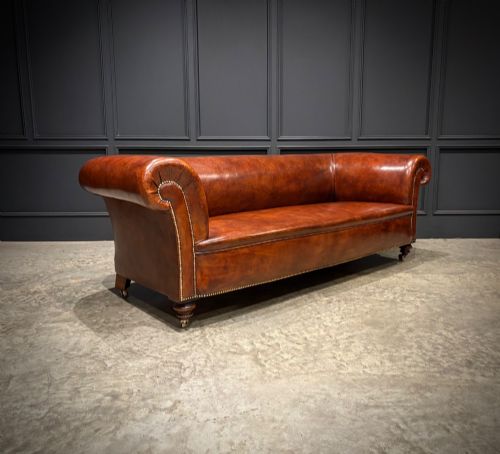


Chestnut Leather Couch
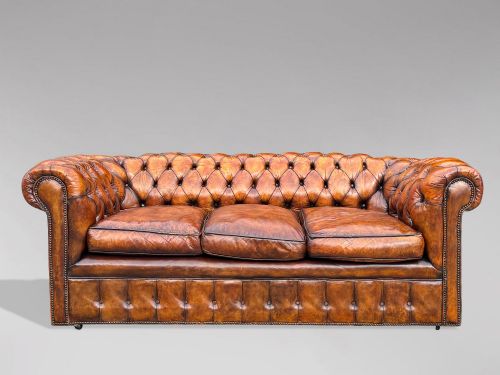
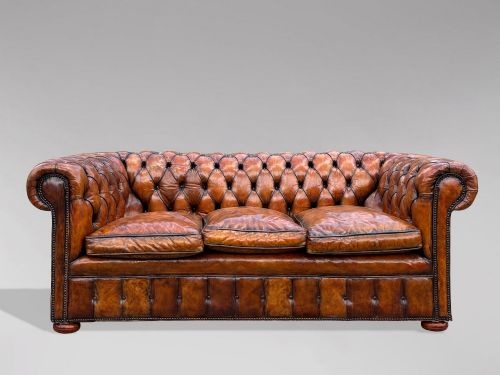
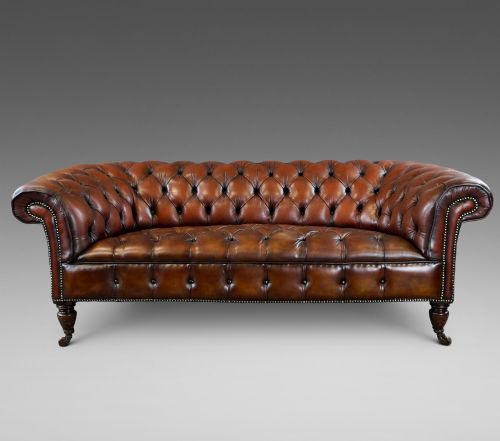
A chestnut leather couch offers deep buttoned comfort and rich historical character, grounding a room with enduring presence.
Chestnut Leather Couch
When you search for a chestnut leather couch, you are looking at substantial seating built primarily during the Victorian and Edwardian periods. These pieces span the nineteenth and early twentieth centuries, bringing traditional English and revival styles into domestic spaces.
The most common forms on this page are three-seater Chesterfields and settees, often featuring deep buttoning and generous proportions. You will encounter nineteenth-century examples alongside early twentieth-century pieces, reflecting decades of craftsmanship.
Makers such as Maple and Co and Howard and Sons occasionally appear alongside standard Victorian productions. These items range from simple settees to large lounge suites incorporating mahogany and hardwood frames.
Construction and materials
Frames rely on sturdy hardwoods such as mahogany, providing the structural skeleton necessary to support heavy daily use. Traditional stuffing materials like horsehair fill the interiors, ensuring firm and resilient cushioning.
Upholstery consists of brown and hand-dyed leathers, secured with traditional methods including deep buttoning. Brass details frequently accent the woodwork and leather edges, adding functional and decorative contrast.
Materials recorded across the inventory include leather, brass, wood, hardwood, and mahogany.
Judging quality and execution
The distinction between standard production and high-end work lies in the handling of the timber frame and the depth of the upholstery buttoning. Superior examples demonstrate rigorous joinery in hardwoods and precise tension in the internal horsehair stuffing.
The quality of the leather itself defines the tactile appeal, where hand-dyed finishes exhibit greater tonal variation and depth. Maker attribution also elevates certain pieces, distinguishing generic workshop output from named manufacturing houses.
Maple and Co·Howard and Sons
The Chestnut Leather Couch Glossary
- Chesterfield
- A traditional style of sofa characterised by rolled arms and deep buttoned upholstery. It remains a defining form in British seating history.
- Horsehair
- A natural filling material harvested from horses and utilised for internal padding. It provides firm, breathable support in antique upholstery.
- Deep buttoning
- An upholstery technique where buttons are pulled deep into the padding to create distinctive diamond patterns. This secures the filling and adds structural tension.
- Hardwood
- Dense timber derived from broad-leaved trees, used for internal frames. It ensures long-term stability and resistance to warping.
Chestnut Leather Couch: Frequently Asked Questions
What defines a traditional chestnut leather couch?
These pieces are predominantly Victorian or Edwardian Chesterfields upholstered in brown or hand-dyed leather. They feature deep buttoning and robust hardwood frames designed for longevity.
Craftsmen utilised horsehair for internal padding, creating a firm seat that retains its shape over decades of use.
How can I identify a Victorian period sofa?
Victorian examples often display deep buttoned leather and substantial proportions, frequently taking the form of a three-seater Chesterfield. The presence of traditional materials like mahogany and horsehair points directly to nineteenth-century production methods.
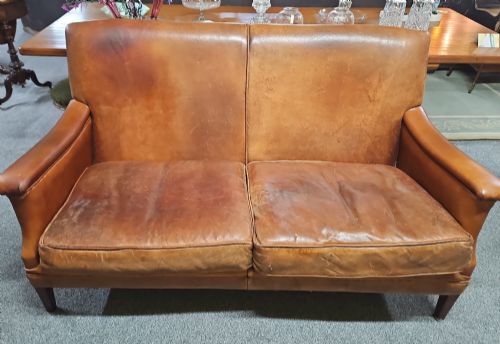
Stylistic influences range from plain traditional English designs to George II revival highback forms.
Are these sofas suitable for daily use?
These pieces were built for everyday seating using dense hardwoods and durable leather hides. Many surviving examples have been fully restored with traditional coil springing and padding intact.
Proper leather conditioning and careful placement away from direct heat sources will keep the material supple for ongoing use.
What is the difference between a settee and a Chesterfield?
A settee is a general term for a long upholstered seat, which can encompass various back heights and arm styles. A Chesterfield specifically denotes a design with arms and back of the same height, finished with rolled edges and deep buttoning.
How do hand-dyed leathers age over time?
Hand-dyed leathers develop a natural patina through regular handling and exposure to light. The hide softens and deepens in colour, revealing subtle tonal variations that reflect its history.
This ageing process enhances the visual character of nineteenth and early twentieth-century seating.