
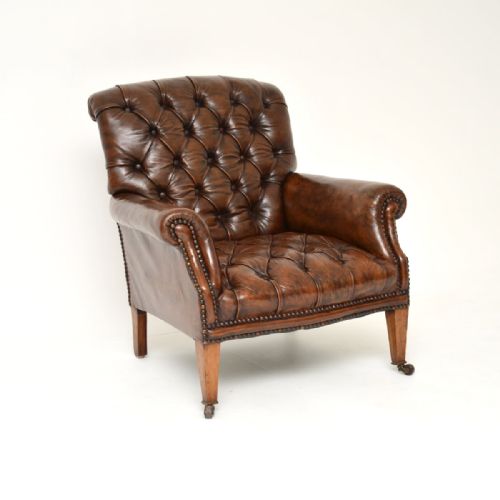


Chestnut Leather Chesterfield
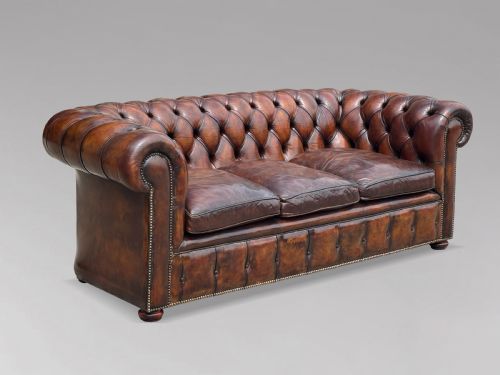
A chestnut leather chesterfield brings deep buttoning and rich warmth to a room, offering enduring comfort in both sofas and armchairs.

Chestnut Leather Chesterfield
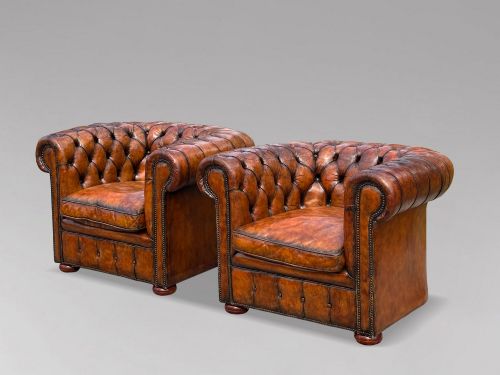
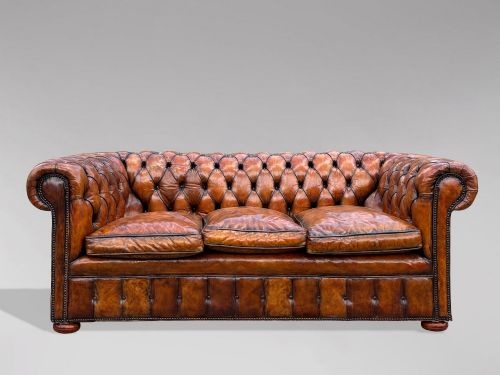
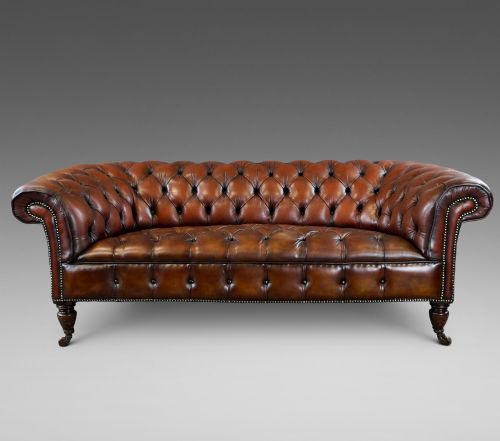
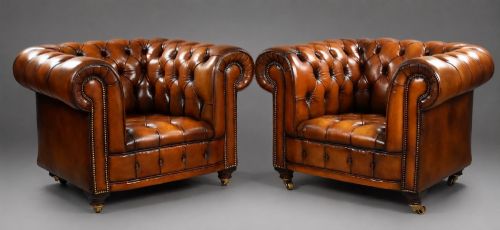
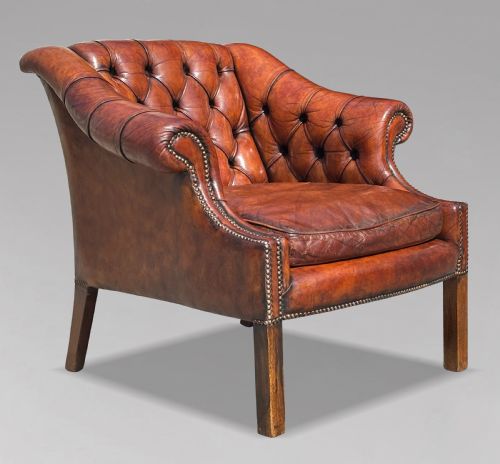
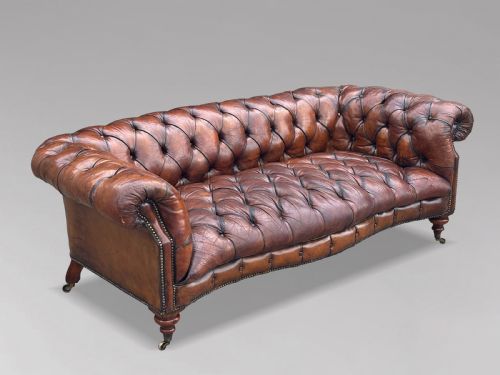
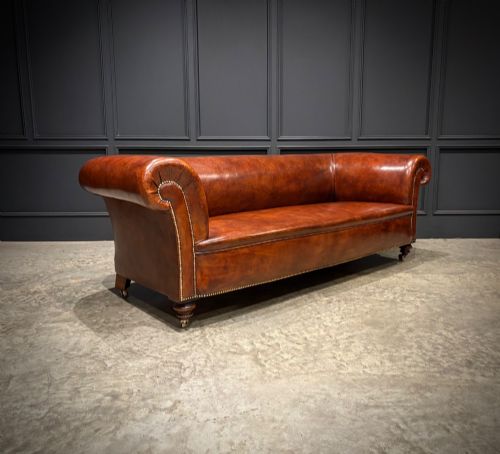
When you search for chestnut leather chesterfield pieces, you are looking at substantial seating built for traditional English interiors. The selection spans three-seater sofas, club armchairs, wing armchairs, and matching ottomans or footstools. Victorian examples form a significant portion of what meets the eye on this page.
The designs draw on Victorian, Edwardian, Regency, and George III styles. Alongside the larger settees, compact footstools and library armchairs appear frequently. These forms emerged across the nineteenth and early twentieth centuries to serve parlours, libraries, and studies.
Makers utilised resilient frames and characteristic upholstery methods to create pieces that survive across generations. The typical find combines deep buttoned backs with supportive coil springing. Chestnut leather tones dominate the current selection, ranging from lighter brown shades to deeper hand-dyed finishes.
How They Were Made
The foundational structure relies on sturdy hardwood and mahogany timber frames. These wooden skeletons support fully loose coil springing and horsehair stuffing within the upholstery layers. Such traditional stuffing methods provide a dense, resilient seat that retains its shape.
Upholsterers shaped the leather over the frame using deep buttoning techniques to secure the padding. Brass detailing often appears along the edges or around the feet. Hand-dyed finishes give the leather its distinctive chestnut colouration and varied surface depth.
Materials recorded across the inventory include hardwood, mahogany, brass, and traditional horsehair fillings.
What Varies in Quality
The integrity of the internal horsehair stuffing and coil springing dictates the tactile character of the seat. Superior examples maintain firm support and even tension across every buttoned panel. Poorer execution results in sagging areas where the internal padding has shifted over decades of use.
The grade of the leather and the depth of the hand-dyeing process separate standard pieces from exceptional ones. Premium hides display a rich variation in chestnut tone and supple texture that improves with age. Heavier hardwood framing likewise denotes a sturdier build than lighter secondary timbers.
Howard & Sons
The Chestnut Leather Chesterfield Glossary
- Chesterfield
- A traditional upholstered sofa or armchair characterised by rolled arms and a back of the same height, traditionally featuring deep buttoning. This form originated in Britain during the eighteenth century.
- Deep buttoned
- An upholstery technique where leather or fabric is pulled tight and secured with buttons at regular intervals, creating a diamond pattern of folds and indentations. This method provides structural stability to the internal padding.
- Horsehair
- A traditional upholstery filling material sourced from the manes and tails of horses. It offers durable resilience and breathability within seat cushions and backs.
- Coil springing
- A system of interconnected steel coil springs tied into place within the furniture frame to distribute weight evenly. This technique superseded simpler webbing methods in many nineteenth-century seats.
- Wingback
- An armchair featuring protective side panels, or wings, attached to the back and designed to shield the sitter from drafts. These chairs often incorporate deep leather upholstery in traditional library settings.
Chestnut Leather Chesterfield: Frequently Asked Questions
What is a chestnut leather chesterfield?
A chestnut leather chesterfield is a traditional British seat defined by deep buttoning, rolled arms, and warm brown leather upholstery. These pieces include three-seater sofas, club armchairs, and matching footstools.
Most examples date from the Victorian and Edwardian periods, constructed with hardwood frames and traditional coil springing.
How do I clean chestnut leather?
Clean chestnut leather gently using a soft, dry cloth to remove surface dust. Avoid harsh chemical cleaners that strip the natural oils from the hide.
Conditioning the leather periodically helps maintain its suppleness and preserves the rich chestnut colour over time.
Are these sofas comfortable for daily use?
These sofas offer firm, supportive seating due to their traditional horsehair stuffing and coil spring construction. The deep buttoning keeps the internal padding securely distributed.
Over decades, the leather softens further while the underlying frame maintains its structural integrity for everyday sitting.
How do I date a Victorian chesterfield?
Dating a Victorian chesterfield involves examining the timber frame, upholstery tacks, and the method of springing used beneath the leather. Nineteenth-century pieces typically employ heavy hardwood frames and hand-tied coil springs.
Stylistic cues such as turned mahogany feet and specific chestnut dye lots also help narrow down the manufacturing decade.