

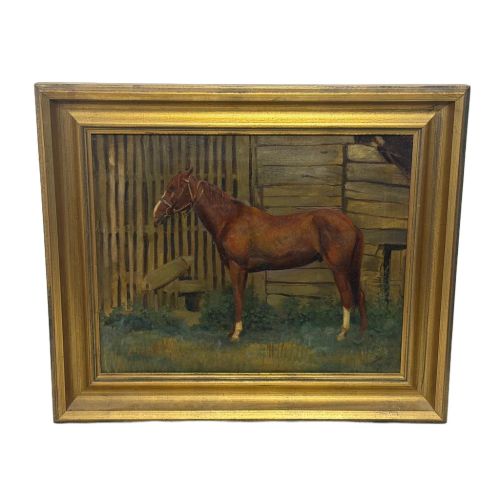

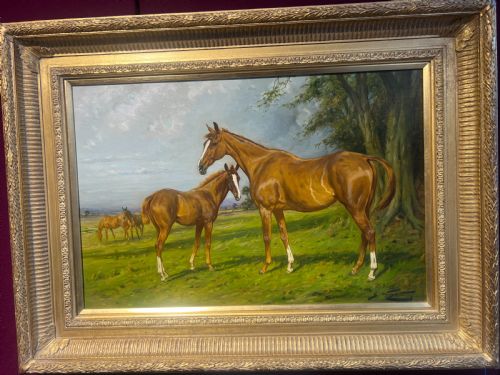
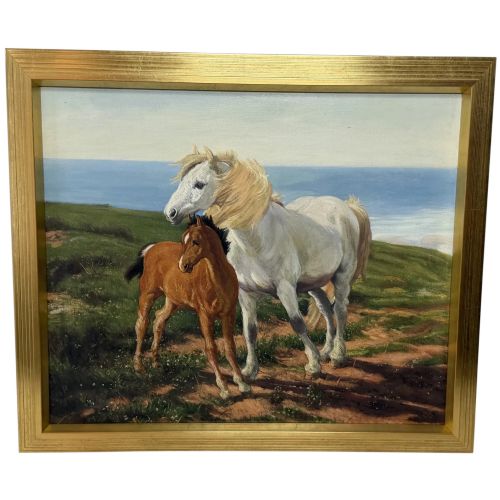
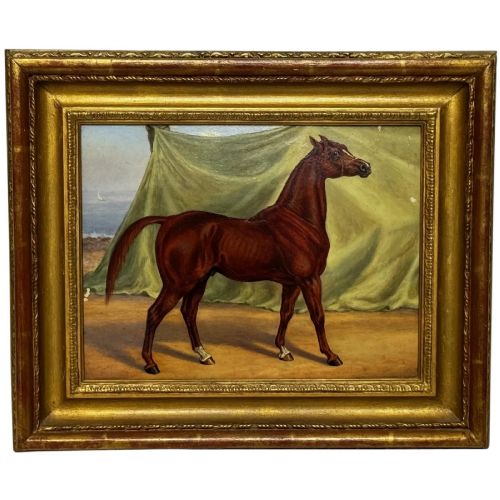


Chestnut Horse Oil Portrait
A chestnut horse oil portrait captures the power and presence of these prized animals through traditional painted canvas and panel.
Chestnut Horse Oil Portrait
A chestnut horse oil portrait represents a distinct genre within equestrian art, focusing on the rich reddish-brown coat of hunters, racehorses, and stable favourites. These works capture specific animals either within landscape settings or detailed stable interiors.
The selections available range widely across decades, spanning Victorian sporting art to early twentieth-century equestrian depictions. Common formats include oil on canvas as well as works painted directly on oak panel.
Many examples stem from British school traditions, reflecting regional breeding and sporting culture from the nineteenth century onward. Buyers encounter both signed works by known animal painters and atmospheric pieces by anonymous regional artists.
Materials and technique
Artists relied primarily on oil paint applied to stretched canvas or wooden panels, building up layers to render the musculature and sheen of the animal. This medium allowed painters to achieve deep tonal gradations within the chestnut coat.
Frames frequently complement the artwork, utilising giltwood and carved wood surrounds that reflect the interior tastes of the period. The combination of oil paint and original gilt frames provides a cohesive historical object.
Chestnut Horse Oil Portrait Retail Price Guide 2026
Typical asking prices for chestnut horse oil portrait among the pieces listed under this phrase on Sellingantiques today, from the lower quarter to the upper quarter. They describe what is for sale here now, not the wider market.
Several portraits thoughtfully include an observant stable dog keeping quiet company beside the chestnut horse.
Assessing the quality
Quality rests heavily on the anatomical precision of the horse and the ability of the painter to convey light across the muscular form. Superior examples show careful attention to the specific conformation of the animal rather than relying on generic formulas.
The depth of the background landscape or stable interior also dictates the standard of the piece, with richer works incorporating detailed environmental context. Preserved canvas condition and minimal overpaint further distinguish finer examples.
George Wright·John Ferneley Senior·Alfred Moginie Bryant·Abraham Cooper RA·Charles Bilger Spalding RA·Benedict Angell Hyland·Karl Georg Arsenius
The Chestnut Horse Oil Portrait Glossary
- Oil on Canvas
- A traditional painting medium where pigments suspended in oil are applied to a woven fabric support stretched over a wooden frame. This method permits smooth blending and lasting luminosity.
- Giltwood
- Wood that has been coated with a thin layer of gold leaf or gold paint, frequently seen on period picture frames. It adds a warm reflective border to the artwork.
- Equine Art
- Depictions of horses across various mediums, encompassing racing scenes, stable portraits, and hunting subjects. This genre flourished particularly in British art during the eighteenth and nineteenth centuries.
- Oak Panel
- A rigid wooden support used by artists before canvas became dominant, offering a stable surface for detailed portraiture. Panels require careful humidity control to prevent warping over time.
Chestnut Horse Oil Portrait: Frequently Asked Questions
How do I identify a nineteenth-century horse portrait?
Examine the preparation of the canvas or panel, the style of the giltwood frame, and the clothing styles of any figures included in the composition. Nineteenth-century works often feature specific brushwork and varnish patination characteristic of the period.
Look for signatures or inscriptions on the reverse of the stretcher bars, which frequently record the name of the horse or the stable location.
Where were these equine paintings originally displayed?
Landowners and sporting enthusiasts typically hung these portraits in country house libraries, drawing rooms, or dedicated estate offices. They served as proud records of valued hunters, racehorses, and breeding stock.
Stable blocks themselves also housed simpler depictions of favourite animals, though surviving examples from domestic interiors tend to retain finer original frames.
What is the difference between a hunter and a racehorse portrait?
Hunter portraits usually depict sturdier, powerful animals often shown alongside hunting dogs or within stable yards, reflecting field sports. Racehorses and thoroughbreds generally appear leaner, sometimes captured on the track or with jockeys.
Both types emphasise the specific conformation and coat colour of the individual animal, most notably rich chestnut shades.