

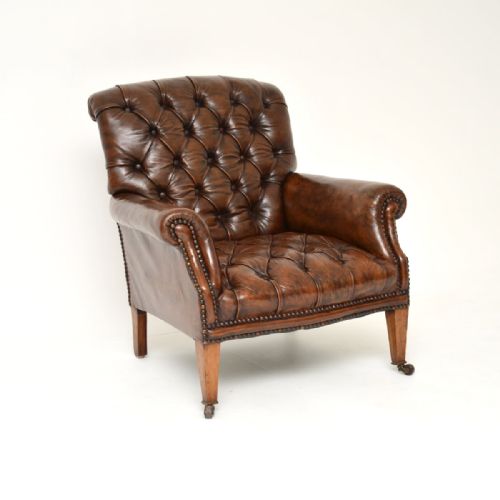
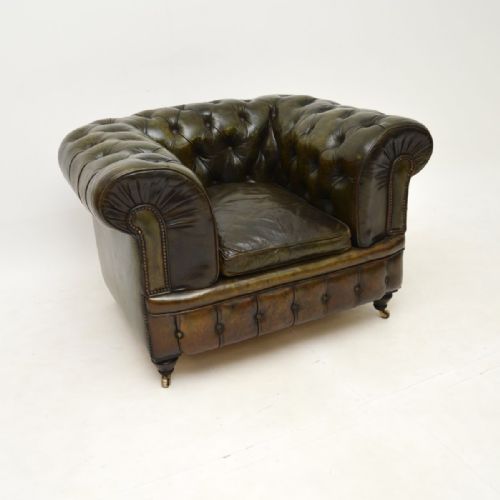


Chesterfield Club Armchair
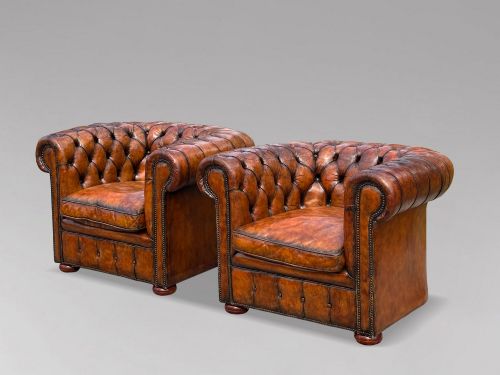
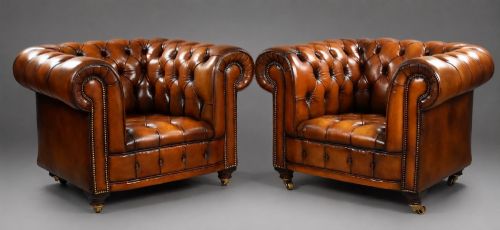
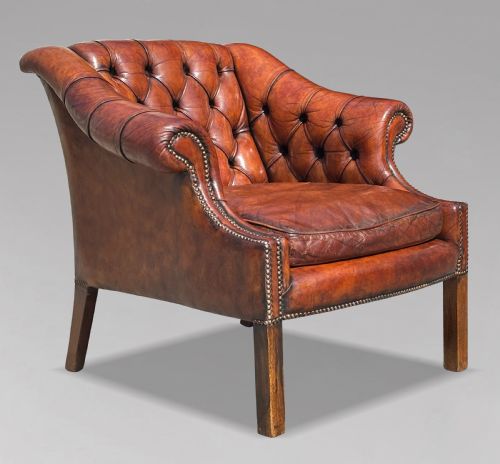
A chesterfield club armchair delivers deep-seated comfort through low backs, robust frames, and heavily upholstered leather arms.
Chesterfield Club Armchair
A chesterfield club armchair brings substantial proportions and deep buttoning into a room, designed originally for private libraries, smoking rooms, and gentleman's clubs. The pieces on this page span the Victorian and Edwardian eras, alongside later early twentieth-century interpretations.
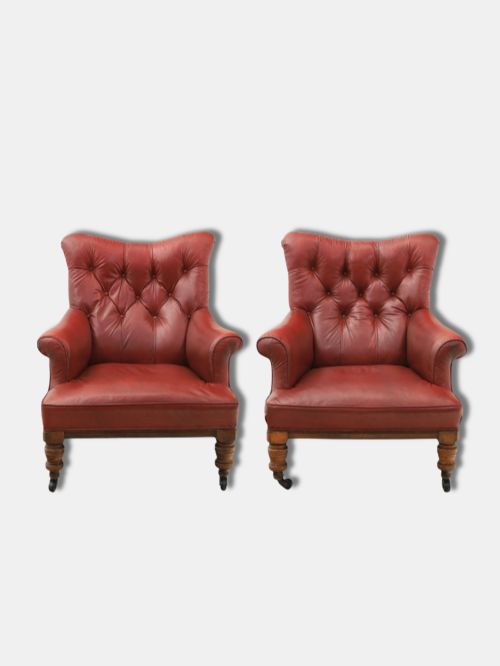
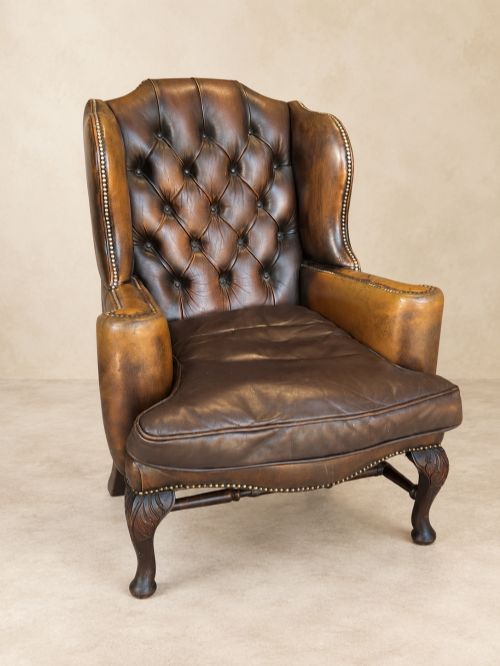
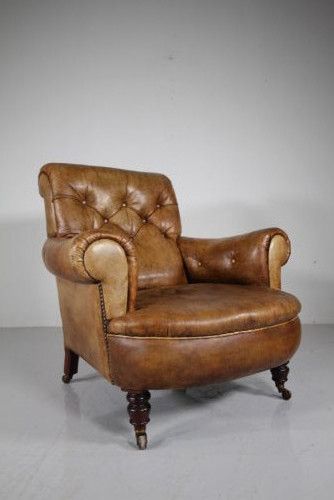
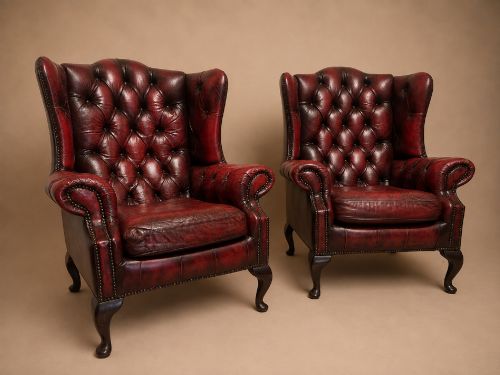
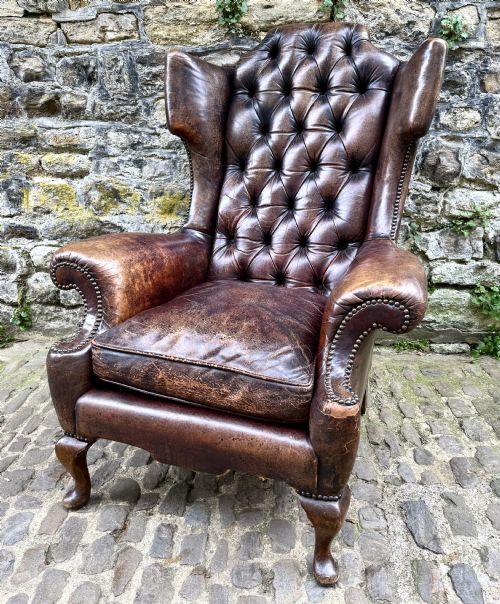
Most examples you encounter present traditional brown or oxblood leather, though green hide and early synthetic substitutes such as rexine also appear. Forms range from standard low club chairs to wingback variants and larger library seating.
Makers occasionally combined these frames with carved mahogany or oak woodwork, including lion-carved details on the arm terminals. You will find single armchairs, matched pairs, and larger suites comprising sofas and multiple chairs.
Materials and construction methods
Underpinning these armchairs are sturdy timber frames constructed from hardwood, oak, or mahogany, designed to support heavy internal stuffing and coiled springs. Traditional upholstery techniques involve deep-buttoned leather secured with individual brass tacks.
Hides are hand-dyed or finished in deep brown and oxblood tones, developing a natural patina through decades of use. Alternative surfaces employ rexine over hardwood framing for durability.
Chesterfield Club Armchair Retail Price Guide 2026
Typical asking prices for chesterfield club armchair among the pieces listed under this phrase on Sellingantiques today, from the lower quarter to the upper quarter. They describe what is for sale here now, not the wider market.
Materials recorded across current and archive listings include oak, hardwood, rexine, timber, and brass alongside standard brown and oxblood leather.
Distinguishing quality across examples
Quality rests upon the integrity of the underlying timber frame and the depth of the original upholstery work. Superior pieces demonstrate substantial scale, substantial timber usage, and meticulous hand-tooling on the leather hide.
The degree of professional restoration also dictates standing, as fully restored examples retain proper spring tension and supple leather without losing historical character. Carved wooden accents, such as lion motifs on the arms, separate standard utilitarian chairs from high-status commissions.
Howard & Son's·Thomas Chippendale
The Chesterfield Club Armchair Glossary
- Chesterfield
- A style of upholstered seating characterised by deep buttoning and uniform low back and arm heights. The term traditionally denotes deep buttoned leather furniture.
- Rexine
- A leathercloth material utilised as an artificial upholstery substitute in the early twentieth century. It consists of a woven fabric base coated with nitrocellulose.
- Wingback
- An armchair featuring protective side panels attached to the armrests and extending up to the shoulders. These wings historically blocked drafts in large rooms.
- Oxblood
- A dark reddish-brown leather colour frequently applied to nineteenth-century club furniture. This shade remains distinct from standard lighter tan and dark brown finishes.
- Library chair
- A heavy upholstered seat designed for prolonged reading in private studies or institutions. These pieces prioritise structural support and lumbar comfort.
Chesterfield Club Armchair: Frequently Asked Questions
How do I identify a Victorian chesterfield club armchair?
Look for dense hardwood framing, hand-tacked brass detailing, and heavy leather hides showing natural wear patterns. Victorian examples frequently utilise mahogany or oak timbers alongside deep buttoning.
Check for period-specific proportions and traditional stuffing methods beneath the leather rather than modern foam padding.
What is the difference between club chairs and wing chairs?
Club armchairs feature low backs and broad armrests designed for relaxed lounging in private rooms. Wing chairs incorporate protective side panels extending upward from the arms.
Both forms utilise similar leather upholstery and deep buttoning techniques across the periods represented here.
How should I care for antique leather upholstery?
Maintain the leather by applying appropriate conservative balms that prevent the hide from drying out. Keep the armchair away from direct heat sources and strong sunlight to protect the original dye.
Regular dusting with a soft cloth preserves the surface without damaging the historic finish or brass tacks.
Are these armchairs suitable for daily modern seating?
Most antique club chairs provide robust support through their original coiled spring construction and heavy internal padding. Fully restored examples easily accommodate regular use in contemporary living spaces.
Consider the seat depth and back height to ensure the dimensions suit your room layout and seating preferences.