





Chester Hallmarked Silver Box
A chester hallmarked silver box brings distinct provincial assay marks and compact elegance to a desk or dressing table.
Chester Hallmarked Silver Box
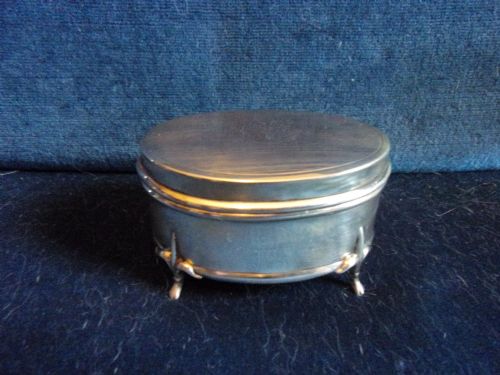
A chester hallmarked silver box encompasses small household containers bearing the three sheaves and sword mark of the Chester assay office alongside sterling silver standards. Collectors searching for a chester hallmarked silver box encounter forms ranging from trinket boxes and snuff boxes to tea caddies and jewellery caskets.
The pieces on this page span the Victorian, Edwardian, and George V periods, reflecting the output of late nineteenth and early twentieth-century silversmiths. Alongside traditional boxes, the selection includes related silver items such as stamp cases, napkin rings, and tea caddies bearing the same provincial marks.
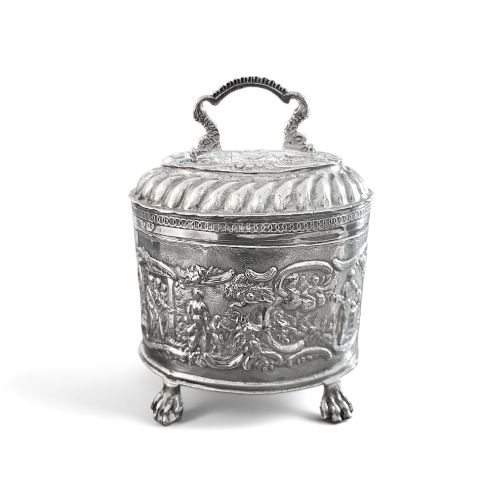
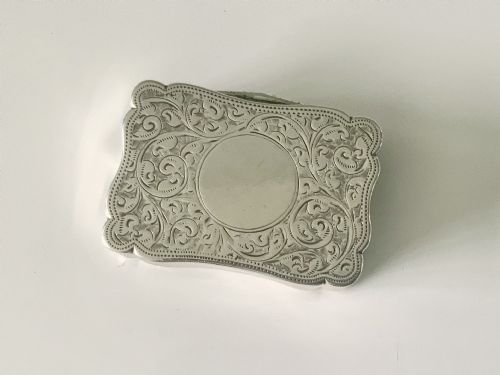
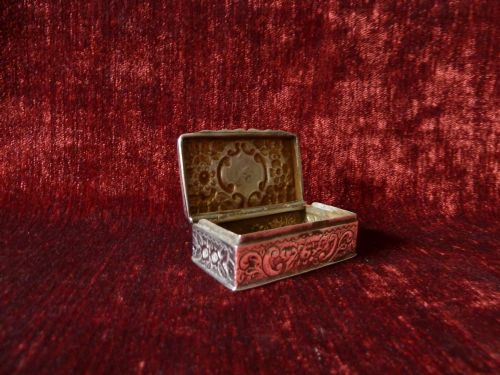
Victorian and Edwardian examples predominate, displaying the characteristic decorative treatments of their respective eras from crisp engraving to ornate repoussé work. Smaller items like snuff boxes and stamp cases sit alongside larger jewellery caskets and tea caddies, offering varied storage functions.
How they were made
Construction relies upon sterling silver, frequently manipulated through hammering, piercing, or repoussé techniques to create textured and decorative surfaces. Arts and Crafts examples exhibit spot-hammered finishes, whereas Art Nouveau and Edwardian pieces utilise flowing chased motifs and intricate piercing.
Internal spaces often feature fitted linings of silk, velvet, or leather to protect delicate contents such as jewellery and stamps. Gilding and silver-gilt treatments appear on interior surfaces, contrasting with the bright exterior sterling silver.
Maker marks stamped alongside the Chester town mark identify the workshops responsible for shaping and assembling each container. Structural integrity depends on secure hinges and close-fitting lids designed for daily use.
Chester Hallmarked Silver Box Retail Price Guide 2026
Typical asking prices for chester hallmarked silver box among the pieces listed under this phrase on Sellingantiques today, from the lower quarter to the upper quarter. They describe what is for sale here now, not the wider market.
An envelope-shaped stamp case proves that Edwardian correspondents appreciated elaborate silver stationery accessories.
What varies in quality
Quality rests upon the crispness of the hallmarks, the weight of the sterling silver, and the execution of surface decoration such as repoussé or engraving. Substantial gauge silver and deep, unrubbed punch marks indicate superior manufacture.
The sophistication of the design sets finer pieces apart, whether through balanced Art Nouveau curves or deliberate Arts and Crafts hand-hammering. Intact internal linings of silk, velvet, or leather contribute positively to the preservation of the piece.
Albert Ernest Jenkins·Nathan and Hayes·William Neale and Sons
The Chester Hallmarked Silver Box Glossary
- Chester assay mark
- The official hallmark stamp of the Chester assay office, featuring three sheaves of wheat and a sword.
- Repoussé
- A metalworking technique where the silver is hammered from the reverse side to form a raised design on the front.
- Silver-gilt
- Sterling silver that has been coated with a thin layer of gold on its surface, often seen on the interior of boxes.
- Pierced work
- A method of cutting decorative openwork patterns through the silver sheet.
- Trinket box
- A small container utilised for storing rings, brooches, and other small personal items.
Chester Hallmarked Silver Box: Frequently Asked Questions
How do I date a Chester silver box?
Dating relies upon the specific date letter punch accompanying the Chester assay marks and standard sterling silver symbols.
Comparing the style, whether Victorian, Edwardian, or George V, helps confirm the production era alongside the town office marks.
What were small silver boxes used for?
These containers served practical functions on desks and dressing tables, holding items such as stamps, snuff, or small trinkets.
Larger variants like jewellery caskets and tea caddies were designed to safeguard precious personal possessions and dry goods.
Are interior linings original?
Many Edwardian and Victorian boxes retain their fitted silk, velvet, or leather interiors designed to cushion delicate items.
Survival of these delicate fabrics depends on how carefully the container was stored and handled over the decades.
How do I clean a silver box?
Gentle maintenance involves soft cloth polishing to preserve the sterling silver surface and any detailed repoussé work.
Harsh chemical dips should be avoided, particularly near fitted velvet, silk, or leather internal linings.