
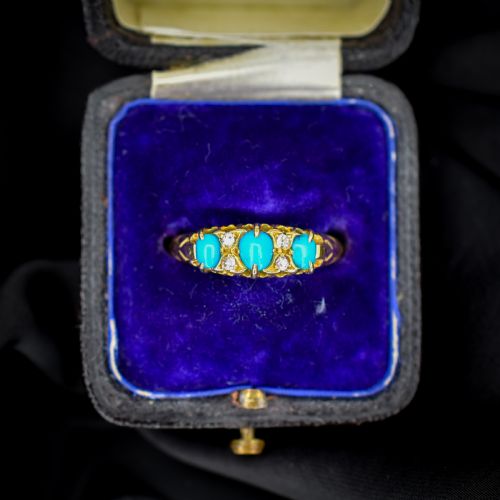

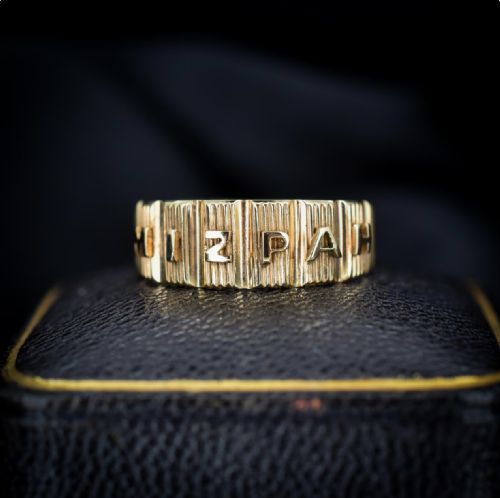


Chester Hallmarked Gold Ring
A chester hallmarked gold ring carries the distinct local assay mark of the historic English city alongside precious metal and gemstone settings.

Chester Hallmarked Gold Ring
A chester hallmarked gold ring encompasses nineteenth and early twentieth century English jewellery bearing the three sheaves of wheat and sword mark of the Chester assay office. These pieces emerge predominantly from the Victorian and Edwardian eras, spanning years from the late nineteenth century up to the 1930s.
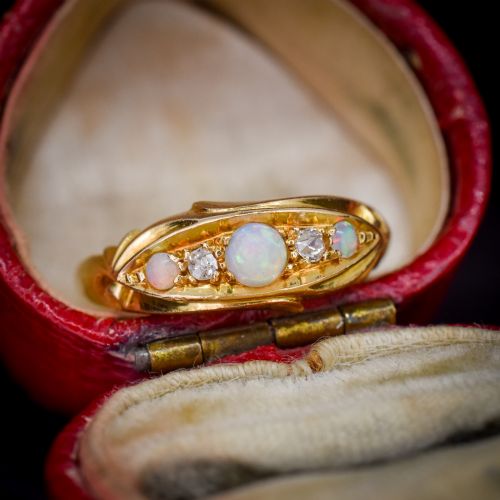
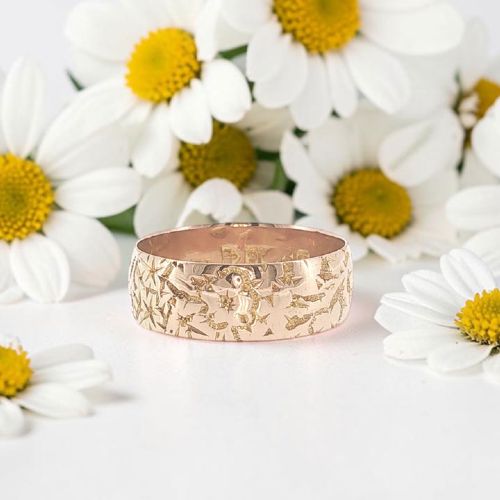
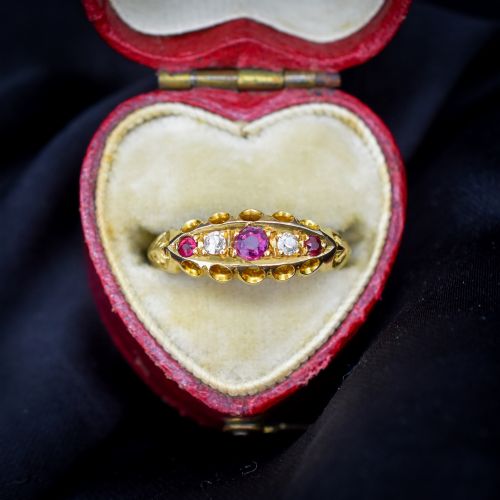
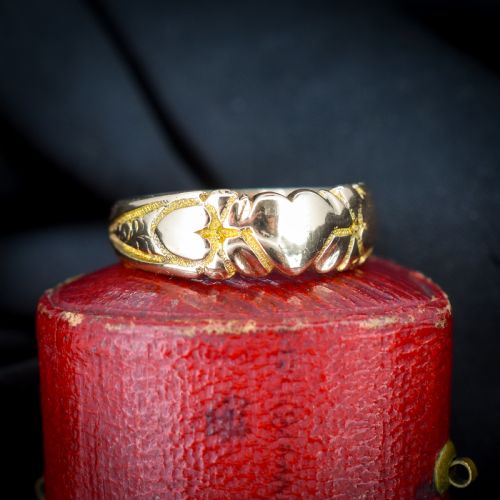
The selection on this page centres on ring forms such as five-stone diamond settings, boat shapes, gypsy mounts, buckle bands and coiled serpent designs. Yellow gold, rose gold and occasionally higher karat standards form the physical body for gemstones including rubies, sapphires, opals and emeralds.
Makers utilised regional assay offices across Britain to stamp standard purities, yet Chester items hold a specific collecting interest due to the closure of that office in the early twentieth century. Buyers encounter everything from plain keeper bands to intricate cluster and navette configurations.
Materials and construction methods
Goldsmiths constructed these rings primarily using 18 carat yellow gold, alongside 9 carat, 15 carat and rose gold variations, shaping bands through casting, hand-forming and chasing. Gemstones were hand-set into bezels, starbursts or claw settings, utilising old cut, old mine cut or rose-cut diamonds alongside rubies, sapphires and opals.
Assay masters applied punches directly to the interior of the shank to stamp the gold purity, the Chester town mark, and the date letter corresponding to the exact year of testing. This rigorous statutory process ensures precise dating across the surviving inventory.
Listings feature 18ct gold, 9ct gold, and 15ct gold pieces spanning from the Victorian era into the 1930s Art Deco period.
Gradations of quality in period rings
Quality rests upon the crispness of the Chester hallmark stamps, the weight and gauge of the gold shank, and the integrity of the gemstone settings. Heavier bands and well-preserved maker marks distinguish superior examples from heavily worn pieces.
The calibre of the hand-cut diamonds and coloured stones, such as natural opals and deep rubies, dictates the visual distinction of each mounting. Original claw integrity and minimal metal thinning around the shoulders preserve the intended profile of the design.
Ring Henry Griffiths
The Chester Hallmarked Gold Ring Glossary
- Chester hallmark
- An official stamp featuring three wheat sheaves and a sword, denoting that a piece was tested and marked at the Chester assay office before its closure.
- Boat ring
- A traditional setting style featuring an elongated curved cluster resembling the hull of a boat, popular during the Victorian and Edwardian periods.
- Gypsy ring
- A band design where gemstones are flush-set directly into the thick, tapered metal of the shank rather than held in raised claws.
- Old cut diamond
- A hand-faceted diamond cut before modern machine-cutting standards, typically displaying a smaller table and larger culet.
- Navette ring
- An oval, boat-shaped cluster ring with pointed ends, designed to sit lengthways along the finger.
Chester Hallmarked Gold Ring: Frequently Asked Questions
How do I date a chester hallmarked gold ring?
Dating relies upon the specific letter punch stamped inside the band alongside the Chester assay mark, which corresponds to official assay office records for that year.
Additional clues include the overall gemstone setting style and the gold karat mark used during the Victorian or Edwardian periods.
Why is the chester mark important?
The Chester assay office closed in the twentieth century, making these regional hallmarks distinct historical markers for English regional goldsmithing.
Collectors prize these specific stamps because they confirm the exact geographic origin and legal precious metal standard of the piece.
What stones are common in these rings?
Diamonds, rubies, sapphires and opals appear frequently across Victorian and Edwardian examples on this page.
These stones were typically hand-set into 18 carat yellow gold or rose gold mountings using traditional techniques of the era.
Can I wear an antique gold ring daily?
Many buyers wear these sturdy gold bands daily, provided the shank retains sufficient thickness and the stone settings remain secure.
Regular inspection by a jeweller helps protect delicate claws and older gemstone cuts from routine wear and tear.