




Cherub Wall Sconces
Cherub wall sconces bring sculptural figures and practical lighting together on the wall, shaped by Rococo Revival and Baroque tastes.
Cherub Wall Sconces
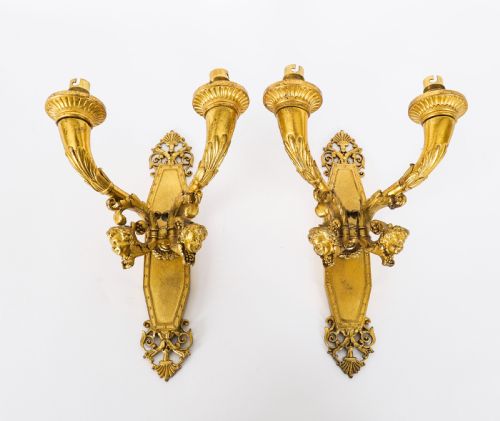
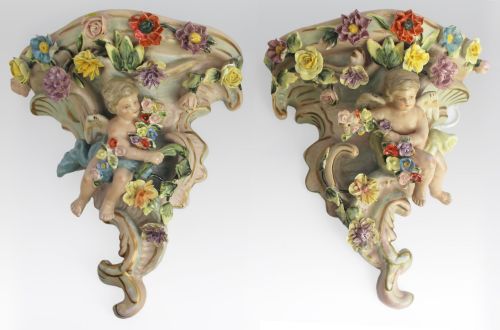
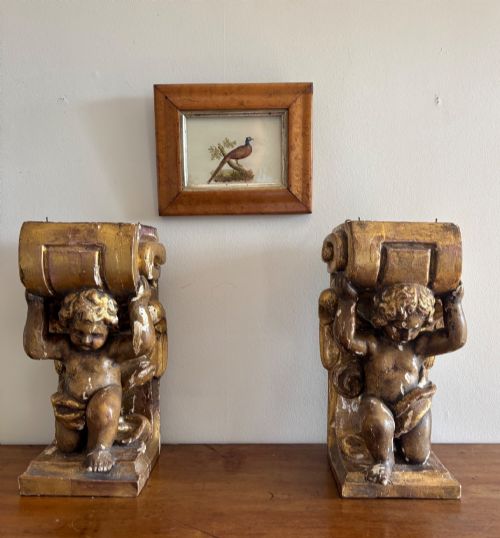
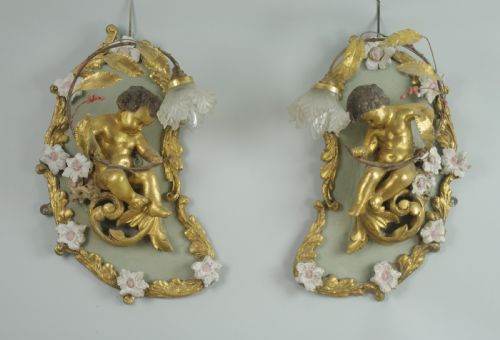
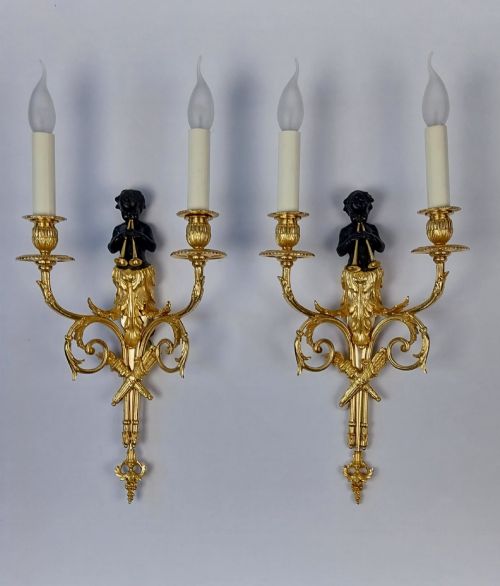
The pieces on this page span the nineteenth and early twentieth centuries, drawing heavily on French and Italian design vocabularies. Common manifestations include gilt bronze or ormolu mounts, carved giltwood brackets, and porcelain figures supporting branch fittings.
Makers and manufacturers produced these lighting fixtures to serve grand interiors, utilising styles such as Louis XIV Revival, Rococo Revival, and Victorian ornamentation. The resulting objects function simultaneously as wall brackets, light fittings, and decorative architectural ornaments.
Materials and construction
Metals form the structural core of many examples, utilising cast ormolu, gilt bronze, brass, and silver plating to create durable armatures and detailed figural motifs. Artisans also worked extensively in organic materials, producing carved wood, limewood, gesso, and giltwood brackets that required skilled hand-carving.
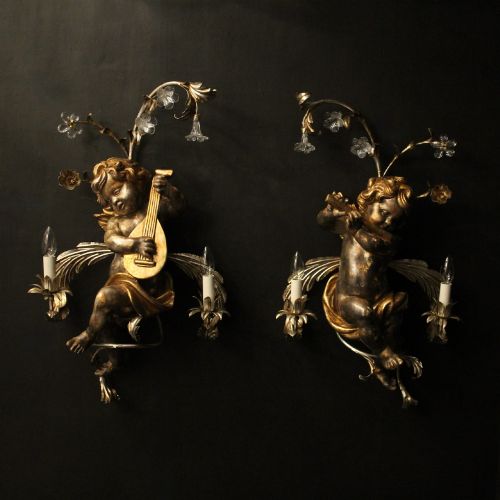
Ceramics and glass appear frequently alongside metal and wood, incorporating porcelain figures and Murano glass elements to catch and reflect illumination. Lustre components and specialised shades complete the assembly of early twentieth-century electric and gas lighting adaptations.
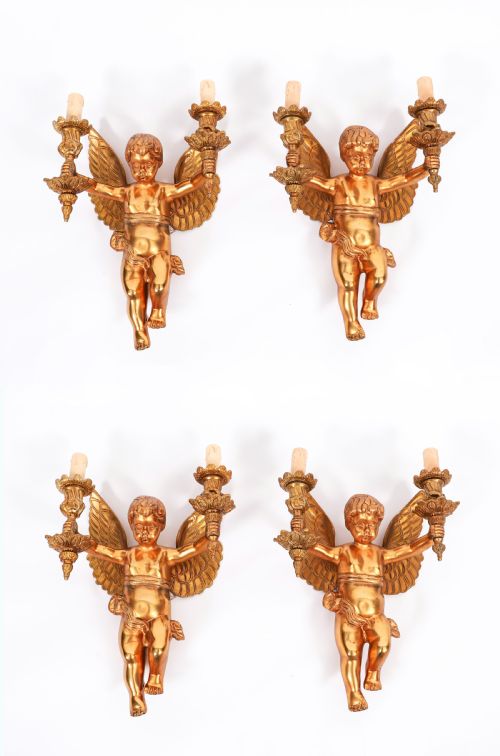
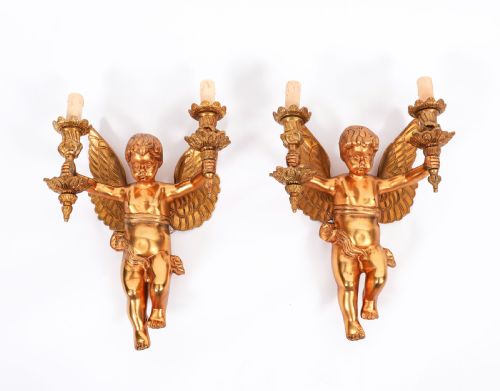
Some winged cherubs appear mid-flight, frozen in bronze or plaster as they carry glowing branch lights across the centuries.
Assessing quality and execution
Quality rests upon the crispness of the chasing in bronze and ormolu, or the depth and precision of the hand-carving in wood and giltwood. Superior pieces exhibit lively facial expressions and anatomical detail in the cherub figures rather than flat, mass-produced moulding.
The integrity of the gilding and the weight of the metal components also distinguish finer workshops from standard commercial production. Matching pairs and larger sets demonstrate a higher degree of initial commission and survival through time.
The Cherub Wall Sconces Glossary
- Ormolu
- Gilded bronze, where a layer of gold amalgam is applied to a bronze base through heat processing. This technique creates a rich, metallic surface common in French decorative arts.
- Putto
- A plump, naked male child figure, often winged, used in classical and revival art. These figures form the primary sculptural motif of the sconces.
- Giltwood
- Timber, such as wood or limewood, that has been coated with a thin layer of gold leaf. It provides a luminous surface for carved brackets and mirrors.
- Corbel
- A structural or decorative bracket projecting from a wall to support a weight. In lighting, these often hold candle arms or electric fittings.
Cherub Wall Sconces: Frequently Asked Questions
How were cherub wall sconces originally lit?
Early versions held wax candles in drip pans, while later Victorian examples accommodated gas fittings. Many surviving pieces have since been converted safely to electricity.
Wiring updates allow these historic fixtures to function as modern wall lights without altering their original aesthetic value.
What is the difference between a wall sconce and a wall bracket?
A wall sconce specifically incorporates arms designed to hold candles or light bulbs. A wall bracket primarily serves as a decorative shelf or support, though some carry light fittings.
Both forms frequently feature carved or cast cherub motifs as their central decorative element.
How do I identify French revival styles on these lights?
French revival pieces often display Louis XIV or Rococo Revival characteristics, marked by scrolling acanthus leaves and energetic putti. The casting quality and use of ormolu point toward continental workshop traditions.
Italian pieces frequently employ heavy giltwood and Murano glass components alongside carved cherubs.
Where should I place these sconces in a room?
These lights suit flanking positions beside large mirrors, fireplaces, or architectural doorways. Their sculptural form allows them to act as standalone wall art when unlit.
Pairs and sets provide symmetrical balance when mounted at eye level in reception rooms or hallways.