
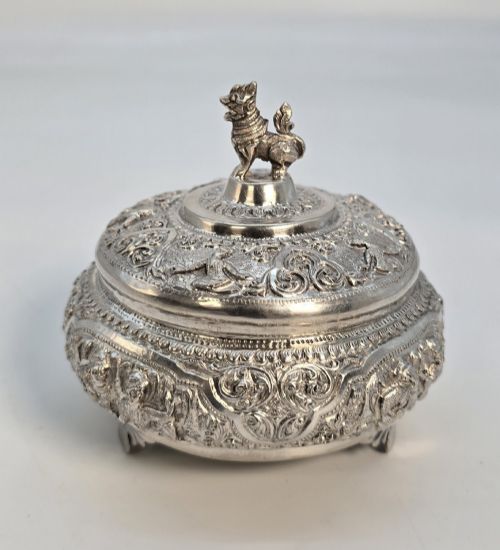


Chased Silver Jar
These chased silver jar selections span tea caddies and vanity pots, offering intricate metalwork that brings nineteenth-century craftsmanship directly to your dressing table.
Chased Silver Jar
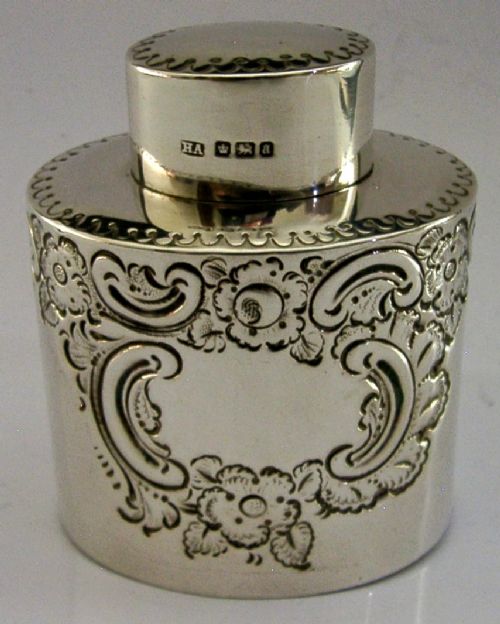
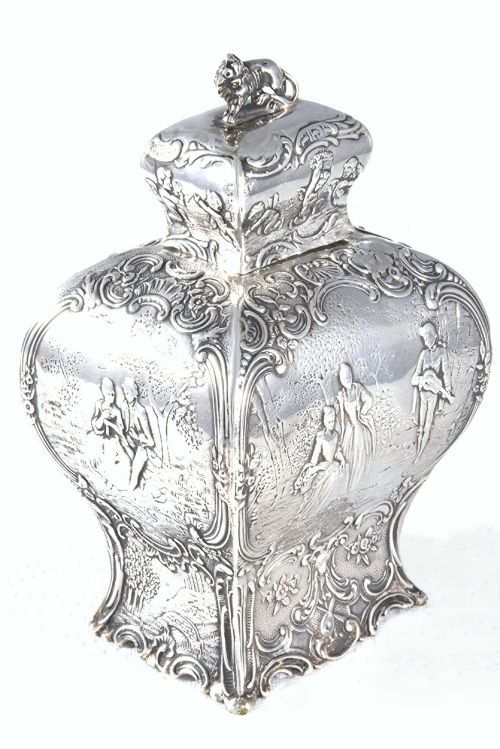
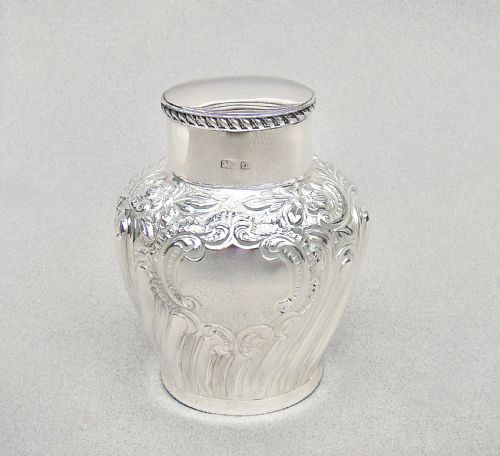
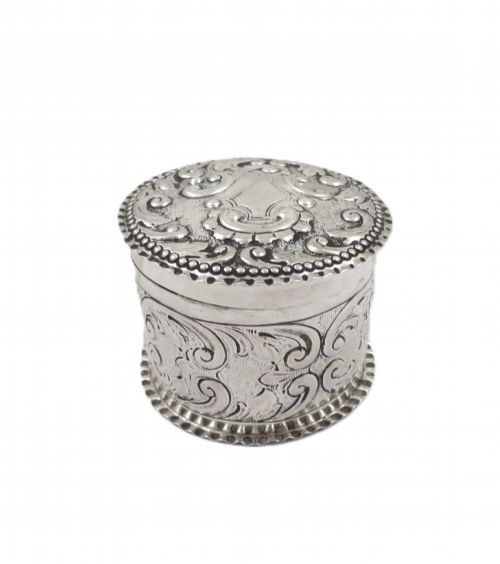
A chased silver jar is a decorative or functional container ornamented with hammered surface designs, frequently appearing as tea caddies, vanity pots, and trinket boxes from the Victorian and Edwardian eras. Buyers searching for a chased silver jar encounter vessels designed to hold tea leaves, cosmetics, or mustard, with many examples originating from British workshops alongside Ottoman and Anglo-Indian makers.
The most common form on this page is the tea caddy, often shaped as an oval or bombe vessel with a pull-off lid. These pieces date predominantly from the late nineteenth century through to the early twentieth century, reflecting the domestic habits of the Victorian and Edwardian periods.
Alongside standard domestic caddies, the selection includes silver mounted glass scent bottles and lidded jars incorporating materials such as ebony and cut glass. Origins stretch from English assay offices in London and Birmingham to international production during the Raj period.
How they were made
Makers fashioned these jars using sterling silver, solid silver, and silver mounts combined with cut glass and ebony. The primary metal technique visible across the listings is repoussé work, where designs are hammered from the reverse side to create raised motifs on the exterior surface.
Objects often incorporate pull-off lids or fitted covers, requiring precise metalworking to ensure a flush fit with the jar body. Additional materials like glass bodies provide contrast to the chased silver collars and mounts.
Some nineteenth-century tea enthusiasts required lockable caddies to prevent domestic staff from helping themselves to the expensive leaves.
What varies in quality
Quality in a chased silver jar is determined by the depth and crispness of the hammered decoration, as well as the thickness of the metal used in construction. Heavier solid silver examples demonstrate substantial material substance compared to lighter counterparts.
The prominence of the maker and the clarity of assay marks significantly influence the standing of a piece. Finer items exhibit detailed repoussé work that retains sharp relief across the entire surface of the container.
Thomas Hayes
The Chased Silver Jar Glossary
- Repoussé
- A metalworking technique where the artisan hammers the metal from the reverse side to form a raised design on the front. This method creates the tactile surface patterns seen on many nineteenth-century containers.
- Sterling silver
- A silver alloy containing a specific high proportion of pure silver by mass, standard in British manufactured plate and hollowware. It provides the durable foundation for chased domestic vessels.
- Caddy
- A small container originally designed for storing loose tea leaves in domestic settings. Victorian examples frequently feature elaborate surface decoration and snug lids.
- Assay mark
- A stamp or series of stamps applied to precious metals to guarantee their purity and origin. These marks identify the city of testing, the maker, and the year of production.
- Bombe
- A swollen or convex shape characteristic of certain decorative vessels and tea caddies. This curved profile adds visual weight and volume to the object.
Chased Silver Jar: Frequently Asked Questions
What were chased silver jars used for?
These jars served primarily as domestic containers for dry goods like tea leaves, or as vanity items for holding small personal effects on dressing tables. Specific forms like mustard pots also functioned directly at the dining table.
Over time, their roles shifted from purely utilitarian storage to decorative display pieces within nineteenth-century households. Their enduring appeal lies in this combination of ornamental surface work and practical daily utility.
How do I date a silver tea caddy?
Dating relies heavily on the assay marks stamped into the silver, which record the specific year letter and assay office location. Stylistic indicators, such as the curved bombe form or Edwardian proportions, provide additional chronological context.
Examining the manufacturing techniques and any accompanying period hallmarks helps narrow down the origin to specific decades like the 1880s or 1900s. Comparing the decorative motifs against known historical periods confirms the likely era of creation.
What is the difference between Victorian and Edwardian styles?
Victorian silver pieces often display dense, highly textured repoussé work and ornate floral or scroll motifs reflecting mid-to-late nineteenth-century tastes. The forms tend toward heavy, substantial construction with robust ornamentation.
Edwardian examples frequently exhibit lighter, more refined detailing influenced by neoclassical or revival aesthetics. The transition from the 1890s into the early 1900s brought subtle shifts in silhouette and decorative restraint.
How should I care for antique silver jars?
Maintenance involves gentle cleaning using appropriate silver cloths to remove tarnish without abrading the delicate chased surface details. Avoiding harsh chemical dips preserves the original patina built up over generations.
Displaying the pieces away from direct sunlight and excessive moisture protects any integrated materials like cut glass or ebony. Regular, careful handling ensures the repoussé metalwork remains undamaged.