



Charles I Stool
A charles i stool brings heavy timber and early British domestic life straight into a room.
Charles I Stool
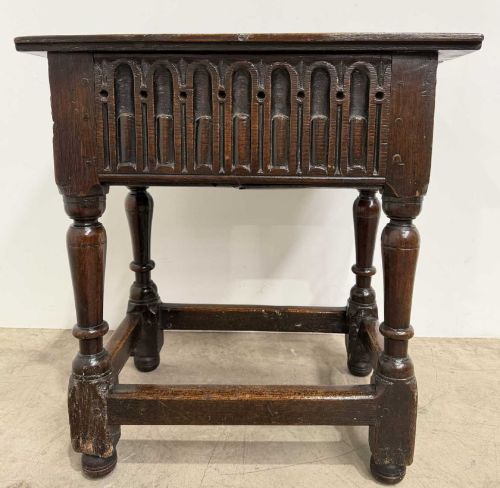
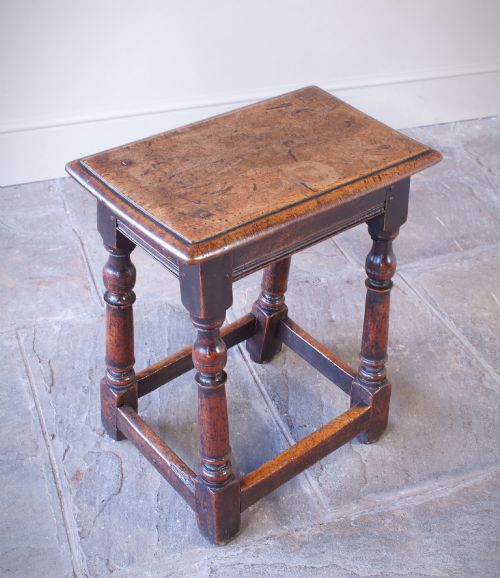
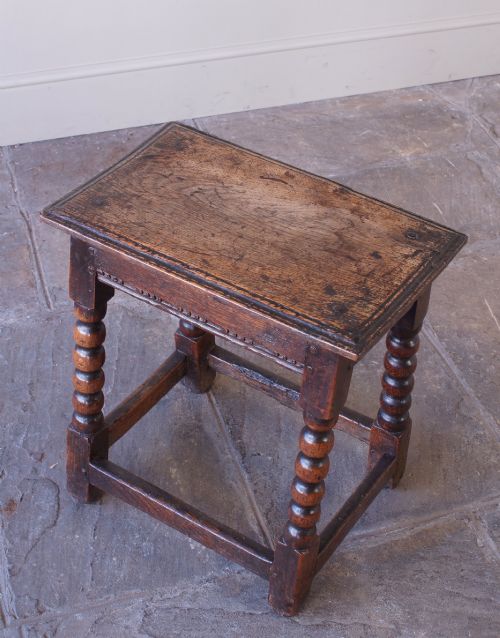
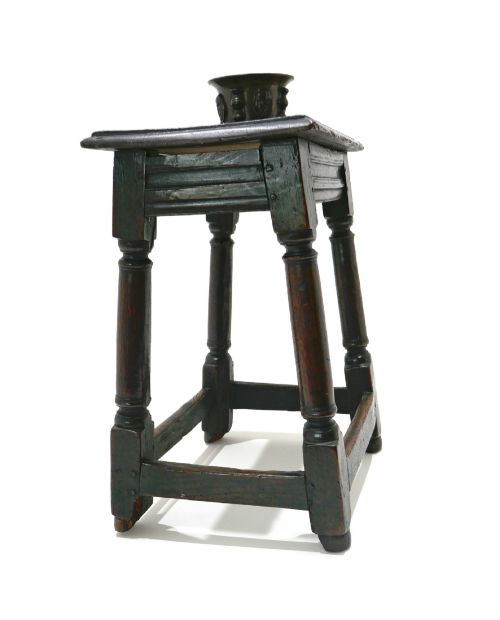
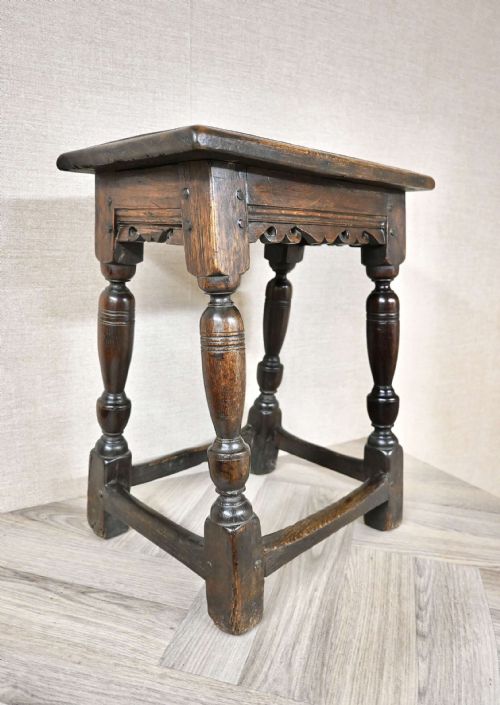
A charles i stool represents the solid seating forms of the seventeenth century, spanning the Jacobean, Commonwealth, and Carolean eras. These pieces typically take the shape of joint stools, box stools, or close stools constructed for domestic use.
Most examples found here are period pieces of English origin, though later revival pieces from the early twentieth century also appear. They serve primarily as sturdy low seating or small display surfaces in traditional interiors.
How they were made
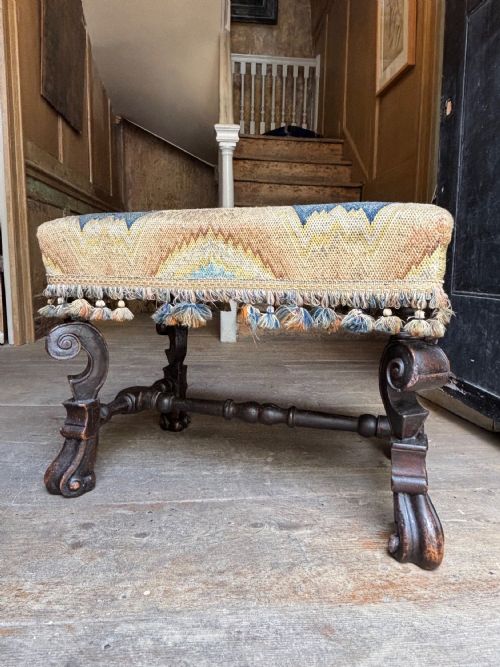
Carpenters built these sturdy forms primarily from oak and walnut, joined together with wooden pegs rather than metal hardware. Many examples incorporate textile elements, including tapestry upholstery and fabric coverings.
Makers shaped the timber using hand tools, turning legs on lathes and cutting mortise and tenon joints to bear substantial weight. Iron components occasionally reinforced internal structures where necessary.
Charles I Stool Retail Price Guide 2026
Typical asking prices for charles i stool among the pieces listed under this phrase on Sellingantiques today, from the lower quarter to the upper quarter. They describe what is for sale here now, not the wider market.
Some seventeenth-century box seats doubled as indoor plumbing before porcelain took over the household.
What varies in quality
The degree of survival among original timbers and surface patination distinguishes superior examples from lesser ones. Untouched pieces retain their early pegged construction and surface depth built up over centuries.
Carving detail and proportion also dictate the standing of a piece, moving from plain utilitarian forms to exuberant baroque shapes with turned legs and shaped rails.
The Charles I Stool Glossary
- Joint stool
- A sturdy wooden seat built with pegged mortise and tenon joints by a joiner rather than a general carpenter. These pieces were common in seventeenth-century households for sitting or serving food.
- Carolean
- The period of English art and furniture spanning the reign of Charles II, known for more exuberant baroque forms and turned walnut timbers. This style follows the Commonwealth period.
- Joined oak
- Furniture constructed using tightly fitted wooden joints secured with wooden pegs. This method provided exceptional strength before the widespread use of metal screws.
- Close stool
- An early form of indoor sanitation furniture comprising a wooden box seat concealing a chamber pot inside. These practical items often featured lids and enclosed storage.
Charles I Stool: Frequently Asked Questions
How are these stools dated?
Carpenters relied on specific joint construction methods, timber species, and turning styles that shifted noticeably across the seventeenth century. Comparing leg profiles and peg placement helps separate period examples from later revivals.
Examination of the wood surface reveals the natural wear patterns and tool marks left by early makers. Over time, oak and walnut develop a distinct dry sheen that modern reproductions cannot easily replicate.
Where were joint stools used?
Seventeenth-century households placed these heavy wooden seats around the main hall for dining or general seating. Their compact footprint allowed them to tuck easily beneath trestle tables when not in use.
Beyond dining, occupants utilised them as portable surfaces for holding lanterns, books, or textiles. Their robust build meant they could double as small mounting steps or work platforms.
How do I care for early oak?
Early timber requires a stable indoor environment away from direct heat sources and sudden humidity changes. Maintaining consistent atmospheric conditions prevents the old oak or walnut from shrinking and cracking.
Applying occasional light wax helps nourish the dry grain and protects the historic surface. Avoid modern liquid polishes that can seep into the open pores of antique wood.
What is a close stool?
A close stool is a specialised box seat designed to house a chamber pot discreetly beneath a hinged lid. Wealthy seventeenth-century households kept these refined cabinets in bedchambers for private use.
Upholstered panels and heavy fabric or tapestry coverings often disguised their utilitarian function. Surviving examples demonstrate how early domestic spaces integrated personal comfort with formal reception rooms.