
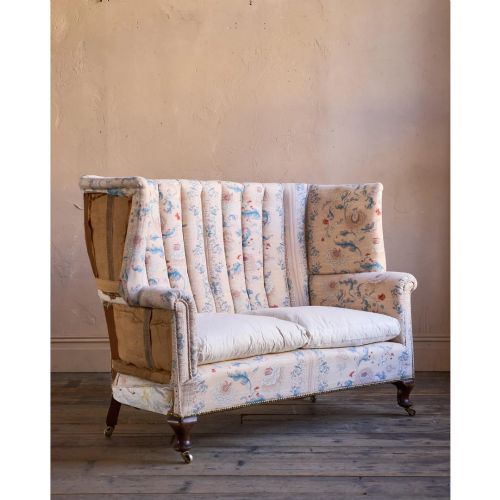


Channel Fluted Armchairs
Channel fluted armchairs are substantial seating pieces defined by distinctive vertical channel work, offering deep comfort and period character.
Channel Fluted Armchairs
When you search for channel fluted armchairs, you encounter comfortable seating forms that span the nineteenth and twentieth centuries. These pieces primarily manifest as barrel back and wingback armchairs designed for domestic reception rooms.
The selection on this page relies heavily on Victorian and Edwardian examples, alongside pieces from the 1920s and 1940s. Barrel back and tub shell forms dominate the listings, frequently paired with mahogany or walnut frames.
Georgian influences also appear through traditional wingback configurations. Buyers find both individual chairs and larger suite components suited to traditional or period interiors.
How they were made
Framing relies upon dense timbers such as mahogany, walnut, and general hardwood or timber. Wood is shaped to form curved barrel backs, low back profiles, and exposed showwood components.
Upholstery techniques involve securing fabric, velvet, linen, damask, or leather across ribbed and fluted interior backs. Brass details occasionally supplement the primary structural materials.
Listings span periods from Georgian and Victorian eras through the Edwardian years up to the 1940s.
What varies in quality
Quality rests in the precision of the timber frame construction and the execution of the fluting. Tightly drawn vertical channels require careful internal padding to maintain crisp lines over decades of use.
The choice of covering material and the integrity of the showwood finish distinguish standard examples from finer commissions. Solid mahogany and walnut frames display superior grain and structural longevity compared to simpler timber carcasses.
The Channel Fluted Armchairs Glossary
- Barrel back
- An upholstered seating form where the backrest curves continuously around into the armrests in a semi-circular shape. This enclosed design protected occupants from draughts in older rooms.
- Wingback
- A traditional chair style featuring projecting side panels attached to the backrest. These wings historically deflected heat from a fireplace and contained body warmth.
- Showwood
- Timber framework left visible on an upholstered chair rather than being entirely covered in fabric. It highlights the quality of the underlying wood.
- Channel fluting
- A series of parallel vertical grooves or ridges stitched into the upholstery fabric of a chair back. The technique adds tactile texture and visual rhythm to the piece.
Channel Fluted Armchairs: Frequently Asked Questions
How do I identify a Victorian armchair?
Victorian armchairs often combine heavy timber frames, such as mahogany or walnut, with deep upholstery. They frequently utilise substantial barrel back or tub shell silhouettes.
Details like ebonised finishes and substantial proportions help separate these nineteenth-century pieces from lighter Edwardian or later twentieth-century seating.
Where were these armchairs used?
These seating pieces were principally placed in drawing rooms, studies, and parlours of period houses. Their enclosed backs provided practical shelter from cold draughts in large rooms.
Today, they function well as standalone statement pieces or reading chairs in traditional and eclectic living spaces.
What materials cover these chairs?
Upholstery materials range from tactile velvet, linen, and damask fabric to durable leather. Plain fabric and ribbed textures are common across the listed items.
Underneath these covers, frames are built from solid woods including mahogany and walnut, occasionally accented with brass fittings.