

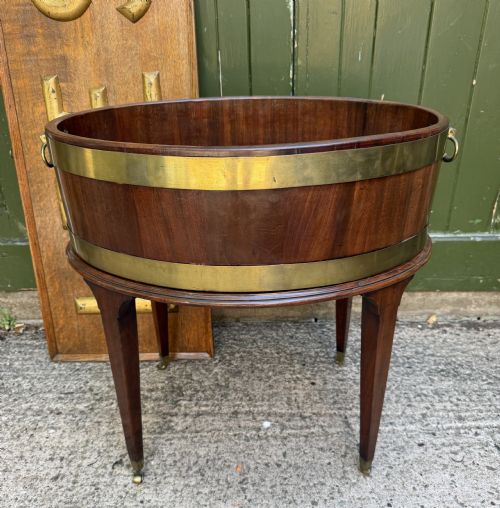

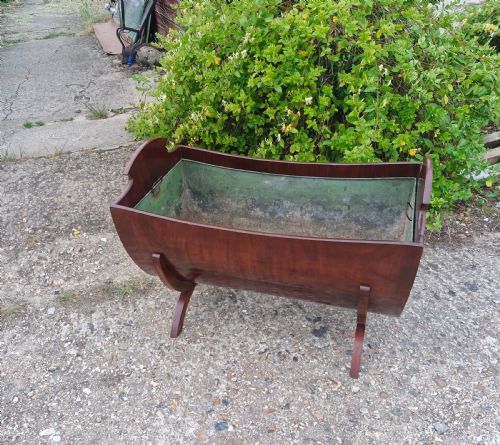
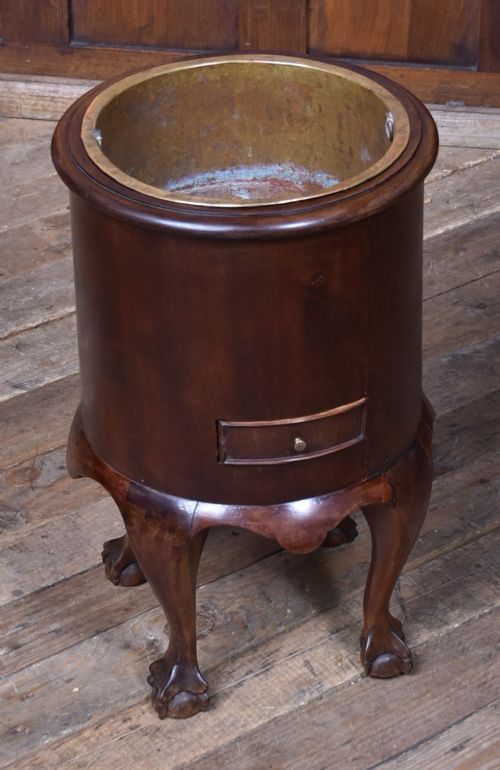


Champagne Bucket Stand
These champagne bucket stand examples offer a practical way to keep bottles chilled at table, combining period craftsmanship with traditional hospitality.
Champagne Bucket Stand
A champagne bucket stand serves to support wine coolers, ice buckets, and presentation bowls at a convenient height during dining and entertaining. When searching for a champagne bucket stand, buyers encounter a variety of forms ranging from standalone floor pieces to vessels integrated directly into dedicated wooden frames.
The selections span significant periods including the Georgian, Victorian, and Edwardian eras, alongside later Art Deco designs. Many pieces originate from British and French workshops, utilising traditional forms such as oval wine coolers and circular presentation bowls.
Earlier iterations frequently feature timber construction with metal bindings, while later 19th and 20th century examples lean towards silver plate, brass, and copper. Buyers often find these objects listed under related descriptions like wine coolers, jardinières, and log baskets due to their versatile proportions.
Materials and construction methods
Makers utilised dense timbers such as mahogany and walnut for the structural stands and wooden cooler bodies, employing cooperage techniques with stave construction to hold liquids safely. Brass bands, copper rivets, and zinc linings were integrated to reinforce the timber vessels and protect the wood from melting ice.
Metalworking traditions defined the silver plated, brass, and copper variants seen across Victorian, Edwardian, and Art Deco pieces. Silver plating was applied to base metals like copper or brass to achieve a bright finish, while hand-beaten copper surfaces display distinct hammering marks from the maker's workshop.
Champagne Bucket Stand Retail Price Guide 2026
Typical asking prices for champagne bucket stand among the pieces listed under this phrase on Sellingantiques today, from the lower quarter to the upper quarter. They describe what is for sale here now, not the wider market.
Listings feature mahogany, brass, silver plate, copper, and zinc across Georgian, Victorian, Edwardian, and Art Deco styles.
Separating the ordinary from the exceptional
Quality in these items rests upon the integrity of the materials and the precision of the construction. Superior examples display tightly fitted staves, robust metal mounts, and heavy-gauge silver plating that resists wear over decades of use.
Design sophistication further distinguishes the range, where fine grain patterns in the mahogany, crisp cast details on brass stands, and balanced proportions elevate a utilitarian vessel into a refined decorative object.
Christofle·WMF·Mappin & Webb
The Champagne Bucket Stand Glossary
- Cooperage
- The method of forming vessels from curved wooden staves bound together with metal hoops. This technique was essential for water-tight wine coolers and buckets.
- Silver Plate
- A thin layer of silver applied to a base metal such as brass or copper. This process provided the visual appeal of solid silver at a lower production cost.
- Jardinière
- An ornamental pot or stand designed to hold plants or flowers. Many examples share identical forms with wine coolers and were utilised interchangeably.
- Stave
- One of the narrow shaped strips of wood fitted together vertically to form the sides of a bucket or cooler. The tightness of these joints determines the vessel's ability to hold ice and water.
- George III
- The period spanning the reign of George III from 1760 to 1820, characterised by classic proportions and skilled mahogany craftsmanship.
Champagne Bucket Stand: Frequently Asked Questions
How were champagne bucket stands used historically?
These stands held cooling vessels near the dining table so hosts could keep wine and champagne at the correct temperature without fetching bottles from the sideboard.
They allowed guests to serve themselves easily while protecting dining room floors from condensation and melting ice.
Are these stands suitable for modern dining rooms?
Floor standing and table models integrate smoothly into contemporary interiors as functional barware or decorative plant holders.
Their robust construction means they continue to perform their original function during parties and gatherings.
How do I distinguish Georgian pieces from Victorian ones?
Georgian stands typically feature rich mahogany with understated brass banding and restrained classical proportions. Victorian examples often introduce heavier silver plating, more ornate cast mounts, and varied metal combinations.
Can the metal liners hold ice directly?
Most original zinc, copper, and silver plated linings were designed to contain ice and water alongside the wine bottles. Modern users should check the condition of the seams before filling them directly to prevent leaks.