

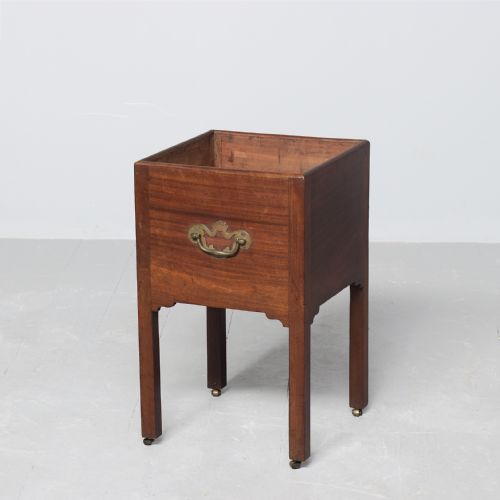
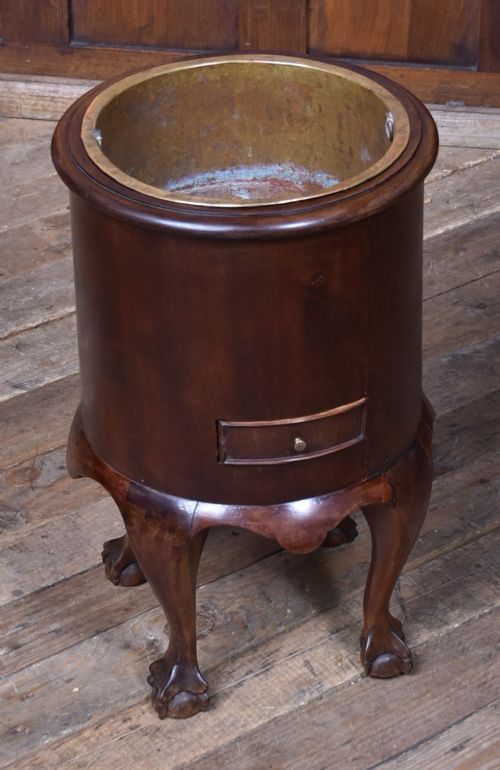


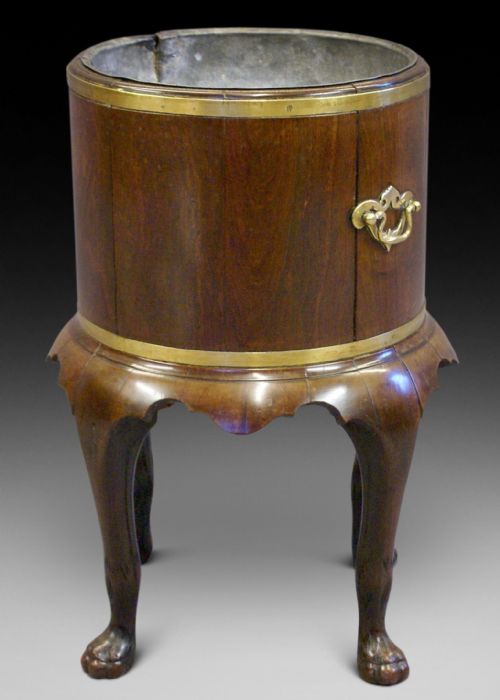


Wine Bucket on Legs
These wine bucket on legs pieces are traditional serving vessels raised on stands that keep iced bottles at table height.
Wine Bucket on Legs
When you search for a wine bucket on legs, you encounter elevated vessels designed to hold bottles and ice during dining. The pieces seen here span the Georgian, 18th Century, Victorian, 1800, and 19th Century periods.
You meet both oval wine coolers and cellarettes, along with related forms such as jardinière stands and copper bowls on stands. These items originate from British cabinet-making traditions, appearing in styles from George II and George III through to Arts and Crafts and George III Revival.
The most common format on this page is the mahogany vessel, frequently bound in brass and mounted on an integrated or separate stand. These designs reflect the formal dining practices of past centuries, where keeping wine chilled beside the table was a necessity.
How they were made
Cabinet-makers constructed these bodies primarily from solid mahogany, occasionally incorporating boxwood inlay for decorative contrast. The timber was selected for its grain and durability, then shaped into staved or panelled vessels.
Metal components such as brass bands, zinc linings, copper bowls, and wrought iron supports provided structural reinforcement and waterproofing. These mixed materials ensured the wooden staves remained stable when exposed to melting ice and moisture.
Wine Bucket on Legs Retail Price Guide 2026
Typical asking prices for wine bucket on legs among the pieces listed under this phrase on Sellingantiques today, from the lower quarter to the upper quarter. They describe what is for sale here now, not the wider market.
Some eighteenth-century cellarettes include internal partitions designed specifically to keep claret bottles from rolling into each other during dinner.
What varies in quality
The standard of timber selection and inlay work separates standard utility items from finer examples. Mahogany with rich figuring and precise boxwood stringing indicates superior workshop production.
The execution of metalwork, including the gauge of brass binding and the integration of the stand, defines the refinement of the piece. Higher quality items display harmonious proportions between the vessel and its supporting legs.
The Wine Bucket on Legs Glossary
- Cellarette
- A lockable container used for storing and cooling wine bottles in the dining room. These vessels typically sat beneath the sideboard or stood on their own legs.
- Jardinière stand
- A decorative receptacle designed to hold plants or flowers, sharing similar supporting frame structures with wine coolers. They employ timber and metal liners.
- Brass bound
- A method of reinforcing wooden staves using metal bands secured with tacks. This technique provides both structural strength and decorative contrast against mahogany.
- Stave
- One of the narrow strips of wood fitted together to form the curved sides of a bucket or cooler. Skillful tapering ensures a watertight seal.
Wine Bucket on Legs: Frequently Asked Questions
What is a wine bucket on legs used for?
These vessels were originally manufactured to hold wine bottles surrounded by ice during formal meals. They kept drinks at the correct temperature while remaining within reach of diners.
Today, buyers frequently utilise them as decorative planters, log holders, or standalone decorative items in living spaces.
How do I date a wine cooler?
Dating relies on examining the timber species, construction techniques, and stylistic markers such as inlay patterns or leg design. Georgian and 18th Century pieces often feature hand-cut dovetails and specific bracket feet.
Victorian and later revival pieces display different internal linings and machine-sawn timber characteristics that distinguish them from earlier work.
Are the liners original?
Many surviving pieces have undergone interior restoration or replacement of their metal linings due to centuries of moisture exposure. Zinc, copper, and tin linings were practical elements that deteriorated over time.
Examining the interior reveals whether the lining is a period replacement or a modern insertion designed to restore functionality.
How do I care for mahogany and brass?
Mahogany requires regular polishing with traditional beeswax to maintain its finish and prevent the wood from drying out. Avoid placing wooden vessels near direct heat sources or damp environments.
Brass bands benefit from gentle cleaning with a soft cloth to remove tarnishing without stripping the aged patina from the metal.