
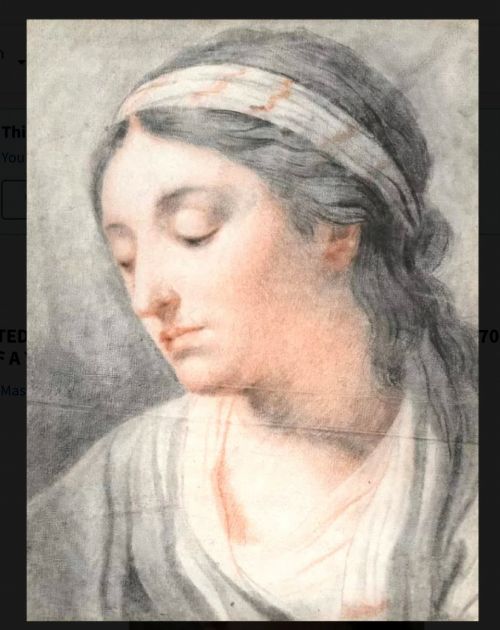


Chalk Portrait Study
A chalk portrait study offers an immediate encounter with a sitter through the direct touch of dry media on paper.
Chalk Portrait Study
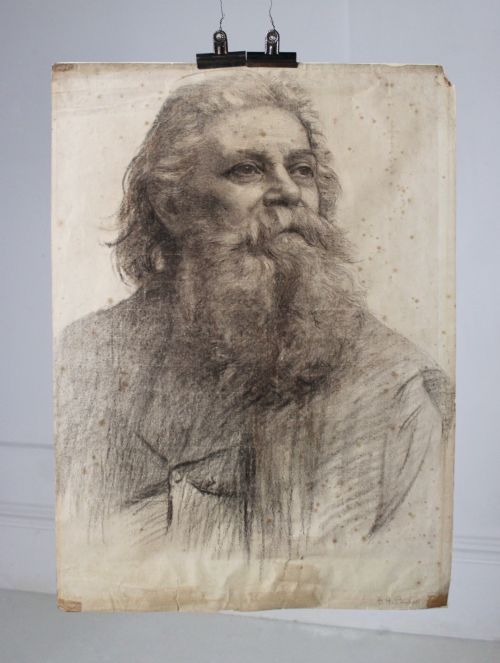
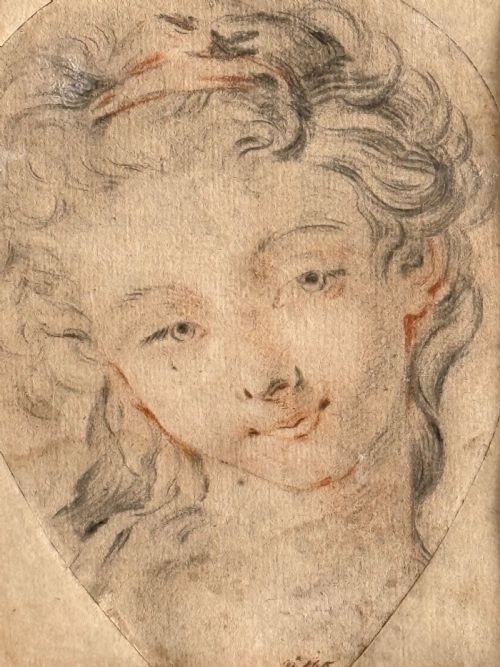
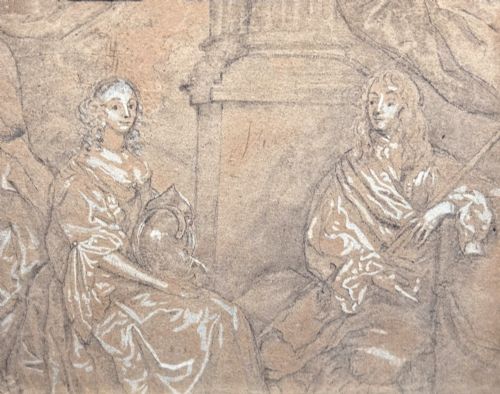
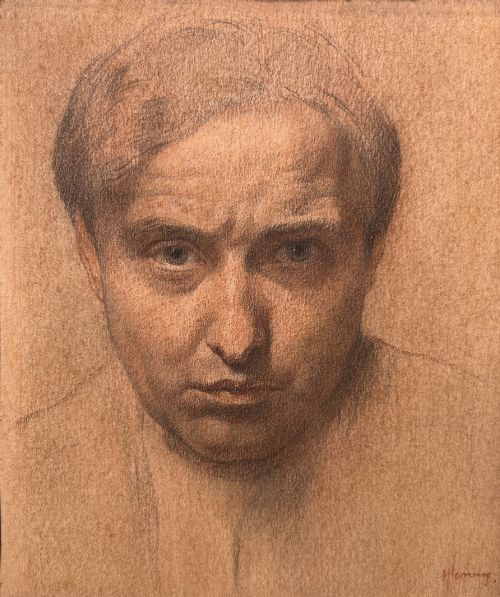
A chalk portrait study captures likeness and expression through works on paper, spanning periods from the seventeenth century through to the mid-twentieth century. The selection ranges from academic life studies and preparatory sketches to finished portrait drawings.
Buyers frequently encounter works executed in traditional French schools, British academic traditions, and early twentieth-century modernism. These original artworks include sanguine sketches, charcoal renderings, and multi-media portrait drawings.
How they were made
Artists utilise chalk, charcoal, and graphite applied to supports such as laid paper, toned paper, and standard paper sheets. Sanguine red chalk often appears alongside black chalk and subtle watercolour or ink washes.
The technique relies on dry media marks to build form and shadow directly, capturing rapid gesture or detailed academic proportion without heavy preliminary painting.
The listings combine nineteenth-century graphite and chalk drawings with twentieth-century academic life studies.
What varies in quality
Quality rests upon the sureness of the draughtsmanship and the psychological immediacy the artist achieves with minimal strokes. A confident handling of tone and contour separates hasty jottings from resolved character studies.
The nuance of expression and the structural integrity of the facial anatomy determine the distinction between routine workshop exercises and masterworks of observation.
François Boucher·Peter Lely·John Hoppner·George Richmond·Harry Epworth Allen·Dame Ethel Walker
The Chalk Portrait Study Glossary
- Sanguine
- A type of red chalk made from haematite, widely utilised for warm, fleshy portrait sketches from the Renaissance onwards.
- Laid paper
- Handmade paper featuring a visible grid of parallel lines created by the wire mesh of the papermaking mould during production.
- Toned paper
- Coloured or tinted drawing paper that allows the artist to work up both highlights in white and shadows in dark media.
- Academic realism
- A style of painting and drawing produced under the influence of European academies, prioritising strict anatomical accuracy and traditional technique.
Chalk Portrait Study: Frequently Asked Questions
How should I frame a chalk portrait study?
Dry media drawings require framing behind glass with a mat to prevent the surface from touching the glazing. This protects the delicate chalk or charcoal particles from smudging and environmental damage.
Keep these works away from direct sunlight to prevent the paper from yellowing and the media from fading over time.
What is the difference between a study and a finished portrait?
A study generally focuses on capturing a specific feature, gesture, or lighting effect with greater economy of line. It often serves as preparatory work for a larger oil painting or final exhibition piece.
Finished portraits present a higher degree of complete detail and tonal graduation across the entire composition.
How do I identify red chalk drawings?
Red chalk drawings, often termed sanguine, utilise iron-rich earth pigments that yield a distinctive reddish-brown tone. Artists historically favoured this medium for rendering warm skin tones and soft facial contours.
Under magnification, the granular texture of the chalk sits directly on the fibres of the paper support.
Are these drawings unique works?
Every piece recorded in this category is a unique original artwork executed by hand directly onto the paper support. Unlike prints or engravings, no mechanical reproduction process is involved.
Signatures or contemporary attributions often accompany the works, though many historical portrait studies remain unsigned.