



Chalk Nude Sketch Drawing
A chalk nude sketch drawing captures the human form with direct immediacy, offering collectors intimate studies ranging from eighteenth-century Italian academic sheets to modern avant-garde compositions.
Chalk Nude Sketch Drawing
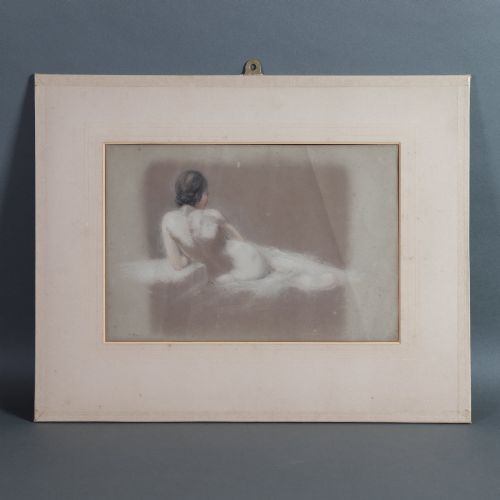
When you search for a chalk nude sketch drawing, you encounter original fine art works on paper spanning several centuries of figurative tradition. These pieces range from eighteenth-century Italian school studies and French neoclassical exercises to twentieth-century cubist and art deco interpretations.
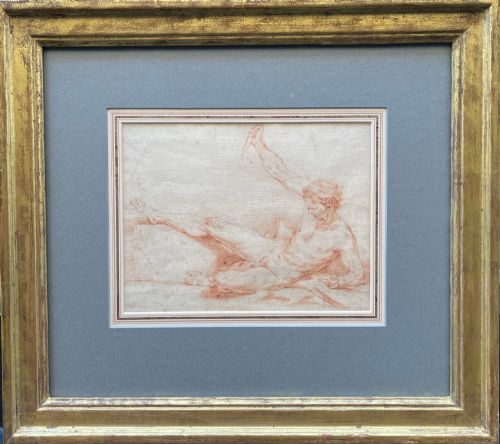
The selections on this page appear primarily as framed drawings and original artwork on paper or toned paper. Subject matter frequently centres on reclining figures, life studies, and classical interpretations rendered by named artists and anonymous European schools alike.
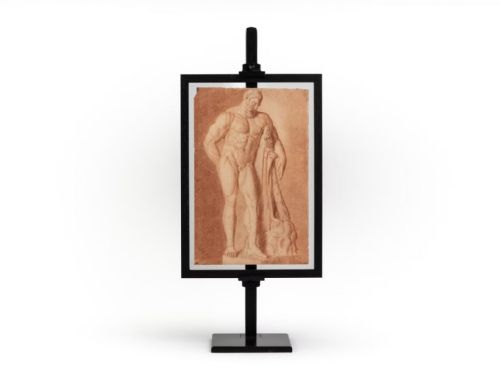
You meet diverse regional approaches, from the red chalk techniques of earlier Italian masters to the bold lines of mid-century British and French draftsmen. Each piece records the immediate hand of the artist capturing the human body without the barrier of heavy paint.
How they were made
Draftsmen relied on compressed carbon or earth pigments applied directly to paper supports, utilising dry media to build form through line and shadow. Artists frequently employed red chalk, often termed sanguine, alongside black chalk and charcoal to achieve tonal depth and warmth.
Working surfaces included plain paper as well as toned paper, which allowed artists to deploy white chalk highlights for three-dimensional emphasis. Many of these works function as preparatory studies or life drawings executed rapidly during studio sessions.
Protective framing under glass preserves these delicate dry media surfaces from smudging and atmospheric degradation over the centuries. Matting separates the paper sheet from the glazing, ensuring the friable chalk particles remain undisturbed.
Listings feature works spanning the eighteenth, nineteenth, and twentieth centuries, executed in red chalk, charcoal, and pastel on paper.
What varies in quality
The strength of anatomical understanding and the confidence of the initial draftsmanship dictate the distinction between routine student exercises and masterworks. A superior sheet demonstrates purposeful hatching, precise contouring, and an economy of line that conveys volume instantly.
Condition and sheet preservation significantly influence the standing of any work on paper, particularly regarding foxing, fading, or paper toning. Intact edges, minimal surface disruption, and strong provenance elevate the desirability of historical drawings.
The historical importance of the hand involved, whether a documented academic painter or an established modernist, establishes the relative standing of the piece. Works retaining double-sided interest or documented historical context command greater attention from serious collectors.
William Etty·Hyacinthe Colin de Vermont·Lucien Gibert·Pierre-Paul Prud'hon·Demetrios Galanis·Frank Dobson·Henry Bird
The Chalk Nude Sketch Drawing Glossary
- Sanguine
- A type of red chalk made from haematite, widely used by artists from the Renaissance through the eighteenth century for warm, fleshy figurative sketches.
- Recto and verso
- Terms describing the front and the back of a sheet of paper respectively, where drawings sometimes appear on both sides of historical working sheets.
- Deux crayon
- A drawing technique utilising two distinct colours of chalk, typically black and red, on toned paper to build sophisticated tonal contrast and highlights.
- Life study
- An artwork executed directly from a live nude model within a studio or academy setting, prioritising observational accuracy over idealized convention.
- Toned paper
- Paper that has been intentionally coloured with a neutral tint such as grey, tan, or blue, providing a mid-tone baseline for artists to add dark shadows and white highlights.
Chalk Nude Sketch Drawing: Frequently Asked Questions
Are these drawings original or copies?
The pieces listed are original works executed by hand directly onto paper using chalk, charcoal, or pastel rather than modern reproduction prints.
Close examination under magnification often reveals the physical texture of the chalk dust and the individual pressure of the artist's hand against the paper grain.
Why do some drawings feature two sides?
Artists historically utilised every available surface for practice, sketching a new composition on the reverse when paper was scarce or expensive.
Studios and academies encouraged students to maximise their working sheets, meaning collectors occasionally discover finished or partial studies on both the front and back.
How can I tell an eighteenth-century sheet from a 1930s work?
Stylistic markers, paper watermarks, and the specific composition type usually signal the era, with eighteenth-century sheets favouring classical mythological themes or academic red chalk.
Twentieth-century works often embrace modernist abstraction, cubist geometry, or bolder art deco lines that reflect the shifting aesthetic priorities of later decades.