


Chair and Footstool
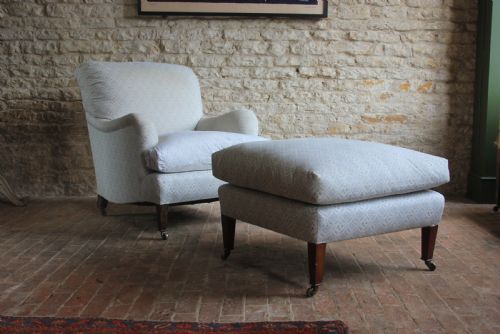
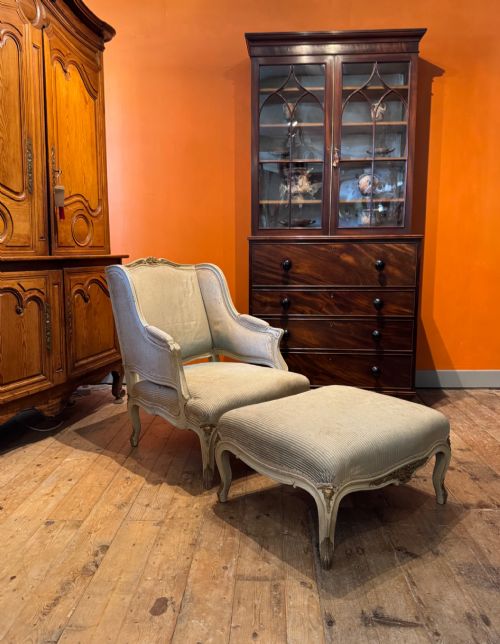
A chair and footstool pairing offers matched seating comfort, bringing together upholstered lounging seats and companion rests from the Victorian, Edwardian, and Art Deco periods.
Chair and Footstool
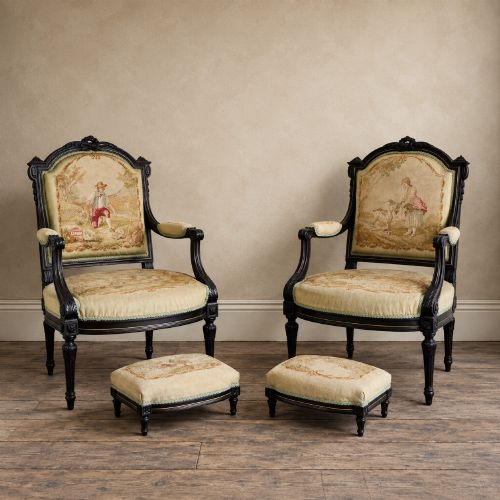
A chair and footstool combination typically pairs an armchair, lounge chair, or dressing seat with a matching low rest designed for the feet. These groupings span diverse forms including matching salon suites, revolving piano stools, X-framed window seats, and extensive daybeds like the duchesse brisée.
The selections appearing here draw from multiple eras, ranging through Victorian walnut and mahogany pieces, Edwardian upholstered suites, and 1930s Art Deco designs. Buyers frequently encounter dressing table stools paired with matching wood frames alongside substantial library and club chairs.
Origins stretch across English workshops and French revival cabinets, incorporating styles from Queen Anne and Louis XVI revivals to Arts and Crafts oak creations and mid-century leather classics.
Distinctions in craftsmanship and condition
Quality rests upon the integrity of the timber framing, the precision of hand-carved ornamentation, and the fidelity of revival styling. Pieces featuring robust walnut or mahogany joinery and distinct sculptural details such as carved animal heads stand apart from simpler utility seating.
The preservation of original textile covers, historic leather patination, or documented maker attribution elevates an example. Consistency between the primary chair and its companion footstool in timber grain, finish, and upholstery fabric defines the cohesion of the set.
Harry and Lou Epstein·Howard and sons·James Shoolbred·Fritz Hansen·Harrods
The Chair and Footstool Glossary
- Duchesse brisée
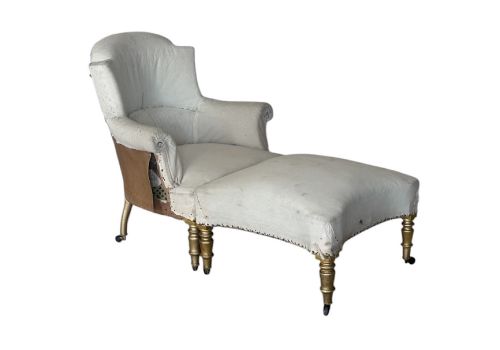
- A multi-part lounge chair and footstool combination, or chaise longue, split into sections to create an extended resting surface. French cabinet makers favoured this format for boudoir and salon spaces.
- Cabriole leg
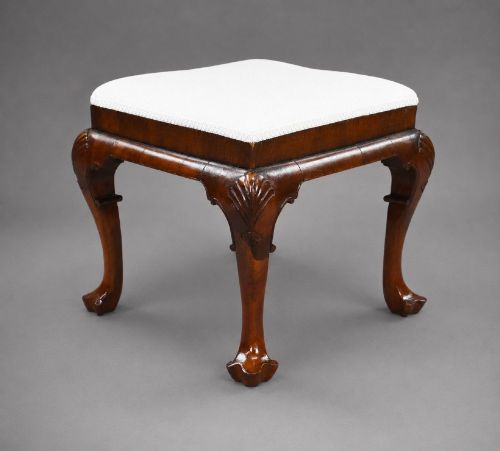
- A furniture leg that curves outward in a convex arc before tapering inward in a concave sweep, commonly ending in a pad or scroll foot. This shape is frequently seen on Victorian and Queen Anne style walnut frames.
- X-framed stool
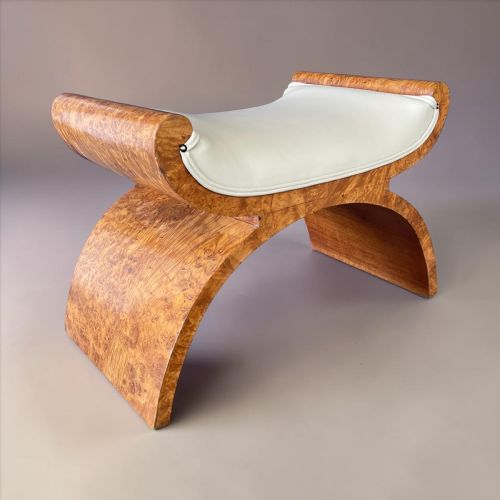
- A seating form supported by intersecting diagonal legs that form an X shape when viewed from the side. Examples range from 19th-century Irish walnut pieces to gilt curule variations.
- Revolving piano stool
- An adjustable seat designed for keyboard players, featuring a mechanism that raises or lowers the top via a central screw thread. These often incorporate mahogany or walnut timbers with circular upholstered pads.
- Wingback armchair
- An upholstered seat featuring protective side panels attached to the backrest to shield the occupant from drafts. Paired editions often include matching leather or fabric footstools.
Chair and Footstool: Frequently Asked Questions
How do I match a footstool to an antique chair?
Look for matching timber species, such as walnut or mahogany, and corresponding leg styles like cabriole or turned supports. Fabric consistency and period details help unify disparate pieces into a cohesive pairing.
Examine the finish and decorative carving to ensure both items share a similar workshop origin or stylistic vocabulary.
What is a duchesse brisée used for?
A duchesse brisée serves as an extended lounging chair where the footstool component locks or pushes flush against the main armchair. It was designed for relaxed reclining in 19th-century French salons and boudoirs.
The segmented construction allows the user to separate the pieces or use the footstool independently.
Are piano stools adjustable in height?
Many period piano stools feature a central wooden or brass screw mechanism beneath the seat pad. Turning the top allows the musician to raise or lower the seating level.
Some surviving examples retain fixed frames, while others rely on revolving tops supported by carved walnut or mahogany columns.